
Seeing water droplets, foggy shelves, or damp food containers every time you open your refrigerator can be frustrating and a little worrying. Condensation inside a refrigerator is more than just an annoyance. Excess moisture can lead to mold growth, unpleasant smells, slimy produce, and higher energy bills. In some cases, it may even be a warning sign that a part of your appliance is not working the way it should. The good news is that most moisture problems have clear causes and straightforward fixes you can handle at home with basic tools and a little patience.
This guide walks you step by step through the most common causes of condensation inside a refrigerator, how to troubleshoot each one, and what you can do to prevent the problem from coming back. You will learn how door gaskets, temperature settings, airflow, and even your food storage habits affect moisture levels. Use this as a practical checklist to get your refrigerator dry, efficient, and safe for your food again.
Is Condensation Inside a Refrigerator Normal?
A small amount of moisture is normal. Every time you open the door, warm, humid kitchen air enters the cold interior. As that warm air cools, water vapor turns into droplets on walls, shelves, and containers. Light fog on glass shelves or a few droplets on the back wall that dry out between door openings is usually nothing to worry about.
However, you may have a problem if you notice:
- Water pooling on shelves or in the bottom of the refrigerator
- Constantly fogged glass shelves or containers
- Wet or slimy produce and packages
- Mold spots on gaskets, drawers, or walls
- Ice buildup around air vents or the back wall
When moisture reaches this level, it usually points to an underlying issue such as air leaks, poor drainage, or incorrect temperature settings. The next sections break down each likely cause and what to do about it.
Common Causes of Condensation Inside a Refrigerator
1. Warm Air Leaking Through Door Gaskets
The rubber seal around the refrigerator and freezer doors (called a gasket) is designed to keep cold air in and warm air out. When it is dirty, cracked, or loose, warm humid air can leak inside all day long, creating constant condensation.
Signs this might be the cause:
- Visible gaps between the door and the frame
- Door does not close smoothly or pops open slightly
- Moisture or mold around the gasket itself
- Condensation mostly near the door edges
2. Temperature Set Too Warm
Refrigerators that are too warm cannot remove moisture efficiently. Cold air holds less water vapor than warm air, so if the interior is not cold enough, humidity rises and condensation forms on surfaces.
Recommended settings for most units:
- Refrigerator compartment: about 37–40°F
- Freezer compartment: about 0°F
If your refrigerator is set higher than this, or if the internal thermometer shows a warmer temperature than the control setting, you may see more moisture than normal.
3. Frequent Door Openings and Overloading
Every time you open the door, you invite warm, moist air inside. If the door is opened constantly or held open for long periods, the refrigerator has to work harder to remove that moisture. Overloading shelves or blocking vents can also trap humid air and prevent it from circulating and drying out.
Common habits that contribute to condensation:
- Standing with the door open while deciding what to eat
- Letting kids or guests repeatedly open and close the door
- Packing food tightly against the back wall or over air vents
- Storing hot or warm food directly in the refrigerator
4. Clogged or Frozen Defrost Drain
Most modern refrigerators use an automatic defrost system. When frost melts off the cooling coils, water is supposed to flow down a small drain hole into a pan underneath the unit, where it evaporates. If that drain is clogged with food debris, ice, or mineral buildup, water can back up inside the refrigerator and create puddles and heavy condensation.
Signs of a drain problem:
- Water pooling under crisper drawers
- Ice sheet on the bottom of the freezer
- Dripping from the back wall into the fresh food compartment
5. High Humidity in the Kitchen
Even if your refrigerator is working correctly, very humid indoor air can lead to more condensation. This is common in kitchens without good ventilation, especially when boiling water, running the dishwasher, or using a humidifier nearby.
Clues that room humidity is part of the problem:
- Windows fog up while cooking
- Condensation on other cold surfaces, like metal or glass
- Moisture problems are worse in summer or during rainy weather
6. Airflow or Cooling System Issues
If fans, vents, or coils are dirty or blocked, cold air may not circulate properly. Some areas may stay too warm and humid, while others freeze. In more serious cases, a failing fan motor or control board can affect both temperature and humidity.
Possible signs:
- Uneven temperatures: some areas freezing, others too warm
- Unusual noises from inside the refrigerator
- Condensation mainly in one section or around blocked vents
Step-by-Step Fixes for Condensation Inside Your Refrigerator
1. Inspect and Clean the Door Gaskets
Start with the simplest and most common cause: air leaks around the doors.
How to test the seal
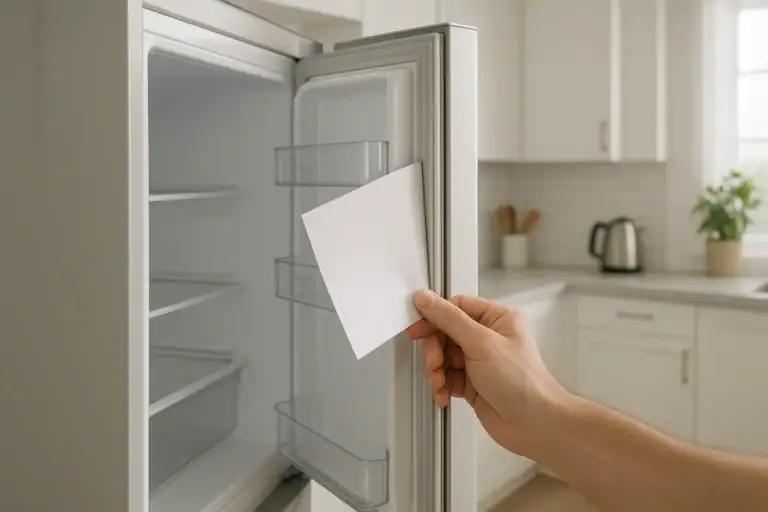
- Close a thin sheet of paper or a dollar bill in the door so half is inside and half is outside.
- Gently pull the paper. If it slides out easily with no resistance, the gasket may not be sealing well in that spot.
- Repeat this test around the entire door perimeter.
How to clean the gasket
- Mix a small amount of mild dish soap with warm water.
- Dip a soft cloth or sponge in the solution and wipe the gasket, paying attention to folds and grooves.
- Use a soft brush or cotton swab to remove any stuck debris or mold.
- Wipe dry with a clean cloth.
Cleaning removes grime that can prevent a tight seal. After cleaning, repeat the paper test. If you still feel weak spots, the gasket may be worn or warped and need replacement by a professional.
2. Adjust Temperature Settings
Next, confirm that your refrigerator is cold enough to control moisture properly.
Check the actual temperature
- Place a simple appliance thermometer in a glass of water on the middle shelf.
- Leave it undisturbed for several hours or overnight.
- Read the temperature. Aim for about 37–40°F.
If the reading is higher than recommended, adjust the control a little colder and recheck after 24 hours. Avoid turning it to the coldest setting immediately, which can cause freezing in some areas and waste energy.
3. Change Door Habits and Organize the Interior
Small behavior changes can significantly reduce condensation.
Better door habits
- Decide what you need before opening the door.
- Group frequently used items together so you can grab them quickly.
- Teach family members to close the door firmly and avoid leaving it open.
Improve airflow inside
- Avoid packing food tightly against the back wall.
- Keep air vents clear so cold air can circulate.
- Leave small gaps between containers and packages.
- Do not store hot food directly; let it cool on the counter until it is warm, not steaming, before refrigerating.
4. Clear a Clogged or Frozen Defrost Drain
If you see water pooling under drawers or ice sheets at the bottom, the defrost drain may be blocked.
Basic method to clear the drain
- Unplug the refrigerator for safety.
- Remove lower shelves and drawers to access the back wall.
- Look for a small drain hole, usually near the bottom center of the back wall or under an access panel.
- If the area is iced over, allow the ice to melt. You can speed this up by placing bowls of warm water inside and closing the door for a short time.
- Use a turkey baster or squeeze bottle filled with warm water to flush the drain hole gently.
- Repeat until water flows freely into the drain pan underneath the unit.
Do not use sharp tools or force, which can damage the drain tube. If the drain clogs repeatedly, consider having a technician inspect for deeper blockages or alignment issues.
5. Reduce Humidity Around the Refrigerator
If your home or kitchen is very humid, lowering overall moisture can help.
- Use the kitchen exhaust fan while cooking or running the dishwasher.
- Open a window when boiling water or simmering for long periods.
- Move humidifiers away from the kitchen area.
- Check for water leaks under the sink or near the refrigerator that may add moisture to the air.
In very humid climates, a small room dehumidifier near the kitchen can reduce condensation on many surfaces, not just the refrigerator.
6. Clean Coils and Check Airflow Components
Dirty condenser coils and blocked vents can cause the cooling system to work harder and less efficiently, which may increase condensation.
Clean the condenser coils
- Unplug the refrigerator.
- Locate the coils, usually on the back or behind a lower front grille.
- Use a vacuum with a brush attachment or a coil cleaning brush to remove dust and pet hair.
- Wipe the surrounding area and replace any panels or grilles.
If you hear unusual noises or suspect a fan is not running, it is safer to contact a qualified appliance technician. Internal fan and control issues are not typically DIY repairs.
Preventing Condensation Problems Long-Term
Once you have addressed the immediate moisture issue, a few simple habits can keep your refrigerator dry and efficient.
1. Maintain the Door Seals
- Wipe gaskets monthly with warm, soapy water and dry thoroughly.
- Inspect for cracks, tears, or hardened areas twice a year.
- Adjust door hinges if the door seems misaligned or does not close evenly.
2. Keep Temperatures Stable
- Use an inexpensive thermometer to verify settings a few times a year.
- Avoid frequent drastic changes to the temperature control.
- Do not place the refrigerator next to ovens or direct sunlight if you can avoid it, as this can make it work harder and affect interior conditions.
3. Store Food to Control Moisture
How you store food can either trap moisture or help manage it.
- Cover liquids and leftovers with tight lids or wrap to keep moisture from evaporating into the air.
- Use crisper drawers as intended: one for high-humidity produce and one for low-humidity items, if available.
- Do not wash produce until you are ready to use it, or dry it thoroughly before storing.
- Leave some open space on each shelf to allow air circulation.
4. Schedule Light Cleaning and Checks
Regular attention prevents small issues from turning into big moisture problems.
- Wipe up spills right away so they do not drip into vents or drains.
- Every few months, remove drawers and clean the bottom of the refrigerator.
- Check the defrost drain area for early signs of ice buildup or debris.
- Clean condenser coils at least once a year, more often if you have pets.
When to Call a Professional
Most condensation issues can be improved with cleaning, adjustments, and better habits. However, there are times when professional help is the safest and most efficient option.
Consider contacting a qualified appliance technician if:
- Condensation returns quickly after you clean gaskets and adjust temperatures.
- You see heavy frost buildup on the back wall or around vents.
- The refrigerator runs constantly or makes loud or unusual noises.
- Temperatures stay too warm or too cold despite adjustments.
- You suspect damage to internal components, wiring, or the sealed cooling system.
A technician can test sensors, fans, and controls, and check for refrigerant or sealed system problems that are not safe to repair on your own.
Key Takeaways: Drying Out a Damp Refrigerator
Condensation inside your refrigerator is usually a sign that warm, humid air is getting in or that moisture is not draining and drying out the way it should. By working through the main causes in a logical order, you can usually solve the problem without major repairs.
- Start with door gaskets: clean them, test the seal, and replace if needed.
- Verify temperature settings with a thermometer and adjust gradually.
- Limit long door openings, avoid overloading, and keep vents clear.
- Check for a clogged or frozen defrost drain if you see pooling water.
- Reduce kitchen humidity with ventilation and good cooking habits.
- Clean coils and schedule light maintenance to keep the system efficient.
With these troubleshooting steps and preventive habits, you can keep condensation under control, protect your food, and help your refrigerator run more reliably for years to come. For more guidance on managing water and moisture in your kitchen, explore related resources at Signature Home Guide.
 Cloudy Glasses From the Dishwasher: Causes and Simple Fixes
 Fridge Door Seal Test Checklist for Better Energy Use and Food Safety
 Freezer Frost Around the Door: Simple Fixes and Checks