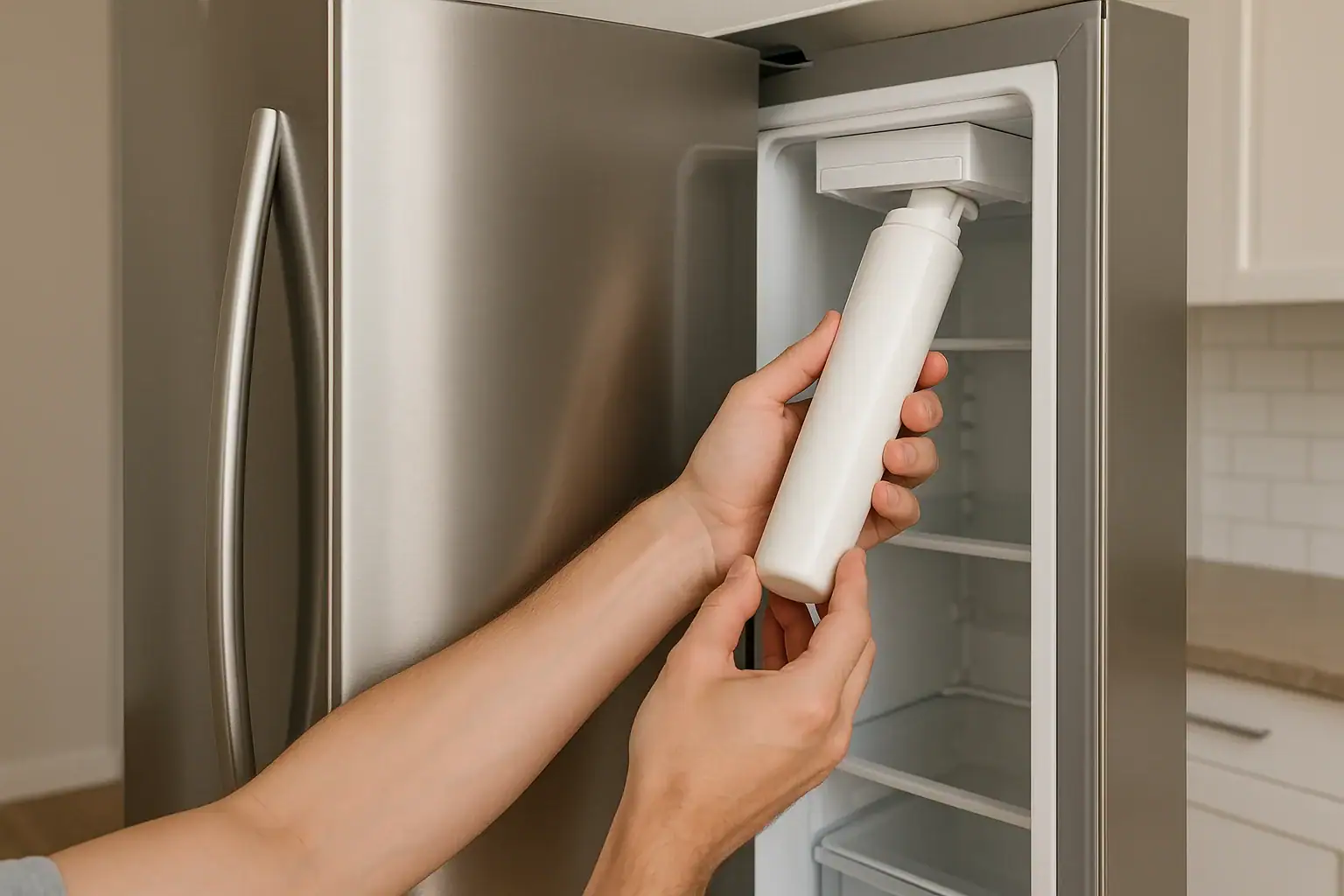
First steps when your refrigerator water filter is stuck
If your refrigerator water filter will not turn or pull out, stop forcing it. Most stuck filters come loose with a few simple checks:
- Turn off the ice maker and water dispenser.
- Gently relieve water pressure in the line.
- Confirm you are twisting or pushing in the correct direction for your model.
If you still feel hard resistance, use the step-by-step methods below. If at any point the filter housing flexes, cracks, or you hear snapping sounds, stop and contact the refrigerator manufacturer or a qualified appliance technician to avoid leaks or damage.
Safety and prep before you start
Refrigerator water systems are under pressure, and damaged parts can leak. Take a minute to prepare before working on a stuck filter.
- Turn off the water supply to the refrigerator if you can reach the shutoff valve safely.
- Turn off the ice maker and stop using the dispenser.
- Unplug the refrigerator if you will be working with both hands inside the compartment for more than a moment.
- Place a towel or shallow tray under the filter area to catch drips.
For general information on home drinking water and contaminants, the U.S. Environmental Protection Agency drinking water pages are a useful reference. For filter performance and certification details, look for products evaluated under NSF/ANSI drinking water treatment standards.
You can also bookmark the main Water & Kitchen guide at Signature Home Guide for broader water and filtration tips around the kitchen.
Identify your refrigerator filter style
The way you free a stuck filter depends on how it mounts. Common styles include:
- Quarter-turn cartridge (inside the fridge or in the base grille): insert-and-twist design, usually turns a quarter or half turn counterclockwise to release.
- Push-in / pull-out cartridge: press a button or push the filter in to pop it out, then pull straight out.
- In-line filter behind the fridge: installed in the water line with quick-connect fittings or compression nuts.
Check your user manual or the manufacturer’s website for your exact model. If you cannot find instructions, look closely at the filter head for arrows or icons showing the direction to turn or push.
How to free a stuck quarter-turn refrigerator filter
Quarter-turn filters are common and often feel stuck because of pressure, mineral buildup, or misalignment.
Step 1: Relieve water pressure
- Turn off the water supply valve to the refrigerator if accessible.
- Dispense water from the fridge for 5–10 seconds to relieve pressure in the line.
- Wait a minute, then try turning the filter again in the release direction (usually counterclockwise).
Step 2: Improve your grip without over-torquing
If the filter still will not budge, improve your grip but avoid tools that can crush the cartridge.
- Use a dry rubber glove or a silicone jar opener pad to get better hand traction.
- Support the filter housing with your other hand so it does not flex.
- Apply steady, even pressure rather than quick jerks.
Avoid pliers or wrenches directly on the plastic filter body; they can crack the filter or the housing and cause leaks.
Step 3: Check for misalignment or over-insertion
Sometimes the filter is slightly cross-threaded or pushed in too far.
- Gently turn the filter toward the locked position a few millimeters, then back toward the unlock direction. This can help reseat the O-rings.
- Lift or support the filter slightly as you turn if it seems to droop; sagging can bind the locking tabs.
Step 4: Warm and clean the area (if accessible)
Cold plastic can be less flexible, especially in the fresh food compartment.
- Open the refrigerator door for a few minutes to let the area warm slightly.
- Wipe away any visible mineral deposits or sticky residue around the filter head with a damp cloth.
Do not use lubricants like petroleum jelly or cooking oil on the filter connection unless your manufacturer specifically recommends a product. Some lubricants can damage plastics or O-rings.
How to free a stuck push-in or pull-out refrigerator filter
Push-in filters usually release with a button or by pushing the filter inward until it springs out. When stuck, the latch or O-rings may be binding.
Step 1: Confirm the release method
- Look for a release button near the filter head or housing.
- Check for arrows or text such as “PUSH” or “PRESS.”
- If you are unsure, look up your model’s instructions on the manufacturer’s website.
Step 2: Relieve pressure and try again
- Turn off the water supply if possible.
- Dispense water for several seconds to reduce pressure.
- Press the release button firmly and hold it while gently pulling the filter straight out.
- If your style requires pushing in, press the filter inward until you feel it click, then let it spring outward before pulling.
Step 3: Free a stuck latch
If the filter moves slightly but will not come out:
- Press the release button repeatedly a few times to loosen the mechanism.
- While holding the button, wiggle the filter very slightly up and down as you pull. Do not bend it sharply; that can crack the housing.
- Shine a flashlight into the housing to look for broken plastic or debris blocking the latch.
If you see broken parts or the housing flexes, stop and contact the manufacturer or a technician. Forcing a damaged latch can lead to leaks or a filter that will not stay in place.
How to deal with a stuck in-line refrigerator water filter
In-line filters are usually located behind or under the refrigerator in the water supply line.
- Turn off the water supply at the nearest shutoff valve.
- Relieve pressure by dispensing water from the fridge until the flow stops.
- Identify the connection type:
- Quick-connect fittings: usually require you to push a collar in while pulling the tubing out.
- Compression fittings or threaded nuts: loosen by turning the nut counterclockwise with an appropriate wrench while supporting the filter body.
- If the fitting is stuck, apply gentle, even pressure. Avoid twisting the plastic tubing itself; it can kink or crack.
If you are not comfortable working with water supply lines, consider hiring a plumber or appliance technician. A poorly reconnected line can leak behind the refrigerator and cause hidden water damage.
When to stop and call for help
Continuing to force a stuck filter can turn a simple maintenance task into a repair. Stop and seek help if you notice:
- Cracking, creaking, or visible damage to the filter head or housing
- The entire filter housing twisting or moving instead of just the filter
- Water leaking around the filter area
- A release button that is jammed, broken, or missing
In these cases, contact the refrigerator manufacturer’s customer support or a qualified appliance repair service. They can often walk you through model-specific steps or replace a damaged housing.
After you remove the stuck filter
Once the filter is out, take a moment to prevent the next one from getting stuck.
- Inspect the old filter for cracks, swollen O-rings, or heavy mineral buildup. This can explain why it was difficult to remove.
- Clean the filter housing gently with a damp cloth. Do not use abrasive cleaners or tools.
- Check the new filter to be sure it matches your model and is installed exactly as the manufacturer describes.
- Flush the new filter by running water through it for the time or volume recommended in your manual to remove loose carbon fines.
For broader guidance on kitchen water filtration and maintenance, you can explore more resources in the Water & Kitchen section of Signature Home Guide.
How often to replace refrigerator water filters
Most manufacturers recommend replacing refrigerator water filters about every six months or after a certain number of gallons, but the right interval depends on your water quality and usage. Waiting too long can increase the chance of clogging and make the filter harder to remove next time.
For general information on household water treatment and when to consider additional filtration, the Centers for Disease Control and Prevention guidance on household water treatment is a helpful overview.
If you notice a major change in water taste, odor, or flow rate before your usual replacement time, it may be worth changing the filter sooner and checking your home’s overall water quality.
 How to Fix a Leaking Faucet-Mount Water Filter
 Microwave Sparking Inside: Safe Checks and Next Steps
 Refrigerator Making Noise: What Needs Attention?