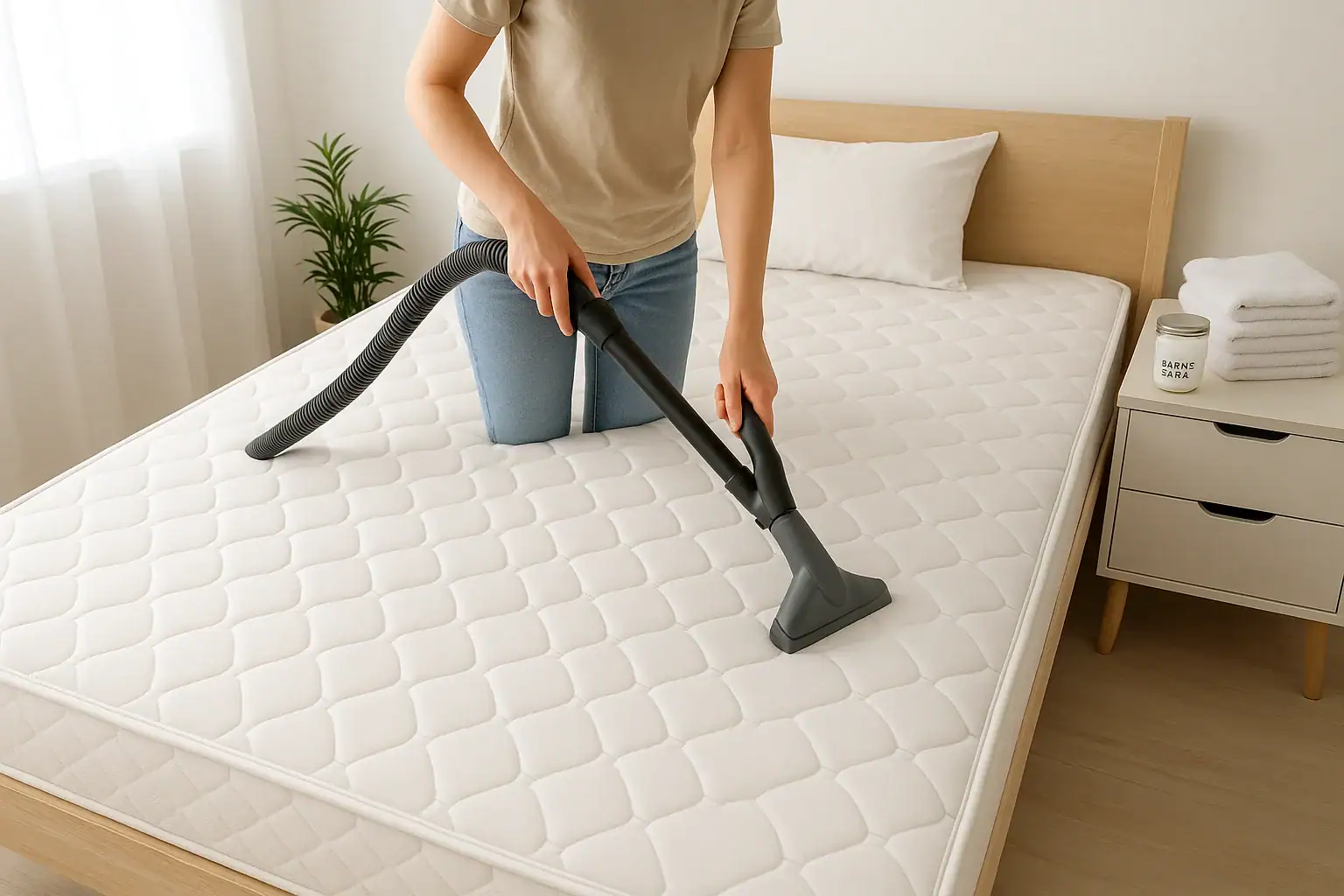
A clean mattress does more than look and smell better. It can also support easier breathing, calmer sleep, and fewer morning sniffles. Over time, mattresses collect sweat, skin cells, dust, and allergens that become food and shelter for dust mites. While you cannot completely remove every dust mite, you can significantly reduce them and keep your mattress fresh with a simple cleaning routine. You do not need special tools or complicated products to get started. With a vacuum, a few pantry ingredients, and a bit of time, you can deep clean your mattress, tackle stains, and build habits that keep dust and allergens under control all year long.
On this page(click to collapse)
- Why Mattress Cleaning and Dust Mite Control Matter
- What You Need to Clean a Mattress
- Step-by-Step: How to Deep Clean a Mattress
- How to Reduce Dust Mites in Your Mattress
- How Often to Clean Your Mattress
- Special Situations: Spills, Accidents, and Allergies
- Simple Habits to Keep Your Mattress Fresher Longer
- When to Consider Replacing Your Mattress
- Related guides
Why Mattress Cleaning and Dust Mite Control Matter
Mattresses are rarely washed, yet we spend hours on them every night. Body oils, sweat, and shed skin cells slowly build up on and inside the mattress surface. Dust settles into the fabric and seams. This combination creates a perfect environment for dust mites, which thrive in warm, humid, and fabric-rich spaces.
Dust mites themselves are too small to see, but their waste and body fragments can become airborne and mix with household dust. For many people, this buildup can contribute to:
- Stuffy nose or sneezing in the morning
- Itchy or watery eyes at night
- Scratchy throat or mild coughing in bed
- General feeling of poor sleep quality
Regular mattress cleaning and simple dust mite reduction steps can help create a calmer, cleaner sleep environment. Even if you do not notice obvious allergy symptoms, maintaining a cleaner mattress can reduce odors, extend the life of your bedding, and make your bedroom feel more comfortable overall.
What You Need to Clean a Mattress
You can clean most mattresses with basic supplies you likely already have at home. Always check the care tag on your mattress first for any specific instructions or warnings.
Basic mattress cleaning supplies
- Vacuum with an upholstery attachment or brush tool
- Clean, white cloths or small towels
- Spray bottle with cool or lukewarm water
- Mild liquid dish soap or gentle laundry detergent
- Baking soda
- Measuring spoon or small sifter for sprinkling baking soda
Optional supplies for deeper cleaning
- Plain white vinegar, diluted with water for odor removal
- Hydrogen peroxide solution for certain light stains (spot test first)
- Soft-bristled brush for gently working in cleaning solutions
- Fan or open windows to speed drying time
- Mattress encasement or protective cover for long-term dust mite control
Keep all liquids light and controlled. Mattresses are thick and can trap moisture inside, which can lead to mold or mildew if they become too wet. The goal is surface cleaning and spot treatment, not soaking.
Step-by-Step: How to Deep Clean a Mattress
Set aside a few hours on a dry, low-humidity day so your mattress has time to air out and dry fully. Plan to sleep elsewhere if the mattress still feels damp by bedtime.
Step 1: Strip the bed completely
Remove all bedding, including sheets, pillowcases, mattress pads, and any protective covers.
- Wash sheets and pillowcases in hot water, if the care labels allow.
- Wash mattress pads and removable covers according to their labels.
- Dry everything thoroughly on a high heat setting if safe for the fabric.
Cleaning the bedding at the same time as the mattress prevents dust and allergens from quickly transferring back onto the freshly cleaned surface.
Step 2: Vacuum the entire mattress
Use the upholstery attachment on your vacuum to remove loose dust, hair, and debris.
- Vacuum the top surface slowly, working in overlapping lines.
- Pay extra attention to seams, tufts, and crevices where dust collects.
- Vacuum the sides of the mattress as well, especially along edges and corners.
- If your mattress is flippable, carefully flip it and vacuum the other side.
Thorough vacuuming is one of the most effective ways to remove dust and some dust mite debris from the surface of your mattress.
Step 3: Spot clean stains carefully
Before using any cleaner, check the care label for codes such as W, S, or X, which may limit what you can safely use. When in doubt, test a small hidden area first.
-
Mix a mild cleaning solution.
Add a few drops of gentle liquid dish soap or laundry detergent to a cup of cool water. Stir until slightly sudsy.
-
Blot, do not scrub.
Dip a clean cloth into the soapy water and wring it out so it is just damp. Gently blot the stained area, working from the outside toward the center. Avoid soaking the fabric.
-
Rinse with plain water.
Use a second cloth dampened with plain water to blot away any soap residue.
-
Blot dry.
Press a dry towel over the area to absorb as much moisture as possible.
For older or tougher stains, a small amount of diluted white vinegar or hydrogen peroxide solution can sometimes help, but always test first. Never pour these directly onto the mattress. Apply with a cloth, use sparingly, and blot dry thoroughly.
Step 4: Deodorize with baking soda
Baking soda helps absorb odors and some surface moisture from your mattress.
- Sprinkle a light, even layer of baking soda over the top of the mattress. You can use a sifter or your hand.
- Gently work the baking soda into the surface with your hand or a soft brush, especially in areas that tend to hold odors.
- Let it sit for at least 30 minutes. For deeper deodorizing, leave it on for several hours or up to a full day.
While the baking soda sits, open windows if possible to allow fresh air to circulate and help with drying.
Step 5: Vacuum again
After the baking soda has had time to work, vacuum the entire mattress again using the upholstery tool.
- Move slowly to remove as much baking soda as possible.
- Go over seams and edges a second time to capture any remaining powder.
Once the mattress feels completely dry and free of residue, you can remake the bed with clean bedding.
How to Reduce Dust Mites in Your Mattress
Cleaning removes dust and some allergens, but dust mites can return if the environment stays comfortable for them. Use these strategies to make your mattress less inviting to dust mites over the long term.
Use protective covers
A tightly woven, zippered mattress encasement can create a barrier between you and the interior of the mattress, where dust mites often live. Look for covers that fully enclose the mattress and close securely.
- Keep the encasement on the mattress at all times.
- Wash the encasement a few times a year, following the care instructions.
- Consider using similar protective covers on pillows and box springs.
Wash bedding in hot water
Weekly washing is one of the most effective ways to control dust mites in your sleeping area.
- Wash sheets and pillowcases every one to two weeks in the warmest water safe for the fabric.
- Dry bedding thoroughly on a medium to high heat setting, if allowed.
- Wash blankets, duvets, and comforters regularly, or use removable duvet covers you can wash more often.
Control humidity and temperature
Dust mites prefer warm, humid conditions. Making your bedroom less humid can help slow their growth.
- Keep indoor humidity around 40 to 50 percent if possible.
- Use a dehumidifier in damp climates or during humid seasons.
- Avoid running humidifiers continuously unless medically advised, and clean them often.
- Allow air to circulate by opening windows on dry days or using fans.
Reduce dust-collecting items near the bed
Soft items around the bed can trap dust and provide more space for dust mites.
- Limit the number of decorative pillows and stuffed animals on the bed.
- Wash any soft items that stay on the bed regularly.
- Dust and vacuum nightstands, headboards, and under-bed areas frequently.
How Often to Clean Your Mattress
You do not need to deep clean your mattress every week, but a simple schedule can keep dust and odors in check.
Weekly or biweekly tasks
- Strip and wash sheets and pillowcases.
- Allow the bare mattress to air out for 30 minutes before making the bed.
- Lightly vacuum the top of the mattress if you have time, especially if you notice dust.
Monthly or seasonal tasks
- Vacuum the mattress thoroughly, including sides and seams.
- Sprinkle baking soda, let it sit, and vacuum it up for odor control.
- Rotate the mattress head-to-foot to promote even wear, if recommended by the manufacturer.
Deep cleaning schedule
Plan a full deep clean, including stain treatment and extended baking soda deodorizing, about every six months. If you have pets that sleep on the bed, small children, or strong seasonal allergies, you may prefer to deep clean every three to four months.
Special Situations: Spills, Accidents, and Allergies
Handling fresh spills or accidents
Quick action can prevent liquids from soaking deep into the mattress.
-
Blot immediately.
Use clean, dry towels to press firmly on the spill. Do not rub, which can push liquid deeper.
-
Apply a mild cleaner.
Use a small amount of diluted soap solution or vinegar solution on a cloth and blot the area. Avoid over-wetting.
-
Blot dry and use baking soda.
Blot again with dry towels, then cover the area with baking soda to absorb moisture and odor. Let it sit for several hours before vacuuming.
If you have dust mite allergies
If you suspect dust mites are affecting your comfort, you may want to layer several strategies together.
- Use a zippered mattress encasement and pillow protectors.
- Wash bedding weekly in hot water, if safe for the fabric.
- Vacuum the mattress and bedroom carpets regularly with a high-quality filter.
- Keep clutter, fabric curtains, and extra textiles to a minimum in the bedroom.
- Discuss additional options with a healthcare professional if symptoms persist.
Simple Habits to Keep Your Mattress Fresher Longer
Once you have done a full cleaning, a few small habits can make day-to-day maintenance easier.
- Let the bed breathe in the morning. Pull back the covers for 20 to 30 minutes to allow moisture to evaporate before making the bed.
- Use a washable mattress protector. A thin, waterproof or water-resistant protector can catch spills and sweat before they reach the mattress.
- Shower before bed when possible. Going to bed clean can reduce the amount of body oils and sweat absorbed by your bedding and mattress.
- Keep pets off the bed if you can. Pet dander and outdoor allergens can add to the dust load in your mattress.
- Address stains quickly. The sooner you treat a spill or spot, the easier it is to remove and the less likely it is to cause lasting odor.
These small steps, combined with periodic deep cleaning, help protect your mattress investment and create a more comfortable sleep environment.
When to Consider Replacing Your Mattress
Even with excellent care, mattresses do not last forever. Over time, materials break down and can hold more dust and allergens.
You may want to think about replacement if you notice:
- Visible sagging or deep impressions that do not bounce back
- Lumps, springs, or support layers you can feel through the surface
- Persistent odors that remain even after deep cleaning
- Worsening sleep quality or increased aches when you wake up
- The mattress is more than a decade old, depending on type and use
Until you are ready to replace it, continuing regular cleaning and using protective covers can help you get the most life and comfort from your current mattress.
Recommended next:
Related posts
Browse this topic →
Scent Free Cleaning Routine for Sensitive Noses: A Practical Guide

How to Create Smart Garage Shelf Zones for Tools, Sports Gear, and Household Backstock

Laundry Sorting Systems for Small Households: Simple Ways to Stay Organized

How to Remove Water Stains on Glass Tables, Mirrors, and Shower Glass
How to Clean Under Appliances Safely Without Moving Everything
Charger Drawer Organization for Cables, Adapters, and Batteries
Keep reading


About this site
Signature Home Guide publishes practical, independent home guides. We aim to be clear, helpful, and transparent.
Affiliate disclosure
As an Amazon Associate, we earn from qualifying purchases. Some links on this site may be affiliate links. If you buy through these links, we may earn a small commission at no extra cost to you. This helps support our content. Learn more.