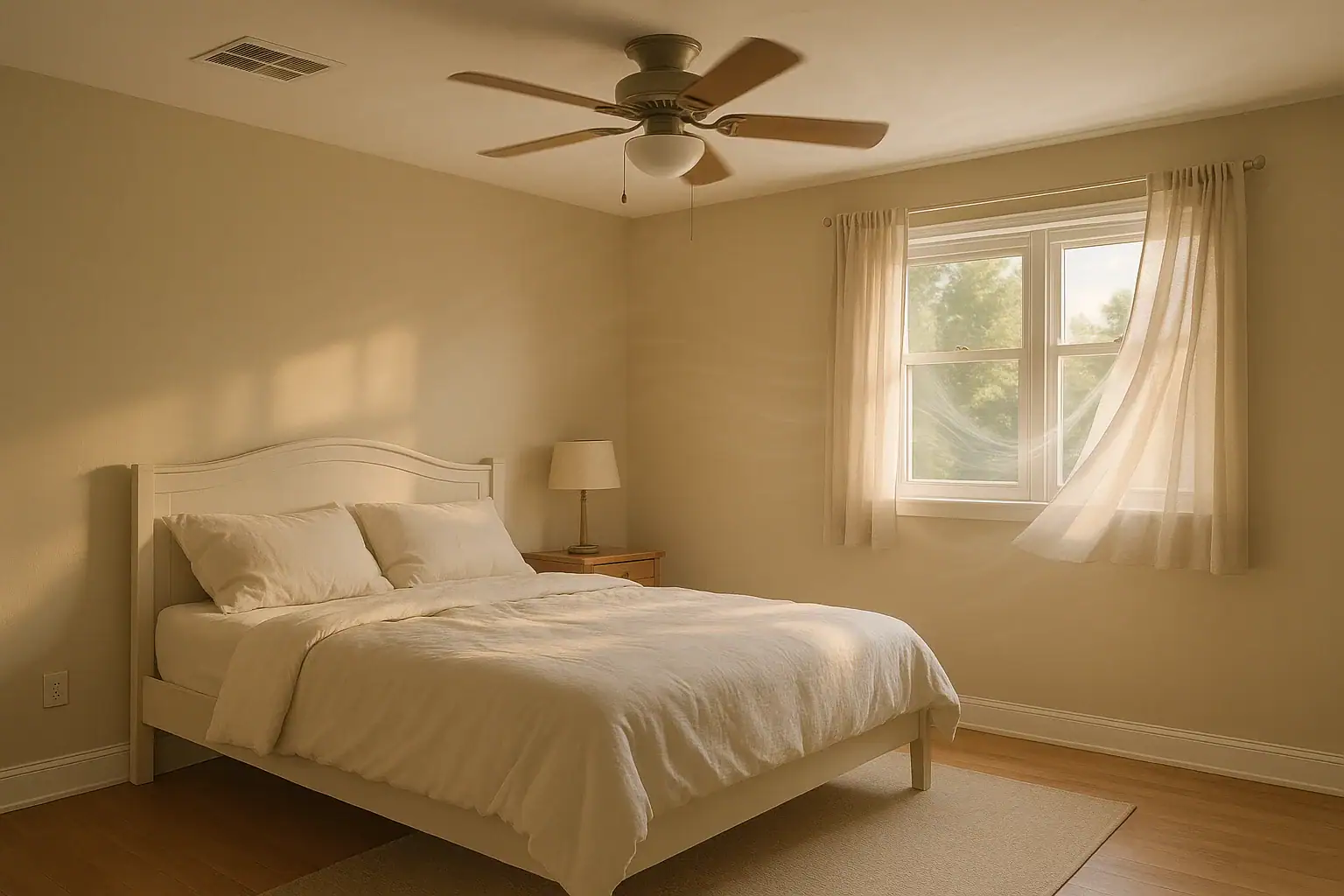
If your bedroom still feels warm, muggy, or hard to breathe in even with the air conditioning running, you are not imagining it. A room can feel stuffy even when the thermostat says the temperature is fine. That heavy, stale feeling usually comes from a mix of poor air circulation, trapped humidity, and indoor pollutants. The good news is that most of the causes are fixable with a few targeted changes, and you do not always need a new system or a major remodel to breathe easier.
This guide walks through the most common reasons a bedroom feels stuffy with the AC on, how to troubleshoot each one, and what you can realistically do on your own. You will also find tips to improve airflow, manage humidity, and create a more comfortable sleeping environment without driving up your energy bills. Use these steps as a checklist and work through them one by one until your bedroom finally feels fresh and comfortable.
1. What “Stuffy” Really Means in a Bedroom
Before you start adjusting vents or changing filters, it helps to understand what “stuffy” usually means inside a bedroom. Most people describe a stuffy room as:
- Air that feels heavy, muggy, or thick
- Little to no noticeable air movement
- A lingering smell or stale odor
- Feeling warm or clammy even when the thermostat looks normal
- Waking up with a dry throat, congestion, or mild headache
These sensations come from a combination of factors:
- Temperature: The room may not be as cool as other parts of the home.
- Humidity: Excess moisture makes the air feel warmer and harder to breathe.
- Ventilation: Not enough fresh air coming in or stale air going out.
- Air quality: Dust, allergens, and odors building up over time.
Your AC is mainly designed to cool and dehumidify, but it cannot fix every airflow or air quality issue on its own. That is why a bedroom can feel stuffy even when the AC is technically working.
2. Check Basic AC Settings and Use
Start with the simplest checks. Sometimes a small setting change is enough to improve comfort in your bedroom.
2.1 Thermostat settings
Look at how your thermostat is set:
- Fan setting: If the fan is set to “Auto,” the blower only runs when the AC is cooling. This can cause air to feel still between cycles. Switching to “On” for a few hours can keep air moving and may reduce that heavy feeling.
- Temperature setting: Bedrooms often feel warmer than hallways where thermostats are located. You may need to set the thermostat a few degrees lower in the evening to keep the bedroom comfortable.
- Schedule: If you use a schedule, make sure nighttime settings are not allowing the home to warm up too much while you sleep.
2.2 Bedroom doors and vents
How you use doors and vents affects pressure and airflow:
- Closed doors: Sleeping with the bedroom door tightly closed can trap air and make the room feel stuffy, especially if there is no return vent in the room. Try leaving the door slightly open or installing a door undercut or transfer grille to let air move back to the main part of the house.
- Blocked supply vents: Make sure the vent blowing air into your bedroom is fully open and not covered by furniture, curtains, rugs, or bedding.
- Return vents: If your bedroom has a return vent, keep it clear. Do not place furniture directly in front of it.
3. Airflow Problems That Make Bedrooms Feel Stuffy
Even with the AC running, poor airflow can make your bedroom feel stale and uncomfortable. Here are common airflow issues and how to troubleshoot them.
3.1 Clogged or overdue air filter
A dirty air filter restricts airflow through your entire system. When less air moves, rooms at the end of the duct runs, such as bedrooms, often suffer first.
What to do:
- Find the main system filter (usually at the return grille or in the indoor unit).
- Check it for visible dust buildup or discoloration.
- Replace it if it is dirty or older than the recommended change interval, often every 1 to 3 months.
3.2 Poorly balanced ductwork
In many homes, some rooms get too much air while others get too little. Long duct runs, sharp turns, or undersized ducts can leave bedrooms under-supplied.
Warning signs:
- Your bedroom is consistently warmer than nearby rooms.
- You feel only a weak stream of air from the bedroom vent.
- Other rooms feel overly cold when the bedroom is barely comfortable.
What you can try:
- Partially close vents in rooms that get too much cooling to push more air toward the bedroom. Do not close them fully, as that can create pressure issues.
- Use a small, quiet fan to help move cool air from the hallway into the bedroom.
- If problems are severe, consider having a professional evaluate and balance the duct system.
3.3 Furniture placement and obstructions
Large furniture, heavy curtains, or storage boxes can block airflow more than you might expect.
Check for:
- Bed frames or dressers placed directly over floor vents.
- Thick curtains hanging over wall vents.
- Clutter or storage bins pushed against vents or returns.
Rearranging furniture to give vents and returns at least several inches of clearance can noticeably improve comfort.
4. Humidity: The Hidden Reason Your Bedroom Feels Heavy
Even if the temperature is reasonable, high humidity can make your bedroom feel sticky and suffocating. The air may feel “thick” and your sheets may feel damp or clammy.
4.1 Why humidity builds up in bedrooms
Bedrooms are prone to humidity problems because:
- People release moisture when breathing and sweating while they sleep.
- Doors are often closed for privacy, trapping that moisture.
- Nearby bathrooms may add steam if they are not well ventilated.
- Older windows and walls can allow moisture to seep in.
4.2 Signs your bedroom humidity is too high
- Windows fogging or showing condensation, especially in the morning
- Musty or damp odors
- Sheets or pillows that feel slightly damp to the touch
- Visible mold or mildew on walls, ceilings, or around windows
4.3 Ways to reduce bedroom humidity
You can lower humidity and reduce that stuffy feeling with a few steps:
- Use bathroom exhaust fans during and after showers to keep moisture from spreading into nearby bedrooms.
- Run your AC long enough for it to dehumidify effectively. Very short cycles may cool the air slightly but not remove much moisture.
- Consider a small dehumidifier for the bedroom or nearby hallway if humidity is consistently high.
- Air out bedding during the day by pulling back heavy comforters to let moisture escape.
- Check for water leaks around windows, ceilings, or exterior walls that could be adding moisture.
5. Ventilation and Fresh Air Issues
Air conditioning cools and recirculates indoor air, but it does not always bring in much fresh outdoor air. Without enough ventilation, carbon dioxide, odors, and indoor pollutants can build up, especially in a closed bedroom.
5.1 Signs of poor bedroom ventilation
- The room smells stale or “used” in the morning.
- You feel groggy or have a mild headache when you wake up.
- The air feels still, even when the AC is running.
5.2 Simple ways to improve ventilation
Depending on your climate and safety needs, try one or more of these:
- Open windows briefly during cooler parts of the day or evening to let in fresh air, then close them before the outside heat or humidity rises.
- Use a window or box fan to exhaust stale air outward for a few minutes, then run the AC to cool the room again.
- Install or use a ceiling fan set to spin counterclockwise in summer to create a gentle breeze without significantly changing the temperature.
- Leave doors slightly open when possible to let air move between rooms and reduce buildup of stale air.
6. Indoor Air Quality: Odors, Dust, and Allergens
A bedroom can feel stuffy not just because of temperature or humidity, but also due to poor indoor air quality. Dust, pet dander, and odors can make the air feel heavy and unpleasant.
6.1 Common bedroom air quality problems
- Dust buildup on furniture, ceiling fans, blinds, and vents
- Pet hair and dander trapped in carpets, bedding, and upholstery
- Fragrances and cleaning products that leave strong, lingering scents
- Mold spores from damp areas or past water damage
6.2 Steps to freshen the air
To help your bedroom feel fresher and less stuffy, focus on reducing pollutants:
- Wash bedding regularly in hot water, including pillowcases and mattress covers.
- Vacuum carpets and rugs often, and consider hard flooring if allergies are severe.
- Dust surfaces, including vents and ceiling fan blades, with a damp cloth to trap particles.
- Avoid heavy fragrances and use milder cleaning products in the bedroom.
- Use an air purifier sized for your bedroom to help capture fine particles and some odors.
7. Heat Sources Inside the Bedroom
Extra heat inside the room can fight against your AC and make the space feel warmer and more uncomfortable than the rest of the home.
7.1 Internal heat sources
Common bedroom heat sources include:
- Electronics such as computers, game consoles, and televisions
- Lamps with high-wattage bulbs
- Multiple people or pets sleeping in the same room
- Direct sunlight through windows in the late afternoon or evening
7.2 How to reduce unwanted heat
- Turn off electronics you are not using, especially before bed.
- Switch to lower-wattage or cooler-running bulbs in bedside lamps.
- Use blackout curtains or shades to block direct sun during the hottest parts of the day.
- Move heat-producing devices away from the thermostat sensor if it is in or near the bedroom.
8. When the AC System Itself Is the Problem
If you have checked filters, vents, humidity, and ventilation and your bedroom still feels stuffy, the AC system may not be performing as it should.
8.1 Undersized or aging system
A system that is too small for the home or has lost efficiency over time may run constantly yet still struggle to keep bedrooms comfortable.
Possible signs:
- The system runs for long periods without reaching the set temperature.
- Multiple rooms feel warm or stuffy, not just the bedroom.
- Your energy bills have climbed without a clear reason.
8.2 Low refrigerant or mechanical issues
Refrigerant leaks, failing components, or dirty coils can reduce cooling and dehumidifying performance.
Warning signs:
- Warm air blowing from vents when cooling is on
- Ice on the outdoor or indoor unit
- Unusual noises or short, frequent cycles
These issues require a qualified technician to diagnose and repair. Continuing to run a malfunctioning system can lead to higher costs and more serious damage.
9. Quick Checklist: How to Fix a Stuffy Bedroom with the AC On
Use this quick checklist to troubleshoot a stuffy bedroom step by step:
- Confirm the thermostat is set to a comfortable temperature and adjust the fan setting if needed.
- Open or partially open bedroom doors to improve airflow.
- Make sure all supply and return vents in the bedroom are fully open and not blocked.
- Replace or clean the system air filter if it is dirty or overdue.
- Reduce humidity with bathroom exhaust fans, a dehumidifier, and by airing out bedding.
- Improve ventilation by briefly opening windows when conditions allow and using fans for air movement.
- Clean the bedroom regularly to reduce dust, allergens, and odors.
- Limit internal heat sources such as electronics and direct sun.
- If comfort problems persist, schedule a professional inspection of your AC system and ductwork.
Addressing these areas will not only make your bedroom feel less stuffy, it can also support better sleep, healthier indoor air, and more efficient cooling throughout your home.
 Why Your Home Feels Dry Even When Humidity Is Normal
 Why One Room Feels More Humid Than the Rest of the House
 Noisy HVAC Vents: Common Causes and Simple Fixes You Can Try Today