First checks when only one faucet has low hot water pressure
If hot water pressure is low at just one faucet, the problem is usually close to that fixture, not your water heater or main supply. Start with these quick checks before assuming you need major plumbing work.
- Confirm that cold water pressure at the same faucet is normal.
- Check other faucets and showers: is hot water pressure normal elsewhere?
- Look under the sink for partially closed shutoff valves or obvious leaks.
If cold water is strong and other fixtures are fine, the most common causes are a clogged aerator, a partially blocked faucet cartridge, or a kinked/faulty supply line to that faucet.
Step 1: Compare hot vs. cold and other fixtures
Before taking anything apart, confirm how widespread the issue is.
- Test the same faucet:
- Turn on cold only. Note the pressure.
- Turn on hot only. If hot is much weaker than cold, the restriction is likely in the hot side of the faucet or its supply line.
- Test other fixtures:
- Check a nearby sink or shower on hot.
- If all hot outlets are weak, the issue may be with the water heater, a main hot line, or a mixing valve, which is beyond this single-faucet guide.
This guide focuses on the common situation where only one faucet has low hot water pressure and everything else is normal. For broader water issues in your kitchen, see the main Water & Kitchen guide on Signature Home Guide.
Step 2: Make sure shutoff valves are fully open
Each faucet typically has two shutoff valves under the sink: one for hot and one for cold.
- Locate the hot water shutoff (usually on the left, with a line running to the hot side of the faucet).
- Turn the valve counterclockwise until it stops, but do not force it.
- Check the cold valve as well so you know both are fully open.
- Turn on the faucet hot side again and see if pressure has improved.
If the valve is stuck, leaking, or won’t fully open, that valve may need replacement by a plumber.
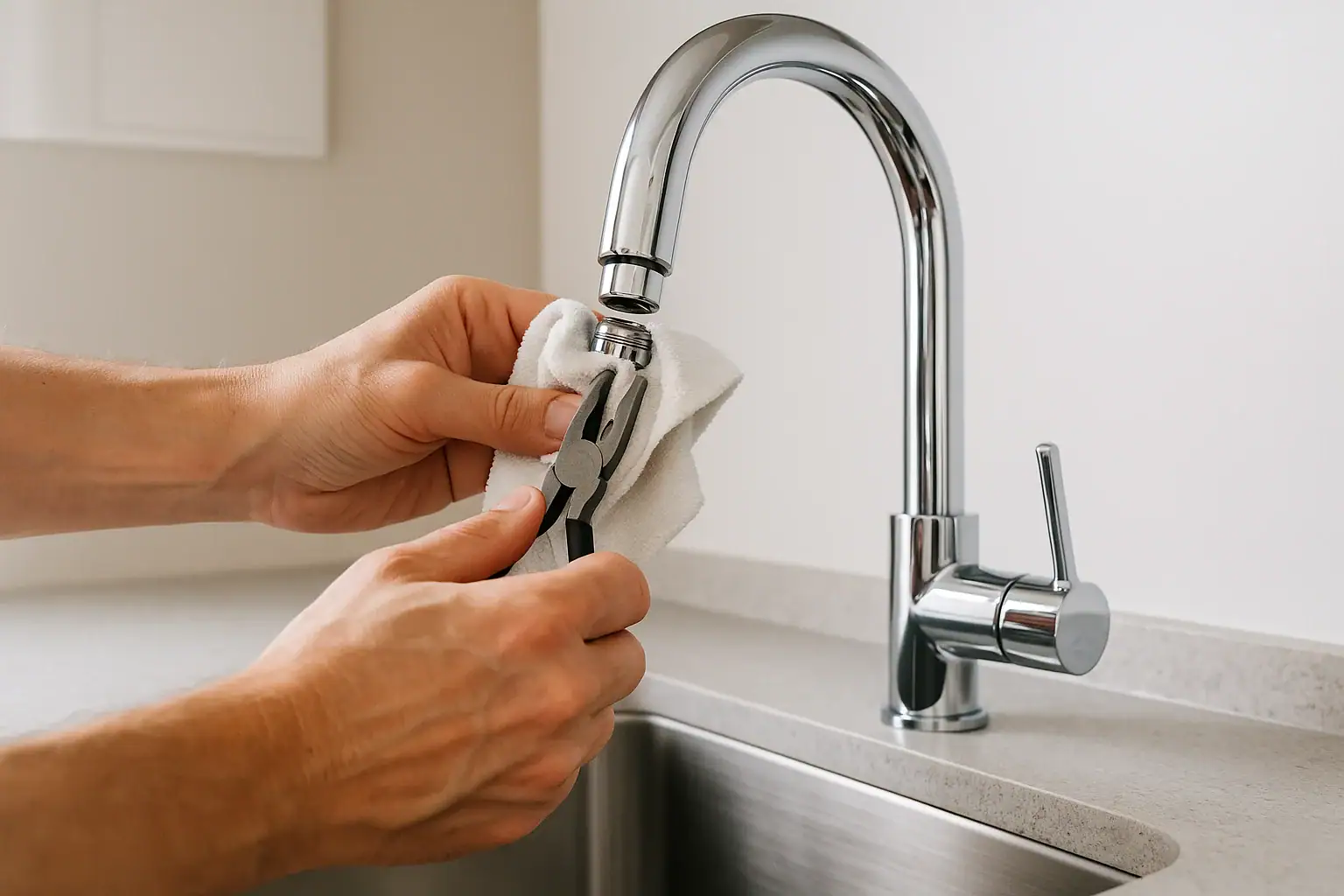
Step 3: Clean or replace the faucet aerator
A clogged aerator is one of the simplest and most common causes of low flow at a single faucet. Mineral deposits and debris can block the small screen at the spout.
- Remove the aerator:
- Look at the tip of the faucet spout for a small screwed-on cap.
- Wrap it with a cloth to protect the finish and unscrew by hand or with adjustable pliers.
- Inspect the parts:
- Note the order of screens, washers, and inserts so you can reassemble correctly.
- Look for sand, rust flakes, or white mineral buildup.
- Clean the aerator:
- Rinse under running water and gently brush with an old toothbrush.
- For mineral buildup, soak the metal parts in plain white vinegar for 15–30 minutes, then scrub.
- Flush the faucet without the aerator:
- Cover the opening loosely with your hand to limit splashing.
- Turn on hot water for 10–20 seconds to flush out debris.
- Reassemble and test:
- Reinstall the aerator and turn on hot water.
- If pressure is now normal, the aerator was the issue.
If the aerator is damaged or badly corroded, replacing it is usually inexpensive and straightforward.
Step 4: Check flexible supply lines for kinks or blockages
Modern faucets often use flexible braided hoses from the shutoff valves to the faucet. A kinked or partially blocked hot supply line can reduce pressure at that faucet only.
- Inspect under the sink:
- Follow the hot water line from the shutoff valve to the faucet.
- Look for sharp bends, kinks, or obvious damage.
- Straighten minor bends:
- Gently reposition the hose to remove tight bends.
- Avoid pulling hard on connections at the valve or faucet.
- If the line looks deteriorated or crushed:
- Replacement is safer than trying to repair a damaged hose.
- If you are not comfortable shutting off the main water and working with supply lines, contact a plumber.
If the hose appears fine and the aerator is clean, the restriction may be inside the faucet body or cartridge.
Step 5: Clean or replace the faucet cartridge
Single-handle faucets and many two-handle faucets use cartridges or ceramic discs that can clog with mineral deposits or debris, especially on the hot side. This can cause low hot water pressure at that faucet only.
Because designs vary by manufacturer and model, always refer to the faucet’s installation or service manual for exact steps. If you don’t have it, many manufacturers provide manuals on their official websites.
Typical cartridge cleaning steps
- Shut off water to the faucet:
- Turn off both hot and cold shutoff valves under the sink.
- Open the faucet to relieve pressure.
- Disassemble the handle:
- Remove decorative caps and handle screws as required.
- Lift off the handle to expose the cartridge or valve stem.
- Remove the cartridge:
- Take out any retaining clip or nut.
- Pull the cartridge straight up, following the manufacturer’s instructions.
- Inspect and clean:
- Look for debris or scale around inlet ports, especially on the hot side.
- Rinse gently and wipe with a soft cloth. Avoid scraping sealing surfaces.
- Flush the valve body:
- With the cartridge removed, briefly crack open the hot shutoff valve to flush the line into a container or towel-lined basin.
- Immediately close the valve after a few seconds to avoid splashing.
- Reassemble and test:
- Reinstall the cartridge in the same orientation, secure it, and reattach the handle.
- Turn on the shutoff valves and test hot water pressure.
If cleaning does not restore flow, the cartridge itself may be worn or internally blocked. In that case, replacing it with the correct part for your faucet model is often the next step.
Step 6: Consider sediment or corrosion in the branch line
In older plumbing systems, especially with galvanized steel pipes, internal corrosion and mineral buildup can narrow the pipe and reduce flow to a specific fixture. Signs that this might be the cause include:
- The affected faucet is on a long or older branch line from the main hot water pipe.
- Pressure at that faucet has slowly worsened over months or years.
- Other nearby fixtures on different branches have normal pressure.
Diagnosing and correcting internal pipe corrosion usually requires a licensed plumber. Solutions may include replacing sections of pipe or re-routing lines rather than trying to clean them from the inside.
When low hot water pressure may involve the water heater
Even if only one faucet seems affected, there are a few situations where the water heater or a central mixing valve might still be involved:
- A thermostatic mixing valve on the hot outlet of the heater is malfunctioning.
- There is heavy sediment buildup at the heater outlet or in a hot water recirculation line.
These issues typically affect more than one fixture, but symptoms can be uneven. If you suspect a heater-related problem, review the manufacturer’s instructions for maintenance and safety. For general hot water system safety guidance, the U.S. Consumer Product Safety Commission home heating and hot water safety information offers useful background on safe water temperatures and scald prevention.
Water heater work can involve hot water, gas, or high-voltage electricity. If you are unsure, it is safer to contact a qualified professional.
When to call a plumber
After you have checked valves, cleaned the aerator, inspected supply lines, and addressed the cartridge, it is reasonable to call a plumber if:
- Hot water pressure at the faucet is still much lower than cold.
- You see signs of corrosion or leaks on pipes or shutoff valves.
- The shutoff valves will not turn or are seized.
- You are not comfortable disassembling the faucet or working around water and potential electrical or gas connections.
A plumber can measure pressure, isolate the affected section of piping, and determine whether the fix is as simple as a new valve or as involved as replacing a section of pipe. For broader planning around kitchen water systems and fixtures, you can also review the Signature Home Guide Water & Kitchen hub for related guidance.
Key takeaways
- If only one faucet has low hot water pressure, the cause is usually local to that faucet.
- Start with simple checks: fully open shutoff valves and a clean aerator.
- Inspect supply lines for kinks and consider cleaning or replacing the faucet cartridge.
- Persistent issues may point to internal pipe corrosion or a valve problem that is best handled by a licensed plumber.
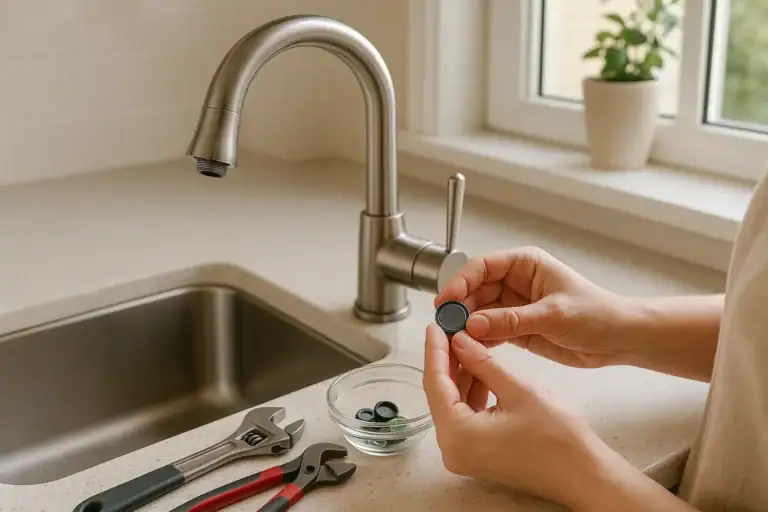 Black Debris From Faucet Aerator: What It Means and How to Fix It
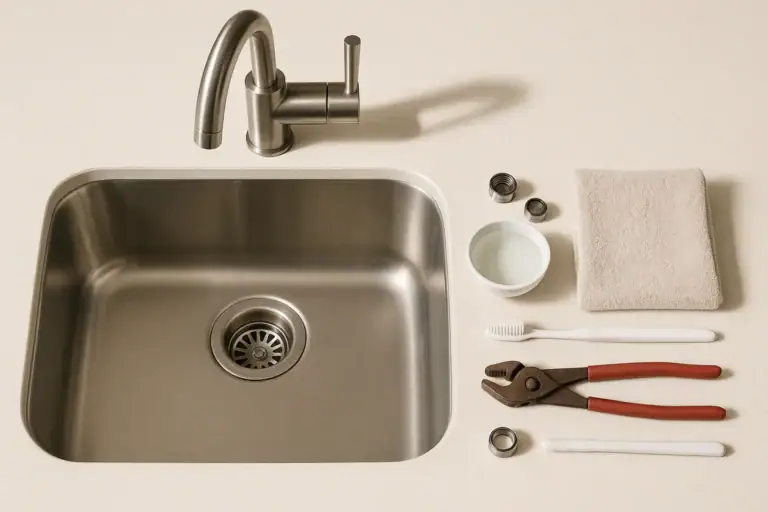 Kitchen Sink Aerator Cleaning for Low Water Flow: A Step-by-Step Guide
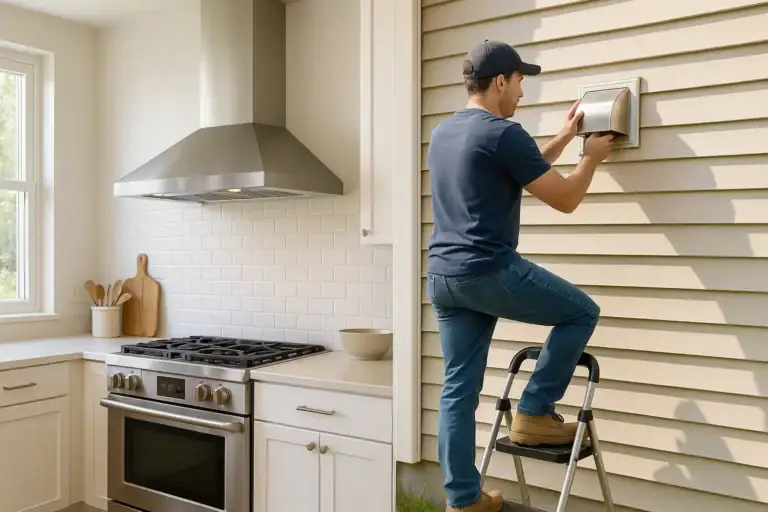 Range Hood Backdraft Damper Stuck: How to Fix It