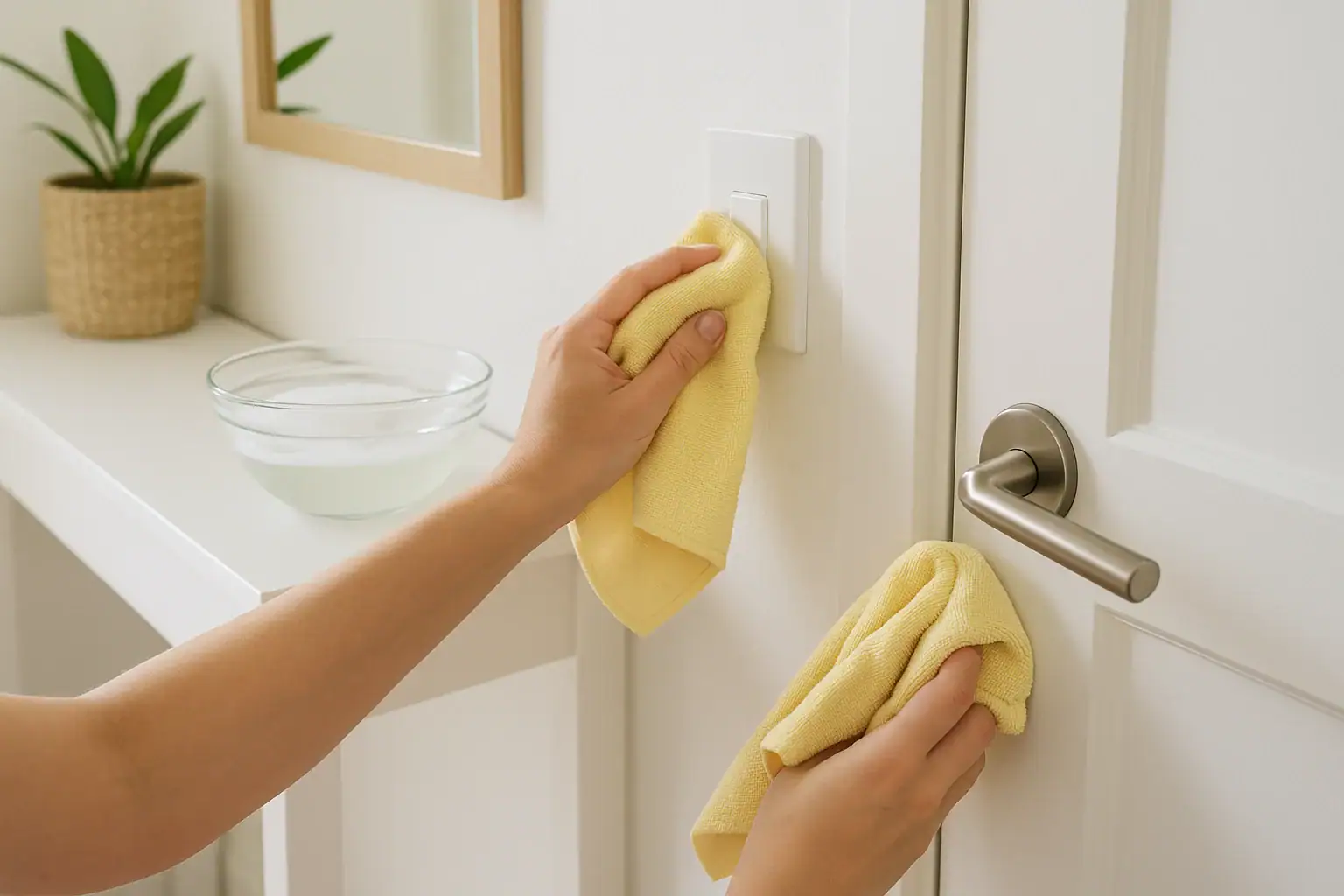
Light switches and door handles are some of the most-touched surfaces in any home, but they are also some of the most overlooked when it comes to regular cleaning. Because they are small and often made of delicate finishes or plastic, it is easy to either forget them or damage them with harsh products. With the right approach, you can safely remove dirt, fingerprints, and germs from these high-touch spots without discoloring, scratching, or loosening any parts. This guide walks you through step-by-step methods, what to use, what to avoid, and how often to clean, so your home stays cleaner and healthier while your hardware and switches stay in good condition.
Why Light Switches and Door Handles Need Special Care
Light switches and door handles collect oils from hands, dust from the air, and germs from daily use. Because they are touched frequently by everyone in the home, they can quietly spread grime and bacteria from room to room. At the same time, they are often made of materials that do not respond well to strong chemicals or abrasive tools.
Common risks when cleaning these surfaces include:
- Discoloration: Strong cleaners or bleach can fade or yellow plastic switch plates and dull metal finishes.
- Corrosion: Moisture and harsh chemicals can damage metal door hardware over time.
- Electrical concerns: Excess liquid near switches can seep behind the plate and reach electrical components.
- Loose hardware: Over-scrubbing can loosen screws and hardware, making handles wobbly or misaligned.
Cleaning with gentle products, light pressure, and minimal moisture helps you keep these areas sanitary while protecting their appearance and function.
Safety First: Preparing to Clean Switches and Handles
Before you begin, take a few simple safety steps, especially when working around anything electrical.
Turn Off Power for Deep Cleaning
For routine surface wiping, you can usually leave the power on as long as you avoid excess moisture. However, if you plan to remove switch plates or do a more detailed cleaning around the switch itself, it is safer to:
- Turn off the light switch.
- Switch off power to that circuit at your breaker panel.
- Use a non-contact voltage tester if you have one to confirm the power is off.
Never spray cleaner directly onto a light switch or into a wall opening. Always apply product to a cloth first.
Gather Gentle Cleaning Supplies
You do not need specialty products to clean light switches and door handles effectively. Gather the following basic supplies:
- Soft microfiber cloths or cotton cloths
- Cotton swabs or soft toothbrush for crevices
- Mild dish soap
- Warm water in a small bowl
- Optional: white vinegar for extra degreasing on non-delicate finishes
- Optional: a gentle, non-abrasive disinfecting wipe or spray
- Dry towel for buffing and drying
Avoid abrasive scrub pads, powdered cleansers, and anything described as heavy-duty or industrial strength for these small, delicate surfaces.
How to Clean Light Switches Without Damaging Them
Light switches are usually made of plastic or a similar material, and the switch mechanism sits close to electrical components. The key is to use very little moisture and gentle pressure.
Step 1: Dust and Dry Wipe
Start with a dry cloth to remove loose dust and debris. This prevents grit from scratching the surface when you wipe with a damp cloth.
- Use a clean, dry microfiber cloth.
- Wipe the switch plate, switch toggle or rocker, and surrounding wall area.
- Use a dry cotton swab to reach into tight corners around the switch.
Step 2: Make a Mild Cleaning Solution
Mix a gentle solution that will cut through oils without being harsh.
- Fill a small bowl with warm water.
- Add a drop or two of mild dish soap and stir to combine.
- For extra grease-cutting on non-delicate surfaces, you can add a small splash of white vinegar, but skip this if you are unsure how the finish will react.
Step 3: Dampen, Do Not Soak, Your Cloth
The most important rule is to keep moisture under control.
- Dip a corner of your cloth into the soapy water.
- Wring it out thoroughly until it is just slightly damp.
- There should be no dripping water at all.
Step 4: Gently Wipe the Switch and Plate
Now you can remove fingerprints, smudges, and grime.
- Wipe the face of the switch plate in small, gentle motions.
- Carefully wipe the switch toggle or rocker, keeping pressure light.
- Use a barely damp cotton swab for edges and corners if needed.
- Avoid pushing moisture into gaps around the switch.
Step 5: Disinfect the Surface (Optional but Helpful)
If you want to reduce germs, you can use a gentle disinfecting product, but apply it carefully.
- Choose a disinfecting wipe or spray that is safe for household surfaces.
- If using a spray, mist it onto a cloth, never directly on the switch.
- Wipe the switch and plate, following the product label for contact time if available.
Do not mix different cleaning products together. Stick with one cleaner at a time.
Step 6: Dry Thoroughly
Finish by drying the area to protect both the surface and the electrical components.
- Use a dry, soft cloth to buff the switch and plate.
- Make sure there is no moisture left around the edges or seams.
How to Clean Door Handles Without Damaging the Finish
Door handles and knobs come in many finishes, including painted, plated, and bare metal. Using harsh cleaners or scrubbing too hard can strip or dull the finish. A gentle, consistent routine keeps them clean and looking good.
Step 1: Identify the Finish if Possible
If you know the type of finish on your door hardware, you can better decide what to use.
- Painted or coated finishes: Need very gentle cleaners and soft cloths.
- Shiny metal finishes: Can show scratches easily, so avoid abrasive tools.
- Matte or brushed finishes: Can hold onto oils and fingerprints, but still need mild products.
If you are unsure, treat the handle as delicate and test any cleaner on a small, less visible area first.
Step 2: Wipe Away Dust and Loose Dirt
Just like with switches, begin with a dry wipe.
- Use a dry microfiber cloth to remove dust and loose debris.
- Pay attention to the base of the handle and any decorative grooves.
Step 3: Clean With Mild Soap and Water
A simple soap and water solution is usually enough for everyday grime.
- Mix warm water with a small amount of mild dish soap.
- Dampen a cloth in the solution and wring it out thoroughly.
- Wipe the handle, latch, and surrounding plate, working from top to bottom.
- Use a soft toothbrush or cotton swab for crevices, but apply light pressure.
Step 4: Rinse and Dry
Soap residue can attract dirt, so it helps to quickly rinse and dry.
- Dampen a second cloth with plain water and wring it out well.
- Wipe the handle to remove any soap film.
- Dry thoroughly with a soft towel to prevent water spots and streaks.
Step 5: Disinfect Gently When Needed
Door handles are high-touch surfaces, so you may want to disinfect them regularly, especially during cold and flu season.
- Use a disinfecting wipe or spray that is safe for household surfaces.
- If using spray, apply it to a cloth rather than directly to the handle.
- Wipe the handle and let it air dry so the product has time to work.
- Avoid using strong bleach solutions on delicate finishes, as they can discolor or corrode metal over time.
What to Avoid When Cleaning Switches and Handles
Certain products and habits can shorten the life of your hardware or create safety issues. Keeping these in mind will help you clean more confidently.
- Do not spray directly on switches: Always spray onto a cloth first to prevent liquid from getting inside.
- Avoid abrasive pads and powders: These can scratch plastic and metal and remove protective coatings.
- Skip strong bleach on delicate finishes: It can cause pitting, discoloration, and peeling over time.
- Do not soak hardware: Submerging knobs or handles in water can damage internal parts and trap moisture.
- Avoid mixing cleaners: Combining different products can create irritating fumes or reactions.
How Often to Clean and Disinfect
The right cleaning schedule depends on how busy your household is and whether anyone is ill, but a simple routine keeps things under control.
Suggested Routine
- Weekly: Wipe light switches and door handles with mild soap and water to remove oils and dirt.
- Every few days: In high-traffic areas like entry doors, kitchen, and bathroom, do a quick wipe with a damp cloth.
- During illness: Disinfect high-touch switches and handles daily, following product directions.
- Seasonally: Do a more detailed cleaning, including around the edges of switch plates and the bases of handles.
Room-by-Room Tips for Switches and Handles
Different rooms in your home may need slightly different approaches based on the type of dirt they collect.
Entryway and Exterior Doors
- These handles often collect outdoor dust and oils from hands.
- Wipe more frequently, especially during wet or dusty seasons.
- Dry thoroughly to prevent spotting and corrosion.
Kitchen Switches and Handles
- Expect a buildup of cooking oils and food splatters.
- Use mild soap and warm water to cut grease.
- Clean more often if switches are near the stove or food prep areas.
Bathroom Switches and Handles
- These areas see frequent moisture and humidity.
- Dry well after cleaning to avoid water spots and rust.
- Disinfect more regularly since they are used by multiple people.
Children’s Rooms and Play Areas
- Expect sticky fingerprints and smudges.
- Use gentle cleaners and avoid strong fumes.
- Consider wiping down switches and handles as part of weekly room tidying.
Simple Habits to Keep Switches and Handles Cleaner
Once you have done a good cleaning, a few small habits can help keep these surfaces cleaner between deep cleans.
- Keep a small cleaning caddy with a microfiber cloth and mild cleaner easily accessible.
- Add switches and handles to your regular dusting or bathroom and kitchen cleaning checklist.
- Teach family members to use clean hands when possible, especially before touching frequently used doors.
- Wipe visible smudges right away instead of waiting for a full cleaning day.
These small steps reduce buildup and make each cleaning session quicker and easier.
When to Repair or Replace Hardware
Sometimes cleaning reveals issues that need more than a wipe-down. Knowing when to repair or replace can improve both safety and appearance.
- Cracked or chipped switch plates: Replace them to avoid sharp edges and to keep dust out of the wall opening.
- Loose or wobbly handles: Tighten screws or consider replacing if the mechanism is worn.
- Peeling or flaking finishes: Very worn finishes may need replacement hardware rather than more cleaning.
- Discolored switches: If plastic has yellowed significantly, replacement can refresh the look of the room.
Basic replacements are often simple projects, but always turn off the power at the breaker before working on any electrical components.
Bringing It All Together
Cleaning light switches and door handles does not have to be complicated, and it should never involve harsh scrubbing or strong chemicals that can cause damage. By using mild soap, soft cloths, and very little moisture, you can safely remove everyday grime and reduce germs on these high-touch surfaces. A regular routine, paired with a few simple safety steps, protects both your family and your home’s finishes.
Consider adding switches and handles to your weekly cleaning checklist so they become part of your normal routine rather than an afterthought. With consistent care, they will stay clean, work smoothly, and look good for years to come.
If you are building a broader cleaning and organization plan for your home, you can explore more room-by-room tips and checklists to keep every surface tidy and well maintained.
 How to Clean Shower Door Tracks and Prevent Slime Buildup for Good
 How to Clean a Dryer Vent Safely at Home
 How to Clean a Washing Machine Drain Pump Filter