Freezers are one of the most useful tools in any kitchen, helping you stretch your grocery budget, reduce food waste, and save time on busy days. But when food comes out covered in icy crystals, dry patches, and off flavors, it can be frustrating and disappointing. That damage is freezer burn, and while it is not unsafe, it can ruin the taste and texture of your food. The good news is that freezer burn is almost always preventable with the right packaging and storage habits.
This guide explains what freezer burn is, why it happens, and how to stop it before it starts. You will learn which packaging methods work best, how to organize your freezer for maximum freshness, and how long different foods really last. With a few simple changes, you can keep frozen food tasting closer to fresh, save money, and feel more confident about what you serve at the table.
What Is Freezer Burn and Why Does It Happen?
Freezer burn is a form of dehydration that happens when frozen food is exposed to air. Water inside the food turns into ice crystals and slowly migrates to the surface, where it evaporates into the dry air of the freezer. This leaves behind dry, tough, and sometimes discolored spots.
Common signs of freezer burn include:
- White, gray, or light brown dry patches on meat or poultry
- Wrinkled, dry, or tough-looking areas on vegetables and fruit
- Large ice crystals inside packaging or on the surface of food
- Off or stale flavors after cooking, even if the food is not spoiled
Freezer-burned food is usually safe to eat if it has been stored at a consistent freezing temperature and within a reasonable time frame. However, the quality is reduced, and many people end up throwing it away. That is why prevention is so important.
Key Principles of Freezer Burn Prevention
Almost all freezer burn can be traced back to two main issues: exposure to air and long storage times. If you focus on limiting air contact and rotating food regularly, you will avoid most problems.
1. Limit Air Exposure
Air is the main enemy when it comes to freezer burn. The more air trapped around your food, the faster it will dry out. Effective packaging removes or reduces air and creates a tight barrier between the food and the freezer environment.
2. Control Moisture Loss
Some foods naturally lose moisture faster than others. Lean meats, baked goods, and cut fruits or vegetables are especially vulnerable. Proper wrapping, glazing, or using protective sauces can help lock in moisture.
3. Store at a Consistent Freezing Temperature
Frequent temperature swings cause ice crystals to melt and refreeze, which damages texture and encourages freezer burn. A steady, cold environment helps food stay stable and retain quality.
Best Packaging Methods to Prevent Freezer Burn
Choosing the right packaging is the single most effective step you can take. Below are common options, with tips on how to use each one to minimize freezer burn.
Heavy-Duty Freezer Bags
Freezer-grade zipper bags are a convenient option for many foods, especially meats, vegetables, fruit, and leftovers.
To use freezer bags effectively:
- Choose bags labeled for freezer use, which are thicker and more resistant to punctures.
- Press out as much air as possible before sealing. Start at the bottom and work your way up.
- For extra protection, double-bag items that will be stored for longer than two to three months.
- Lay bags flat to freeze so food forms a thin, even layer that is easier to stack.
Plastic Containers and Jars
Rigid containers are great for soups, stews, sauces, and chopped ingredients. They protect food from being crushed and help keep your freezer organized.
For best results:
- Use containers that are labeled as freezer-safe to reduce cracking and leaking.
- Leave a small amount of headspace for liquids to expand as they freeze, but not so much that a lot of air remains.
- Place a piece of parchment or plastic wrap directly on the surface of foods like sauces or purees to reduce air contact.
Wraps and Foil
Wrapping is especially useful for larger cuts of meat, baked goods, and items that need an extra barrier.
Effective wrapping layers often include:
- A first layer of plastic wrap or freezer paper pressed tightly against the food
- A second layer of heavy-duty aluminum foil for added protection
- Optional: placing the wrapped item inside a freezer bag for long-term storage
Make sure there are no gaps or loose areas where air can circulate.
Vacuum-Sealing Techniques (With or Without a Machine)
Removing most of the air around food gives excellent protection against freezer burn. While a countertop vacuum sealer is convenient, you can still mimic the effect without one.
If you do not have a machine, try the water displacement method:
- Place food in a freezer bag and seal almost all the way, leaving a small opening.
- Slowly lower the bag into a bowl or pot of cold water, keeping the opening above the waterline.
- The water pressure will push air out through the opening.
- Once most of the air is out, seal the bag completely.
This simple method significantly reduces trapped air and helps protect food quality.
Smart Storage Habits for a Freezer-Burn-Free Kitchen
Even the best packaging cannot fully prevent freezer burn if your storage habits work against you. A few small changes in how you load and use your freezer can make a big difference.
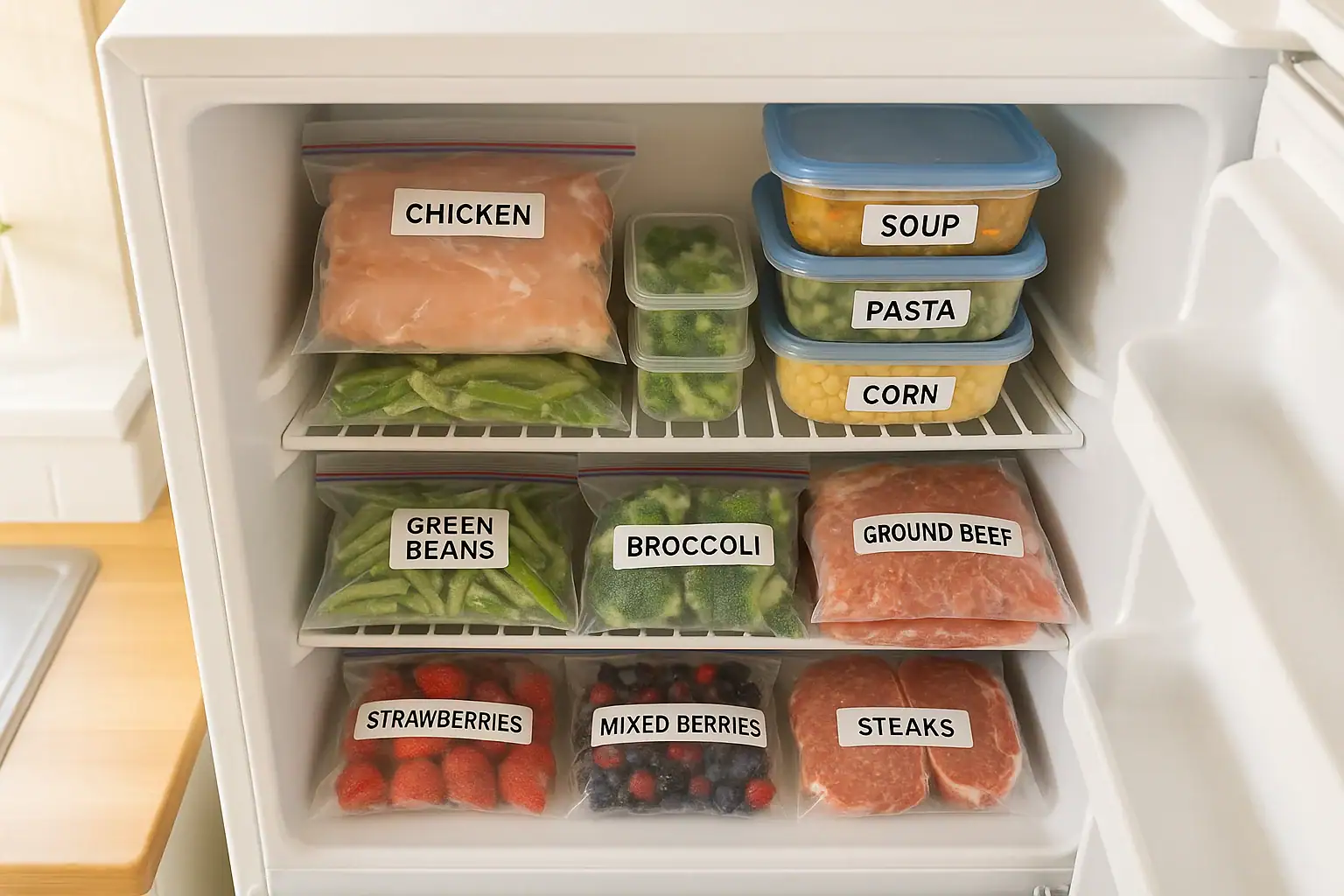
Label Everything Clearly
Labeling helps you use food while it is still at its best and prevents forgotten items from lingering too long.
On each package, write:
- What the food is (for example, “chicken thighs,” “beef stew,” “strawberries”)
- The date it was frozen
- Optional: a “use by” date based on recommended storage times
Use a permanent marker so labels stay readable, even when cold and slightly damp.
Use the First-In, First-Out Method
To keep food from sitting too long, arrange your freezer so older items are used first.
- Place newly frozen items toward the back or bottom.
- Move older items toward the front where they are easier to see and grab.
- Group similar foods together, such as meats on one shelf and vegetables on another.
This simple system helps you rotate food naturally and avoid surprise discoveries of badly freezer-burned items.
Avoid Overstuffing or Leaving Too Much Empty Space
A well-packed freezer holds cold better, but there should still be enough space for air to circulate.
- Do not pack items so tightly that cold air cannot move around them.
- Avoid leaving the freezer almost empty for long periods, which can cause more temperature fluctuations.
- Use bins or baskets to keep items organized without blocking vents.
Limit How Often and How Long You Open the Door
Every time the freezer door opens, warm air enters and can cause partial thawing at the surface of foods. When that moisture refreezes, texture suffers and freezer burn can accelerate.
To reduce this effect:
- Plan ahead and grab everything you need in one trip when possible.
- Keep commonly used items in easy-to-reach spots.
- Make a quick inventory list on the outside of the freezer so you do not stand with the door open trying to remember what is inside.
Freezer Temperature and Placement Tips
Temperature control is a key part of keeping frozen food in good condition. A stable, cold environment slows down the processes that lead to freezer burn.
Set the Right Temperature
For best quality and food safety, set your freezer to 0 degrees Fahrenheit or lower. If your appliance does not show exact numbers, consider using a simple freezer thermometer so you can monitor the temperature.
Keep the Freezer in a Stable Environment
Where your freezer sits in your home can affect its performance.
- Avoid placing it next to heat sources such as ovens or direct sunlight.
- Allow space around the appliance for air circulation so it can cool properly.
- Check door seals occasionally to ensure they are clean and closing tightly.
Stable appliance performance supports stable food quality.
Food-Specific Tips to Prevent Freezer Burn
Different types of food benefit from slightly different preparation and packaging strategies. Tailoring your approach helps you get the best results from your freezer.
Meat and Poultry
Meat and poultry are often the most expensive items in the freezer, so protecting them is a priority.
Helpful habits include:
- Patting meat dry before wrapping to reduce surface ice buildup.
- Wrapping tightly in plastic wrap or freezer paper, then overwrapping with foil or placing in a freezer bag.
- Freezing in meal-size portions so you do not repeatedly thaw and refreeze large packages.
- Using lean cuts within a few months, since they dry out faster.
Fish and Seafood
Fish and seafood are delicate and can dry out quickly in the freezer.
To help protect them:
- Rinse and pat dry, then wrap tightly in plastic wrap or freezer paper.
- Consider glazing fish by briefly dipping it in ice-cold water and freezing, repeating a few times to build a thin ice coating.
- Store in airtight bags or containers and use within a relatively short time frame for best texture.
Vegetables
Most vegetables freeze better if they are blanched first. Blanching means briefly boiling and then rapidly cooling them in ice water to stop the cooking process.
Steps for freezing vegetables:
- Wash and cut vegetables into even pieces.
- Blanch in boiling water for the recommended time for each type of vegetable.
- Cool quickly in ice water, then drain and pat dry.
- Spread in a single layer on a baking sheet to pre-freeze, then transfer to freezer bags or containers.
Pre-freezing on a tray helps prevent clumping and allows you to pour out just what you need later.
Fruit
Fruit is often high in water and can develop large ice crystals if not frozen carefully.
To reduce freezer burn on fruit:
- Wash, dry, and cut fruit into pieces or slices.
- Spread on a baking sheet to pre-freeze before packaging.
- For some fruits, tossing lightly with a bit of sugar or a simple syrup before freezing can help protect texture.
- Use airtight bags, pressing out as much air as possible.
Bread and Baked Goods
Bread, muffins, and other baked items can become dry and crumbly if not well wrapped.
Better results come from:
- Allowing baked goods to cool completely before freezing to avoid condensation.
- Wrapping tightly in plastic wrap, then placing in a freezer bag.
- Freezing individual slices or portions so you only thaw what you need.
Leftovers and Prepared Meals
Freezing leftovers and homemade meals is a great way to save time and money, but they can be prone to freezer burn if not handled properly.
Helpful tips include:
- Cooling foods quickly in shallow containers before freezing.
- Covering the surface of saucy dishes with plastic wrap before sealing the lid.
- Dividing large batches into smaller portions for faster freezing and easier reheating.
How Long Can Foods Stay in the Freezer Before Quality Drops?
Freezing keeps food safe almost indefinitely at a consistent 0 degrees Fahrenheit, but quality slowly declines over time. Using food within recommended time frames helps you avoid freezer burn and off flavors.
General quality guidelines for home freezers:
- Raw poultry pieces: about 9 months
- Whole raw poultry: up to 12 months
- Raw beef or pork roasts and steaks: 6 to 12 months
- Ground meat: about 3 to 4 months
- Fish and seafood: about 3 to 6 months
- Cooked leftovers and casseroles: about 2 to 3 months
- Bread and baked goods: about 2 to 3 months
- Most vegetables and fruits: about 8 to 12 months when well packaged
These ranges focus on quality, not safety. Labeling and rotating items help you stay within these time frames so you enjoy better flavor and texture.
Can You Save Food That Already Has Freezer Burn?
If you discover freezer burn, you may still be able to use the food, especially if the damage is limited.
Consider these options:
- Trim off heavily discolored or dry areas from meat before cooking.
- Use freezer-burned items in soups, stews, or slow-cooked dishes where added liquid and seasonings can help mask minor texture changes.
- Turn freezer-burned fruit into smoothies, sauces, or baked goods where texture matters less.
If the smell is off, the color is very unusual, or you are unsure how long the food has been frozen, it is safer to discard it. Going forward, adjust your packaging and storage habits to prevent the problem from repeating.
Putting It All Together: A Simple Freezer Routine
Small, consistent habits make the biggest difference in preventing freezer burn. Here is a straightforward routine you can follow in your kitchen:
- Prep food properly: Cool cooked foods, pat meats dry, and blanch vegetables when needed.
- Package tightly: Use freezer-safe bags or containers, remove as much air as possible, and double-wrap items for longer storage.
- Label clearly: Note the contents and date on every package.
- Freeze quickly: Spread items out at first so cold air can circulate, then reorganize once solid.
- Organize and rotate: Group similar foods, keep older items in front, and use the first-in, first-out method.
- Maintain temperature: Keep the freezer at 0 degrees Fahrenheit or lower and avoid frequent, long door openings.
With these steps, you can turn your freezer into a reliable tool that supports your cooking, reduces waste, and protects your grocery budget. Thoughtful packaging and storage habits are the key to keeping freezer burn under control and enjoying better-tasting meals from your own kitchen.
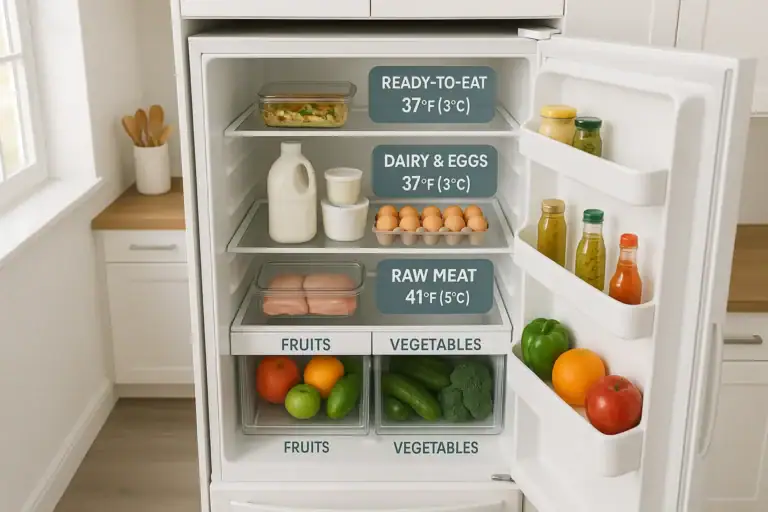 Refrigerator Temperature Zones: A Food Safety Guide for Every Shelf
 Kitchen Trash Can Odors: Liner, Lid, and Cleaning Fixes That Actually Work
 Food Storage Container Organization and Stain Removal Made Simple