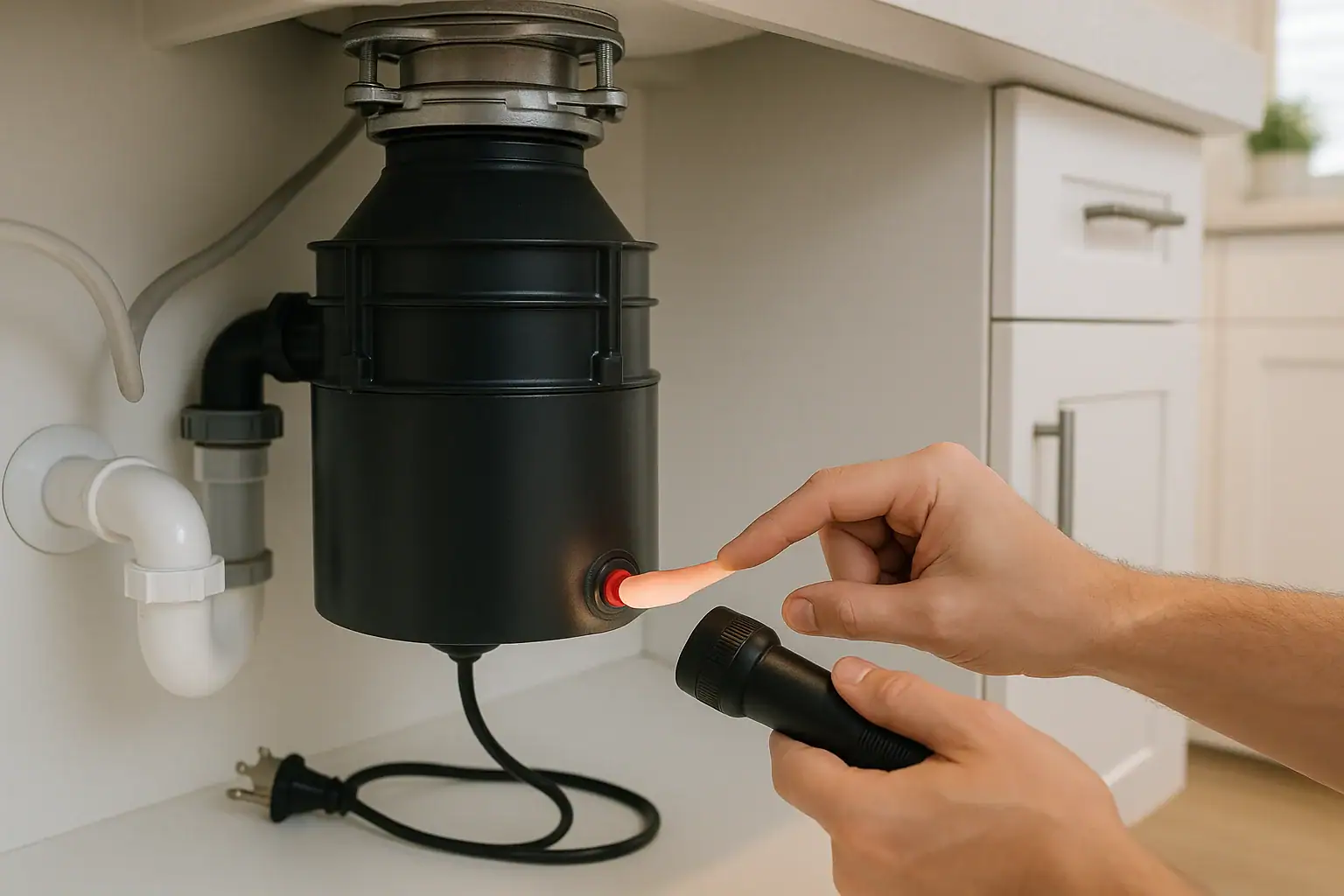
If your garbage disposal is humming but not spinning, it is telling you something is wrong. That humming sound usually means the motor is getting power, but the grinding plate is not turning. The most common causes are a jammed impeller, an overheated motor that needs to be reset, or an internal mechanical failure. With a few careful steps, you can often fix the problem yourself and avoid a service call. This guide walks you through safe reset steps, how to clear a jam, and when it is time to stop and call a professional.
Safety First: Before You Touch the Garbage Disposal
Any time you work on a garbage disposal, safety comes first. The unit has sharp metal parts and a powerful motor. Even when it is off, you should treat it as if it could start at any moment.
Essential safety rules
- Never put your hand into the disposal while it is connected to power.
- Turn off the wall switch that controls the disposal before doing anything.
- Unplug the disposal from the outlet under the sink, if it has a plug.
- If it is hardwired, switch off the breaker in your electrical panel.
- Use tools such as tongs, pliers, or a wooden spoon to reach inside, not your fingers.
- Keep children and pets away from the area while you work.
Once you are sure the power is off and the unit cannot start unexpectedly, you can move on to troubleshooting.
Why a Garbage Disposal Hums but Does Not Spin
Understanding what causes the humming sound helps you choose the right fix and avoid damaging the unit further.
Common causes of a humming disposal
- Jammed impeller or grinding plate: A hard object, such as a utensil, bone, or fruit pit, can wedge between the grinding parts so the motor cannot turn.
- Overheated motor: If the disposal has been run too long or under heavy load, the internal overload switch can trip and the unit may hum or stop completely.
- Foreign objects: Non-food items like bottle caps, glass, or plastic can block movement.
- Worn or seized motor: Over time, internal motor parts can fail, causing a humming noise without rotation.
- Electrical issues: Loose connections or a weak circuit can cause the motor to receive power but not enough to start properly.
In many cases, a jam or tripped reset button is the problem, and you can safely handle those at home with basic tools.
Step 1: Confirm Power and Switch Off Safely
Before you assume the disposal is broken, make sure it is getting power, then shut that power off so you can work safely.
Check that the unit has power
- Flip the wall switch that controls the disposal to the ON position briefly.
- If you hear a steady humming sound but no grinding, the motor is powered but not spinning.
- If you hear nothing at all, you may have a tripped breaker, a tripped reset button, or a loose connection.
Turn the power off completely
- Turn the wall switch to OFF.
- Look under the sink. If the disposal has a cord, unplug it from the outlet.
- If it is hardwired, go to your electrical panel and switch off the breaker labeled for the kitchen or disposal.
- Try the wall switch again to confirm the unit stays silent.
With the power fully off, you can safely inspect and reset the disposal.
Step 2: Use the Reset Button on the Bottom
Most modern disposals have a built-in overload protection switch. When the motor overheats or is overloaded, this switch trips and shuts the unit down. Resetting it is often the quickest fix.
How to find and use the reset button
- Look at the bottom of the disposal unit under the sink.
- Find a small round button, usually red or black, in the center or near the edge of the bottom plate.
- With power still off, press the button firmly. You may feel or hear a click.
- If the button will not stay in or pops back out immediately, the motor may still be overheated or there may be a jam.
Test after resetting
- Restore power by plugging the unit back in or turning the breaker on.
- Run a small stream of cold water into the sink.
- Flip the wall switch to ON for a second or two.
- If the disposal now spins and grinds normally, let it run for 15–20 seconds with water, then turn it off.
- If it still hums but does not spin, turn it off immediately and move on to clearing a jam.
Step 3: Clear a Jam from Inside the Disposal
A jammed grinding plate is one of the most common reasons a garbage disposal hums but will not spin. You can often free the jam with simple tools.
Tools you may need
- Long-handled tongs or needle-nose pliers
- A sturdy wooden spoon or dowel
- Flashlight
- Bucket or towels (in case of drips)
Remove visible objects from the sink opening
- Confirm the disposal is unplugged or the breaker is off.
- Use a flashlight to look down into the drain opening.
- Look for foreign objects such as utensils, bones, fruit pits, glass, or plastic pieces.
- Use tongs or pliers to gently pull out any debris you can see.
- Do not reach in with your fingers, even with the power off.
Try to move the grinding plate from above
- Insert the end of a wooden spoon or a similar tool into the drain opening.
- Press the spoon handle against one of the impeller lugs (the small metal pieces on the plate).
- Gently try to rotate the plate back and forth. You may feel resistance at first.
- Work it slowly until it moves more freely. Do not use excessive force that could bend parts.
If you cannot move the plate from above, use the manual turning method from below.
Step 4: Manually Turn the Disposal from Below
Most disposals have a manual turning socket on the bottom to help free jams. This allows you to rotate the motor shaft and grinding plate without powering the unit on.
What you need
- A 1/4-inch hex (Allen) wrench, or the wrench that came with the unit
- Flashlight
How to manually free the jam
- Make sure the disposal is still unplugged or the breaker is off.
- Look at the center of the bottom of the disposal for a small hex-shaped hole.
- Insert the Allen wrench into this hole.
- Turn the wrench back and forth several times. At first it may be stiff or stuck.
- Continue gently working the wrench until it turns more smoothly in both directions.
- Once it spins freely, remove the wrench.
Reset and test again
- Press the reset button on the bottom of the disposal again.
- Restore power by plugging in the cord or turning the breaker on.
- Run a steady stream of cold water into the sink.
- Flip the wall switch to ON for a brief test.
- If the unit spins without humming, let it run for 20–30 seconds with water to clear any remaining debris.
- If it still hums and does not spin, turn it off right away to avoid burning out the motor.
Step 5: Check for Ongoing Mechanical or Electrical Problems
If your garbage disposal continues to hum after you have cleared jams and used the reset button, there may be a deeper issue.
Signs of a failing or damaged disposal
- The reset button trips repeatedly after short use.
- The unit hums loudly but the grinding plate will not turn, even when you try to move it manually.
- You notice a strong burning smell coming from the unit.
- Water leaks from the bottom or side of the disposal housing.
- The unit vibrates excessively or makes grinding noises even when empty.
These symptoms can indicate a seized motor, worn bearings, or internal damage that is not practical to repair at home.
When to call a professional
- You are not comfortable working with electrical connections or breakers.
- The disposal is hardwired and you suspect a wiring issue.
- The unit is older and has frequent jams or resets.
- There are leaks from the disposal body or mounting assembly.
- You have followed the safe reset and jam-clearing steps and the unit still just hums.
A licensed plumber or qualified appliance technician can test the motor, wiring, and seals, and recommend repair or replacement.
Preventing Future Jams and Humming Problems
Once your disposal is working again, a few simple habits can reduce the chance of it humming and seizing up in the future.
What not to put in a garbage disposal
Avoid sending these items down the disposal, as they can cause jams, clogs, or damage:
- Hard bones and large fruit pits
- Stringy or fibrous foods like celery, corn husks, and onion skins
- Grease, fat, and oil that can solidify in pipes
- Starchy foods such as large amounts of rice, pasta, or potato peels
- Non-food items like plastic, metal, glass, and twist ties
- Coffee grounds in large quantities, which can build up in drains
Good habits for a healthy disposal
- Always run a strong stream of cold water before, during, and after using the disposal.
- Feed food waste in small amounts instead of all at once.
- Let the disposal run for 15–30 seconds after the grinding noise stops to flush debris.
- Periodically grind a few ice cubes to help clean the grinding chamber.
- Rinse with a mild dish soap solution to reduce buildup and odors.
Frequently Asked Questions About a Humming Garbage Disposal
Is it safe to run a humming disposal?
No. If the disposal is humming but not spinning, turn it off immediately. Letting it hum can overheat and permanently damage the motor. Always shut off power before trying to fix the issue.
Can I reach into the disposal to clear a jam?
You should avoid putting your hand inside the disposal, even with the power off. Instead, use tongs, pliers, or a wooden tool to remove objects and move the grinding plate. This reduces the risk of injury if the unit were to start unexpectedly.
Why does my disposal keep tripping the reset button?
Frequent tripping can mean the motor is working too hard due to jams, overloading, or internal wear. It can also happen if you run the unit too long without enough water. If it keeps happening after you clear jams and adjust your habits, the motor may be failing.
How do I know if it is time to replace the disposal?
Consider replacement if the unit is more than several years old, has repeated jams and resets, leaks from the housing, or hums without spinning even after you have tried the manual turning and reset steps. A professional can confirm whether repair is worthwhile.
When to Stop DIY and Protect Your Home
It is tempting to keep trying different tricks when a garbage disposal hums but does not spin. However, forcing the grinding plate, repeatedly resetting the unit, or running it while jammed can lead to leaks, electrical issues, or a burned-out motor.
If you have followed the safe reset steps, cleared visible debris, manually turned the unit, and it still only hums, it is wise to stop and call a professional. This protects your plumbing, your electrical system, and your safety. With the right troubleshooting steps and safe habits, you can often restore your disposal and keep your kitchen sink running smoothly.
 Garbage Disposal Smell Causes and a Simple Cleaning Routine That Works
 Microwave Sparking Inside: Safe Checks and Next Steps
 Dishwasher Air Gap Leaking: How to Find and Fix the Cause