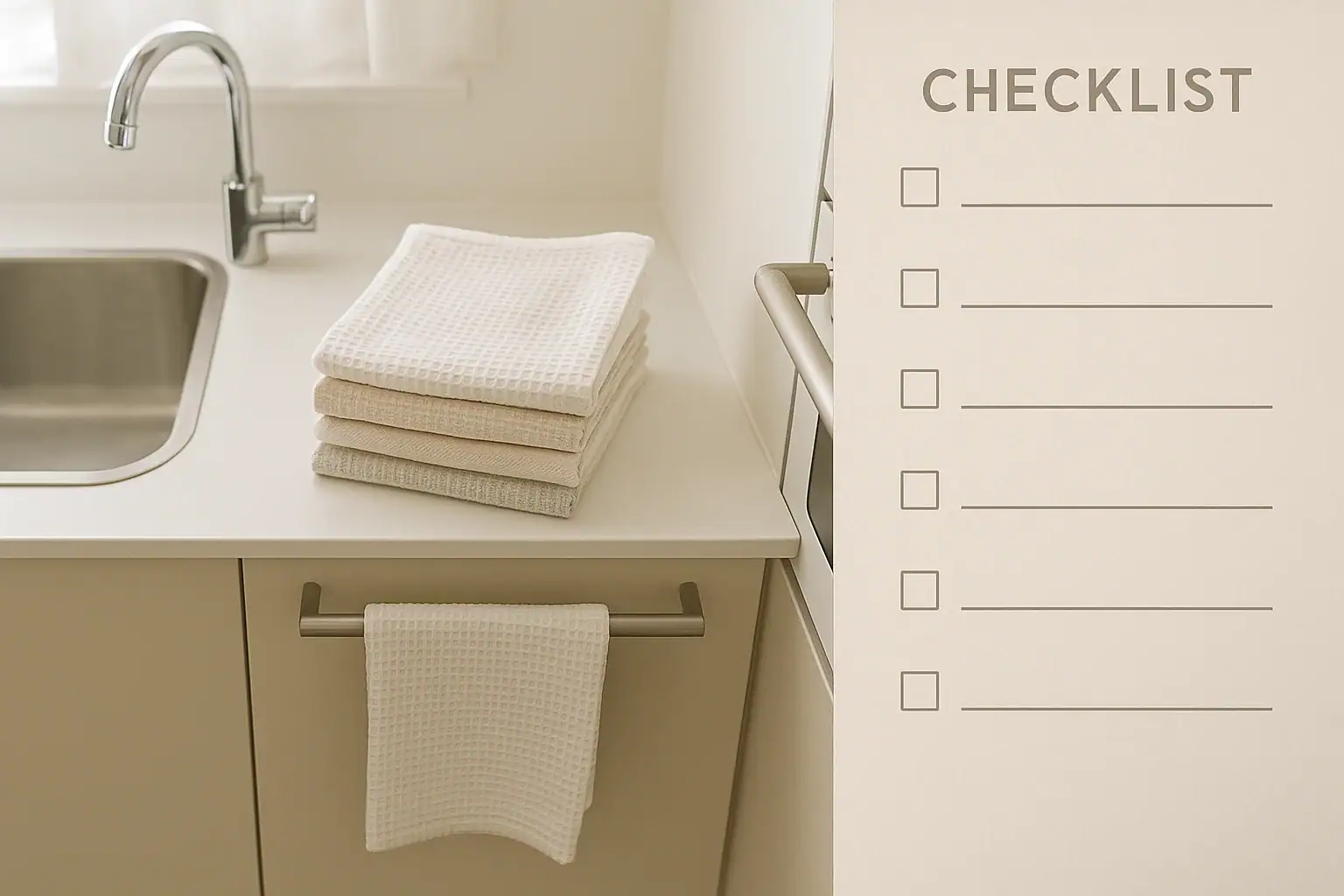
Kitchen towels are some of the hardest-working items in your home, but they can also be one of the most overlooked sources of germs. We reach for them constantly to dry hands, wipe counters, grab hot pans, and clean up spills. Without a clear routine for rotating and washing them, those handy towels can quickly become a breeding ground for bacteria and unpleasant odors. The good news is that a few simple habits can dramatically improve kitchen towel hygiene and help keep your cooking space safer.
This guide walks you through a practical, easy-to-follow checklist for choosing, using, rotating, and washing kitchen towels. You will learn how often to change them, how to separate towels by task, and how to wash and dry them so they stay fresh and effective. You do not need special equipment or complicated routines—just consistent habits and a bit of planning. Use this checklist to build a routine that fits your household and keeps your kitchen cleaner day after day.
Why Kitchen Towel Hygiene Matters
Kitchen towels touch many different surfaces in a short amount of time. One minute they may be drying clean dishes, and the next they are wiping raw meat juices from the counter. Without proper hygiene, this can spread germs around your kitchen and onto your hands, utensils, and food.
Common concerns include:
- Cross-contamination: Bacteria from raw meat, unwashed produce, or dirty hands can transfer to towels and then to other surfaces.
- Moisture buildup: Damp towels that never fully dry create an ideal environment for bacteria and mildew.
- Odors and stains: Persistent smells and discoloration can signal that towels are not being cleaned or dried thoroughly.
- Skin contact: Every time you dry your hands with a contaminated towel, you may be reintroducing germs you tried to wash away.
By following a simple rotation and washing checklist, you can limit the spread of germs, protect your family, and make your kitchen feel fresher and more pleasant to work in.
Step 1: Set Up a Simple Kitchen Towel System
Before building better habits, start with a clear system. Having enough towels and a way to organize them makes it much easier to rotate and wash them consistently.
Decide How Many Towels You Need
The right number depends on your household size and how often you cook. As a general guideline:
- 1–2 person household: Aim for 8–12 kitchen towels in rotation.
- 3–4 person household: Plan on 12–16 towels.
- Larger or very active kitchen: Consider 16+ towels.
This gives you enough clean towels to change them frequently without constantly running small laundry loads.
Assign Towels by Purpose
One of the most effective hygiene habits is to use different towels for different tasks. This reduces cross-contamination and keeps your system simple.
Use this basic separation:
- Hand-drying towels: For drying clean hands only.
- Dish-drying towels: For drying clean dishes, glassware, and cookware.
- Surface towels: For wiping counters, tables, and general spills.
- High-risk towels: For raw meat juices, pet messes, or other high-germ tasks (often best replaced with disposable options, but if you use towels, wash them promptly and separately).
To keep them straight, you can assign each purpose a distinct color or pattern, or store them in separate drawers or baskets. The key is to avoid using the same towel for both clean items and dirty messes.
Step 2: Daily Kitchen Towel Rotation Checklist
Consistent rotation is at the heart of good kitchen towel hygiene. Use this daily checklist to decide when to change towels and where to put used ones.
How Often to Change Kitchen Towels
While every household is different, these guidelines work well for most homes:
- Hand-drying towels: Change at least once a day, more often if multiple people are cooking or washing hands frequently.
- Dish-drying towels: Change daily or whenever they feel damp, smell off, or have visible food residue.
- Surface towels: Change daily, or immediately after wiping up raw meat juices, eggs, or other high-risk spills.
- High-risk towels: After a single use for raw meat or similar messes, place them directly in a designated hamper or bin for hot washing.
Daily Towel Rotation Checklist
Use this quick checklist each day, ideally after dinner or your last kitchen cleanup:
- Collect all used kitchen towels from counters, oven handles, and hooks.
- Check each towel for dampness, stains, or odors.
- Place used towels in a dedicated hamper or basket away from food areas.
- Hang a fresh hand-drying towel near the sink.
- Set out a clean dish-drying towel where you usually dry dishes.
- Place a clean surface towel where you most often wipe counters.
- Make sure no visibly dirty towel remains hanging in the kitchen.
Turning this into a nightly habit keeps towels from sitting damp overnight and makes the next day’s kitchen routine smoother.
Step 3: Washing Habits for Cleaner Kitchen Towels
Even with good rotation, your towels still need thorough washing. The way you wash and dry them has a big impact on how clean and long-lasting they are.
How Often to Wash Kitchen Towels
Most households benefit from washing kitchen towels every 2–3 days. If you cook frequently or have young children, pets, or anyone with a weakened immune system at home, consider washing them daily or every other day.
A simple approach:
- Run a towel load whenever your dedicated hamper is full or nearly full.
- Do not let damp towels sit more than a couple of days before washing, even if the hamper is not full.
Pre-Wash Checklist
Before starting the washer, do a quick check:
- Shake out crumbs and debris over a trash can.
- Pre-rinse towels with heavy food residue or strong odors.
- Pre-treat stubborn stains, such as tomato sauce, coffee, or grease.
- Separate heavily soiled or high-risk towels (used for raw meat or pet messes) so they can be washed on a hot cycle.
Water Temperature and Cycle Settings
For hygiene and durability, consider these guidelines:
- Hot water: Use for heavily soiled towels, high-risk messes, and loads that have been sitting damp. Hot water helps reduce bacteria.
- Warm water: Works well for routine loads that are not heavily soiled.
- Cold water: Can be used for lightly soiled towels if you are following up with a hot dryer cycle, but it may be less effective on oils and heavy grime.
- Normal or heavy-duty cycle: Choose a cycle that provides enough agitation to remove grease and food residue.
Detergent and Add-Ons
Use a quality laundry detergent in the recommended amount. Too much detergent can leave residue that traps odors, while too little may not clean effectively.
Optional add-ons:
- Oxygen-based booster: Helpful for whitening and stain removal.
- White vinegar in the rinse cycle: Can help reduce odors and detergent buildup.
- Avoid heavy fabric softeners: They can coat fibers, making towels less absorbent and trapping smells.
Step 4: Drying and Storing Kitchen Towels Safely
How you dry and store towels is just as important as how you wash them. Damp, wadded-up towels can quickly develop musty smells and harbor bacteria.
Drying Checklist
After washing, follow this drying routine:
- Dry towels on high heat in the dryer when possible, especially for high-risk loads.
- If line-drying, hang towels fully spread out in a well-ventilated area with good air circulation.
- Make sure towels are completely dry before folding or stacking them.
- Do not leave damp towels in the washer; move them to the dryer or line as soon as the cycle ends.
Proper Storage Habits
Once dry, store towels in a clean, dry place:
- Fold and stack them in a cabinet or drawer away from cleaning chemicals and trash.
- Keep separate stacks or bins for hand, dish, and surface towels to make daily rotation easier.
- Place the most recently washed towels at the back of the stack so older clean towels are used first.
In the kitchen, hang in-use towels where they can dry between uses, such as on a bar, hook, or oven handle. Avoid draping multiple damp towels on top of each other.
Step 5: Special Situations and Extra Precautions
Some situations call for extra attention to kitchen towel hygiene. Adjust your habits when the risk of contamination is higher.
After Handling Raw Meat, Poultry, or Seafood
Raw animal products can carry bacteria that you do not want spreading around your kitchen. Follow this checklist:
- Use paper towels or a dedicated high-risk towel for raw meat juices.
- Do not use your regular hand or dish towels to wipe up raw meat spills.
- Place any towel used on raw meat surfaces directly into the laundry hamper.
- Wash these towels on a hot cycle and dry on high heat.
When Someone in the Home Is Ill
If anyone in your household is sick, tighten your towel hygiene routine:
- Change hand-drying towels multiple times a day.
- Wash kitchen towels more frequently, using hot water cycles.
- Encourage everyone to wash hands thoroughly and avoid sharing towels.
Dealing With Persistent Odors or Stains
Sometimes towels develop lingering smells or stains even with regular washing. To refresh them:
- Run an occasional deep-clean cycle with hot water and an oxygen-based booster.
- Add white vinegar to the rinse cycle to help break down buildup.
- Avoid overloading the washer so water and detergent can circulate properly.
- Retire towels that remain stained, thin, or smelly after deep cleaning and repurpose them as rags for non-kitchen tasks.
Quick-Reference Kitchen Towel Hygiene Checklist
Use this summary checklist as a handy reference to keep your towel habits on track.
Daily
- Use separate towels for hands, dishes, and surfaces.
- Change hand and dish towels at least once a day.
- Replace any towel that is damp, dirty, or smells off.
- Remove all used towels from the kitchen at the end of the day.
- Hang fresh towels in their designated spots.
Every 2–3 Days (or More Often as Needed)
- Wash a full load of kitchen towels.
- Separate heavily soiled or high-risk towels for hot washing.
- Dry towels completely on high heat or on a well-ventilated line.
- Store clean towels in a dry, organized space.
As Needed
- Deep-clean towels that develop persistent odors or buildup.
- Retire worn, frayed, or stained towels from kitchen use.
- Review your towel supply and add more if you are constantly running out of clean ones.
Building a Sustainable Routine
Strong kitchen towel hygiene does not have to be complicated or time-consuming. By setting up a simple system, separating towels by purpose, rotating them daily, and washing them regularly at the right settings, you can greatly reduce the spread of germs in your kitchen.
Consider posting a small version of the checklist on the inside of a cabinet door or near your laundry area as a reminder. Over time, these steps will become second nature, and your kitchen will feel cleaner, fresher, and more organized. For more ideas on improving everyday habits around water and kitchen care, explore additional guides and resources at this kitchen and water hub.
 Kitchen Sponge Hygiene: When to Replace It and How to Sanitize It
 Wood vs Plastic Cutting Boards: Hygiene, Safety, and Care Compared
 Fridge Door Seal Test Checklist for Better Energy Use and Food Safety