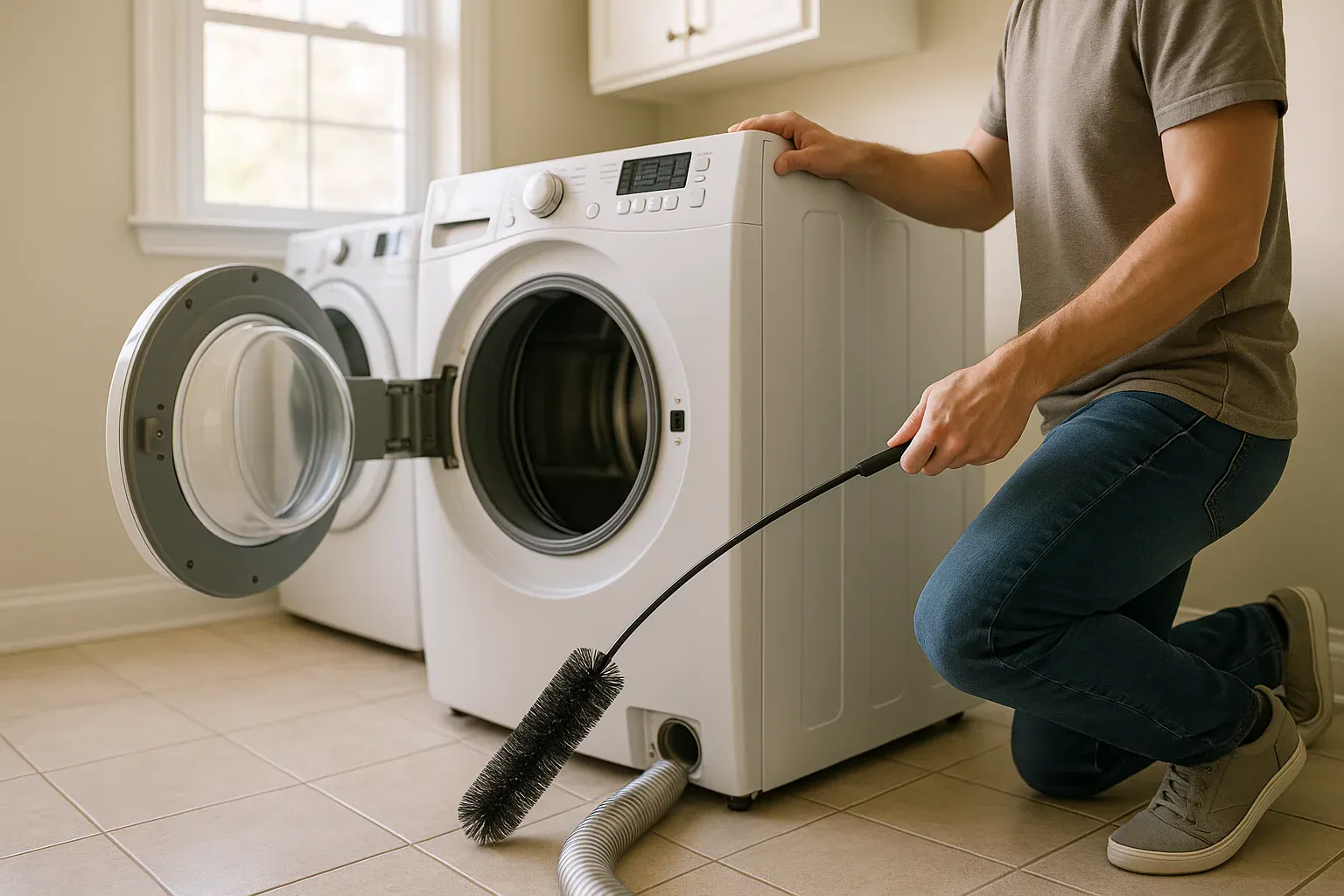
Why cleaning your dryer vent matters
To clean a dryer vent safely, unplug the dryer, gently remove lint from the lint screen and vent opening, then clear the vent duct with the right tools without forcing anything or damaging the duct. Reconnect everything securely and test the dryer on a short cycle.
Lint buildup can make your dryer run longer and may increase fire risk. The U.S. Fire Administration notes that clothes dryers are involved in thousands of home fires each year, with lint buildup as a common factor. You can see their guidance in the U.S. Fire Administration clothes dryer safety tips.
Most homes benefit from a basic vent cleaning at least once a year, and more often if you do large or frequent loads. The steps below focus on safe, homeowner-level maintenance. If anything looks damaged, inaccessible, or beyond your comfort level, it is safer to stop and call a qualified dryer vent professional.
Before you start: safety checks and tools
Safety first
- Turn off power: Unplug an electric dryer. For a gas dryer, unplug it and close the gas shutoff valve if you need to move the appliance. Do not disturb the gas connection more than necessary.
- Let the dryer cool: Wait until the dryer drum and vent are cool to the touch.
- Work in good lighting: Use a flashlight so you can see inside the vent and around the back of the dryer.
- Know your limits: If you see flexible plastic or thin foil duct, crushed or very long runs, or you are unsure how to move the dryer safely, consider hiring a pro instead of forcing a DIY solution.
Basic tools and supplies
- Vacuum with hose attachment (a crevice tool is helpful)
- Dryer vent cleaning brush kit or a soft, long-handled brush
- Screwdriver or nut driver (if your vent clamp uses screws)
- Flashlight
- Dust mask and safety glasses (recommended when working with lint and dust)
For more general cleaning and organizing ideas around the laundry area, you can browse the Cleaning & Organization hub at Signature Home Guide.
Step-by-step: how to clean a dryer vent safely
1. Clean the lint screen and housing
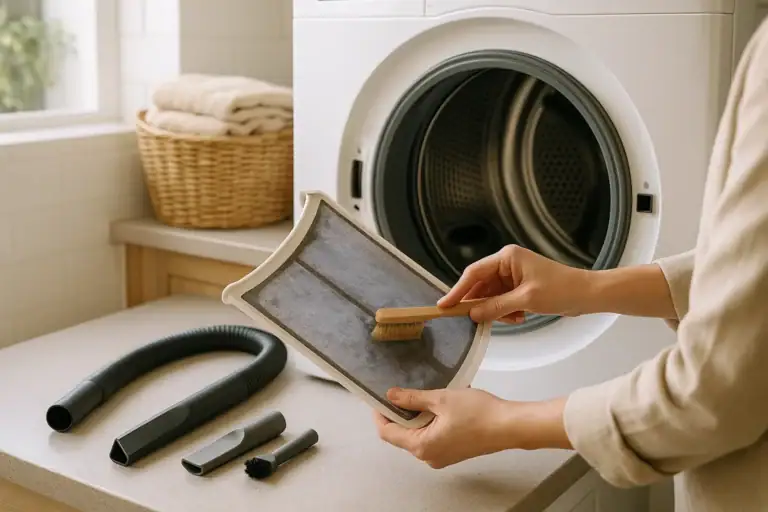
- Remove the lint screen from the dryer.
- Use your fingers or a soft brush to remove visible lint from the screen.
- Use the vacuum hose to gently clean inside the lint screen housing. Avoid pushing the hose so far in that it could get stuck.
- If the screen has a film from dryer sheets or fabric softener, wash it with warm water and mild dish soap, rinse thoroughly, and let it dry completely before reinstalling.
2. Pull the dryer away from the wall
- Carefully slide the dryer straight out from the wall, just far enough to reach the vent connection. Avoid pulling or kinking the vent duct.
- For gas dryers, move the appliance gently so you do not strain the gas line. If anything feels tight or looks stressed, stop and contact a professional.
3. Disconnect the vent duct
- Locate the duct where it connects to the back of the dryer.
- Loosen the clamp by hand or with a screwdriver/nut driver.
- Gently twist and pull the duct off the dryer outlet. Do not crush or tear the duct.
- If the duct is fragile plastic or thin foil, note that many safety sources, including the U.S. Consumer Product Safety Commission clothes dryer safety page, recommend rigid or semi-rigid metal ducts instead. Consider having a professional upgrade it.
4. Clean inside the dryer outlet and nearby duct
- Use the vacuum hose to gently remove lint from the dryer outlet on the back of the machine.
- Insert a vent brush or vacuum hose a short distance into the duct, working carefully to avoid puncturing or disconnecting it inside the wall.
- Pull the brush or hose back out slowly, removing lint as you go. Repeat a few times until you are no longer pulling out significant lint from this end.
5. Clean the vent from the exterior
- Go outside and locate the dryer vent hood on the exterior wall.
- Remove the vent cover if possible (some covers snap off; others have screws).
- Clear away visible lint from the hood, flap, and surrounding area by hand or with the vacuum.
- Feed your vent brush or a flexible cleaning rod into the vent from the outside, gently pushing it in and out to loosen lint. Avoid spinning aggressively if the duct feels delicate.
- Work in sections, pulling the brush out periodically to remove lint. Do not force the brush around sharp bends; if it catches, back it out.
If your vent run is long, has several turns, or exits through the roof, it may be difficult to clean thoroughly from both ends with homeowner tools. In those cases, a professional cleaning service is often the safer option.
6. Vacuum up loosened lint
- Return indoors and vacuum around the back of the dryer, the floor, and the area where the duct connects.
- Vacuum any lint that may have fallen out of the duct during cleaning.
- Check the exterior vent again and remove any remaining lint.
7. Reconnect and secure the vent
- Slide the duct back onto the dryer outlet, making sure it fits fully and straight.
- Tighten the clamp snugly so the duct is secure but not crushed.
- Ensure the duct has a smooth path with gentle bends, not sharp kinks or crushed sections.
- Carefully slide the dryer back toward the wall, checking that the duct does not get pinched.
8. Restore power and test
- Plug the dryer back in. For gas dryers, reopen the gas shutoff valve if you closed it.
- Run the dryer on an air-only or low-heat cycle for 5–10 minutes.
- Go outside and confirm that air is blowing strongly from the exterior vent and that the flap opens freely.
- Listen for unusual noises or vibrations that might indicate a loose connection.
How often to clean your dryer vent
How often you should clean a dryer vent safely depends on how you use your dryer:
- Typical household: At least once every 12 months.
- Large family or heavy use: Every 6 months, or more often if you notice signs of restriction.
- Short vent run with light use: You may be able to stretch to 18 months, but still check the exterior vent regularly.
Always clean the lint screen before or after every load. This quick habit helps reduce buildup in the vent itself and is one of the simplest maintenance steps you can take.
Signs your dryer vent needs attention
Schedule a cleaning or professional inspection if you notice:
- Clothes taking longer than usual to dry
- The dryer or laundry room feels unusually hot or humid
- A burning or musty smell when the dryer runs
- Visible lint around the dryer, behind it, or near the exterior vent
- The exterior vent flap does not open fully or is stuck
If you ever see scorch marks, melted duct material, or smell gas from a gas dryer, stop using the dryer and contact a qualified appliance or HVAC technician immediately. For general home fire safety guidance, you can review the National Fire Protection Association home heating and fire safety resources.
When to call a professional instead of DIY
DIY vent cleaning is not always the safest choice. Consider hiring a professional if:
- Your dryer vents through the roof or a long, hidden duct run
- You have rigid metal ductwork with several tight bends
- The duct is damaged, disconnected, or made of old plastic or thin foil
- You are not comfortable moving the dryer or working around a gas line
- After cleaning, you still have poor drying performance or overheating
A qualified technician can inspect the full vent path, check for code issues, and verify that the duct material and installation meet current safety recommendations. Pairing professional help with simple routines like regular lint screen cleaning and periodic visual checks can keep your dryer running more smoothly and help reduce risk over time.
Make dryer vent care part of your home routine
Cleaning a dryer vent safely is mostly about slowing down, unplugging the appliance, and working gently with the right tools. Once you have done it once, it becomes a manageable part of your yearly home maintenance list, alongside other cleaning tasks you might track from the Cleaning & Organization guides.
If anything during the process feels uncertain or unsafe, pause and get help from a qualified professional. A cautious approach is better than risking damage to your dryer, ductwork, or home.
 How to Clean a Dryer Lint Trap Housing Safely
 How to Clean Under Appliances Safely Without Moving Everything
 How to Clean a Washing Machine Drain Pump Filter