If you run a humidifier to make your home more comfortable, you might notice a light powder on nearby furniture and floors. This “white dust” can be frustrating and a little worrying, especially if you have kids, pets, or allergies. The good news is that white dust is common, usually not dangerous for healthy people, and very manageable once you understand what causes it. This guide explains why humidifiers create white dust, when it might be a concern, and practical steps to reduce or stop it. With a few simple changes to your water, cleaning routine, and settings, you can enjoy the benefits of added moisture without the extra mess.
What Is Humidifier White Dust?
Humidifier white dust is a fine, powdery residue that settles on surfaces when you use certain types of humidifiers, especially cool mist or ultrasonic models. It usually looks like pale gray or white powder on tables, electronics, and floors near the unit.
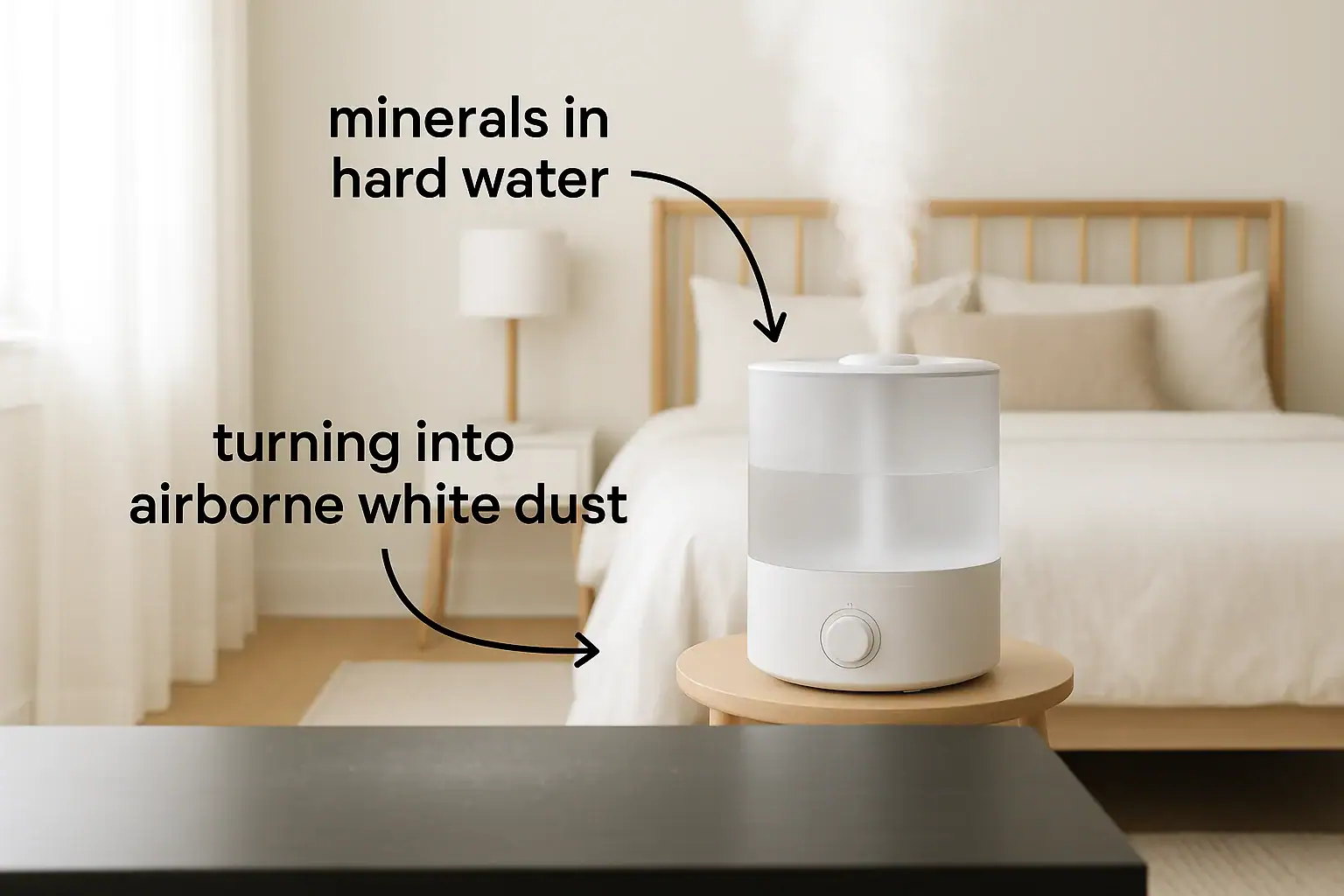
This dust is not actually coming from the humidifier itself. Instead, it is made of minerals that were originally dissolved in your tap water. When the humidifier turns water into mist, those minerals can be carried into the air and then fall out as dust.
Key points to know:
- White dust is mostly minerals such as calcium and magnesium.
- It is most common with ultrasonic and impeller (cool mist) humidifiers.
- It is more noticeable in homes with hard water.
Why Humidifiers Create White Dust
To understand white dust, it helps to look at how different humidifiers work and what is in your water.
The Role of Hard Water
Tap water contains dissolved minerals. The amount depends on where you live. Water with a high mineral content is called “hard water.” When hard water is turned into a fine mist, those minerals do not disappear. They stay in the droplets, dry out in the air, and settle as dust.
Common minerals in hard water include:
- Calcium
- Magnesium
- Trace amounts of other minerals
The harder your water, the more white dust you are likely to see around your humidifier.
How Ultrasonic and Cool Mist Humidifiers Work
Ultrasonic humidifiers use a vibrating metal diaphragm to create tiny water droplets that form a visible cool mist. Impeller or cool mist units use a rotating disk. In both cases, the humidifier sends whole water droplets into the air, minerals and all.
Because the water is not boiled or filtered inside the machine, anything dissolved in the water can leave the tank as part of the mist. As those droplets evaporate, minerals are left behind as white dust.
Why Warm Mist and Evaporative Units Produce Less Dust
Warm mist and evaporative humidifiers usually create less white dust because of how they release moisture:
- Warm mist models heat water to produce steam. Some minerals stay behind in the tank as scale instead of going into the air.
- Evaporative models draw water through a wick filter and blow air across it. The filter can trap some minerals before moisture enters the room.
These designs do not completely eliminate minerals, but they often reduce visible dust compared with ultrasonic units using hard tap water.
Is Humidifier White Dust Harmful?
For most healthy adults, small amounts of humidifier white dust are more of a housekeeping issue than a serious health risk. However, there are a few situations where you should be more cautious.
Potential Concerns
When white dust is present, you are breathing in some of those mineral particles along with the air. Possible issues include:
- Respiratory irritation for people with asthma, chronic lung conditions, or very sensitive airways
- Extra dust load on surfaces, which can mix with other allergens like pet dander and pollen
- Build-up inside electronics if the humidifier is placed too close to devices
Who Should Be Extra Careful
Consider being more cautious with white dust if you have:
- Infants or very young children in the home
- Older adults with lung or heart issues
- Anyone with asthma, chronic bronchitis, or other breathing problems
- A history of severe allergies or environmental sensitivities
In these cases, it is wise to limit airborne particles as much as possible by reducing white dust and keeping the humidifier very clean.
How to Prevent Humidifier White Dust
You do not have to stop using your humidifier to cut down on white dust. A few simple changes in water, maintenance, and settings can dramatically reduce the problem.
1. Switch to Distilled or Demineralized Water
The most effective way to prevent white dust is to remove minerals before they ever enter your humidifier.
- Distilled water has had most minerals removed through a purification process.
- Demineralized or purified water is treated to reduce mineral content.
Using distilled water can almost eliminate white dust, especially in ultrasonic units. While it costs more than tap water, many people find the trade-off worth it for less cleaning and fewer airborne particles.
2. Use a De-mineralization Cartridge or Filter
Some humidifiers are designed to work with de-mineralization cartridges, filters, or softening pads that sit in the tank. These products help trap minerals before they become mist.
Tips for using them effectively:
- Check your humidifier manual to see what type of cartridge or filter is recommended.
- Replace cartridges or filters as often as the manufacturer suggests, or sooner if you have very hard water.
- Rinse the tank when you change the cartridge to remove any loose mineral buildup.
3. Clean Your Humidifier Regularly
Regular cleaning does not remove minerals from the water, but it prevents buildup in the tank and keeps your humidifier working efficiently and safely.
A simple routine:
- Daily or after each use: Empty the tank, rinse with clean water, and let it air dry.
- Weekly: Do a deeper clean to remove scale and disinfect surfaces.
For weekly cleaning:
- Unplug the unit and disassemble removable parts.
- Pour out any remaining water.
- Fill the base or tank with a mix of equal parts white vinegar and water to cover mineral deposits.
- Let it sit for 20–30 minutes to loosen scale.
- Use a soft brush or cloth to gently scrub away buildup.
- Rinse thoroughly with clean water until the vinegar smell is gone.
- Let all parts air dry completely before reassembling.
Always follow the cleaning instructions in your humidifier manual, and avoid harsh chemicals that are not recommended for use inside the tank.
4. Adjust Humidity Levels
Running a humidifier at very high output can create more white dust than you actually need for comfort. Aim for a balanced indoor humidity level.
Guidelines for indoor humidity:
- Target a range of about 30–50 percent relative humidity.
- Use a simple hygrometer to monitor humidity in the room.
- Turn the humidifier down or off if humidity climbs above 50 percent.
Keeping humidity in this range not only limits white dust but also helps prevent mold growth, dust mite activity, and condensation on windows.
5. Improve Room Ventilation
Good airflow helps disperse moisture and reduce the amount of dust that settles in one spot.
- Run a ceiling fan or small oscillating fan on a low setting to move air gently.
- Open interior doors so moisture can spread more evenly through the home.
- Avoid pointing the mist directly at walls, windows, or electronics.
6. Consider a Different Type of Humidifier
If white dust is a constant problem even with distilled water or filters, you may want to switch to a style of humidifier that produces less mineral residue.
Options to consider:
- Evaporative models with wick filters that can trap minerals.
- Warm mist units that tend to leave more minerals behind in the tank as scale.
These options can reduce visible dust, though they still need regular cleaning to prevent scale and microbial growth.
Safe Placement to Minimize White Dust Problems
Where you place your humidifier matters. Even if you cannot eliminate white dust completely, smart placement can keep it away from sensitive items and reduce buildup in one area.
Best Spots for Your Humidifier
- On a stable, water-resistant surface a few feet off the floor
- Several feet away from beds, cribs, and seating areas
- Away from electronics, televisions, and computers
- In the center of the room when possible, not directly against a wall
Placing a washable mat or tray under the humidifier can protect surfaces from moisture and mineral spots.
Places to Avoid
- Directly on wooden furniture without protection
- Right next to upholstered furniture or curtains
- On top of audio equipment, game consoles, or other electronics
- Inside tight corners with very little airflow
How to Clean White Dust Around Your Home
Even with good prevention, you may still see some white dust. Cleaning it up safely and effectively is straightforward.
Cleaning Hard Surfaces
For tables, shelves, and floors:
- Use a microfiber cloth slightly dampened with water to wipe surfaces.
- For heavier buildup, mix a small amount of mild dish soap with warm water.
- Dry surfaces thoroughly to prevent moisture damage.
Cleaning Floors and Carpets
- Vacuum carpets and rugs regularly using a vacuum with a good filter.
- Damp-mop hard floors to pick up fine dust that sweeping might miss.
- Consider using a vacuum with a high-efficiency filter if you have allergies.
Protecting Electronics
White dust can settle inside vents and on screens.
- Keep the humidifier several feet away from electronics.
- Dust electronics gently with a dry microfiber cloth.
- Use compressed air carefully to clear vents if needed.
Balancing Comfort, Health, and Maintenance
A well-maintained humidifier can make indoor air feel more comfortable during dry seasons, easing dry skin, scratchy throats, and static electricity. The key is to balance those benefits with good air quality and manageable cleaning.
To keep that balance:
- Choose low-mineral water whenever possible.
- Clean your humidifier on a regular schedule.
- Monitor humidity levels and avoid over-humidifying.
- Place the unit thoughtfully to protect furniture and electronics.
With these habits, white dust becomes a minor issue instead of a constant frustration. You can enjoy comfortable humidity and cleaner surfaces while supporting healthier air for everyone in your home.
 What Happens When Furniture Blocks a Return Vent? Troubleshooting Guide
 Musty Smell When the AC Turns On: Troubleshooting and Fixes
 Does Sleeping With a Fan Cause a Dry Throat? Simple Airflow and Humidity Fixes