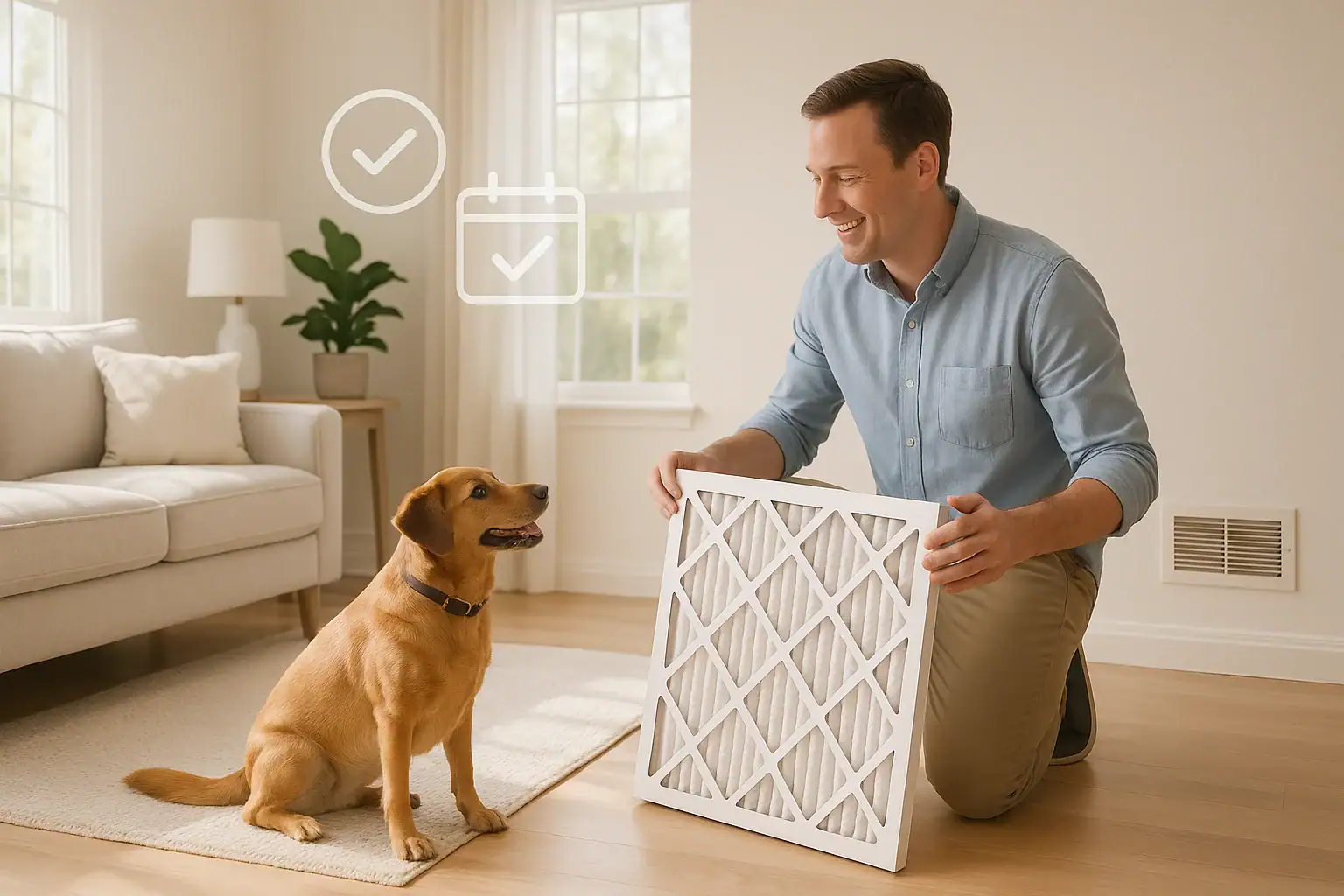
If you share your home with a dog, cat, or any furry friend, your heating and cooling system is working harder than you might think. Pet hair and dander drift into return vents, cling to air filters, and slowly choke airflow. Over time, this can lower indoor air quality, trigger allergies, and force your system to run longer to reach the same temperature. Knowing how often to change HVAC filters with pets is one of the simplest ways to protect your comfort, your health, and your energy bill.
This guide breaks down how frequently to change filters based on the number of pets, shedding levels, and health concerns in your home. You will also find an easy checklist you can follow every month, plus signs your filter needs attention, tips for choosing the right filter, and simple steps to extend the life of each replacement. Use this as a practical reference you can revisit each season to keep your air clean and your system running efficiently.
How Pets Affect Your HVAC Filters
Pets add warmth and personality to a home, but they also add extra particles to your indoor air. Those particles end up on your air filter. The more buildup, the faster your filter clogs and the sooner it needs to be replaced.
Common Pet-Related Air Contaminants
- Pet hair: Larger strands that can quickly blanket vents and filters.
- Pet dander: Tiny skin flakes that float through the air and trigger allergies.
- Tracked-in dirt and dust: Pets bring in outdoor particles on their paws and fur.
- Odor particles: Natural pet odors and litter box smells that can linger in ducts.
Because these particles constantly circulate, homes with pets tend to overload filters faster than pet-free homes. That is why pet owners should rarely follow a one-size-fits-all filter schedule printed on the package.
How Often to Change HVAC Filters With Pets
The right replacement schedule depends on how many pets you have, how much they shed, and whether anyone in your home has allergies or asthma. Use the timelines below as a starting point, then adjust based on what you see on your filter.
General Filter Change Guidelines
- No pets, no allergies: Every 60–90 days
- One pet, light shedding: Every 45–60 days
- One heavy-shedding pet: Every 30–45 days
- Two or more pets: Every 30 days
- Pets plus allergies or asthma: Every 20–30 days
If you are unsure where to start, aim for 30 days when you first begin paying attention to your filters. After a few months of checking, you can stretch or shorten that interval based on how quickly the filter loads up.
Seasonal Adjustments
Your HVAC system runs more often during temperature extremes, which means more air passes through the filter and more pet debris gets trapped.
- Peak heating and cooling seasons: Change filters more often, usually on the shorter end of your range.
- Mild spring and fall weather: You may be able to extend your schedule by a week or two if the system runs less.
- High pollen seasons: If you open windows or suffer from allergies, consider more frequent changes even if pets are not shedding heavily.
Monthly HVAC Filter Checklist for Pet Owners
A simple monthly routine can keep your system clean and efficient without much effort. Use this checklist to guide you.
1. Mark Your Calendar
- Choose a consistent day each month, such as the first Saturday.
- Set a reminder on your phone or write it on a wall calendar.
- Note when you last replaced the filter and what size you used.
2. Turn Off the System
- Switch your thermostat to “off” before removing the filter.
- This prevents the system from pulling in unfiltered air while the filter is out.
3. Locate and Remove the Filter
- Find the filter slot, usually near the return air grille or at the furnace or air handler.
- Note the arrow on the filter frame that shows airflow direction.
- Slide the filter out carefully to avoid shaking dust and pet hair loose.
4. Inspect the Filter
Use this quick test to decide whether to replace your filter right away.
- Color check: If the filter surface is gray or dark instead of white, it is loading up.
- Light test: Hold the filter up to a bright light. If you can barely see light through it, it is time to replace it.
- Pet hair buildup: If you see clumps of hair or a fuzzy layer, do not put it back.
5. Replace or Reinstall
- If the filter fails the inspection, install a new one of the same size and type.
- Align the airflow arrow on the new filter with the direction of airflow toward the blower.
- Slide it in firmly so air cannot bypass the filter around the edges.
6. Reset Your Reminder
- Record the date and any notes, such as “very dusty” or “lots of pet hair.”
- Adjust your next reminder earlier or later based on how dirty the filter was.
Signs Your HVAC Filter Needs Changing Sooner
Even with a schedule, certain warning signs mean your filter is clogging faster than expected. Pay attention to these clues, especially in homes with multiple pets.
- More dust on surfaces: You notice new dust and pet hair on furniture shortly after cleaning.
- Lingering pet odors: Smells from litter boxes, bedding, or wet fur seem to hang in the air.
- Hot or cold spots: Some rooms feel stuffy, warmer, or cooler than others.
- Weak airflow from vents: Air feels faint or inconsistent when the system runs.
- Increase in allergy symptoms: More sneezing, coughing, or itchy eyes for you or your family.
- Longer run times: The system runs more often or takes longer to reach the set temperature.
If you notice several of these at once, check and replace your filter even if it is ahead of schedule.
Choosing the Right HVAC Filter When You Have Pets
How often you change your filter is important, but so is the type of filter you choose. The right filter can capture more pet dander and hair without straining your system.
Understand Filter Ratings
Most residential filters use a rating scale that measures how well they capture particles of different sizes.
- Lower-rated filters: Capture larger particles like dust and lint but may miss fine pet dander.
- Mid-range filters: Capture smaller particles, including many allergens and pet-related debris.
- High-efficiency filters: Capture very fine particles but can restrict airflow if your system is not designed for them.
For most homes with pets, a mid-range filter is a good balance between air quality and system performance. If anyone in the home has significant allergies or asthma, consider a higher-rated filter, but consult a professional to be sure your system can handle it.
Filter Material and Thickness
- Fiberglass filters: Inexpensive and thin, but they capture fewer small particles and often need very frequent changes in homes with pets.
- Pleated filters: Offer more surface area to trap pet hair and dander while maintaining airflow.
- Thicker filters: Some systems use deeper filters that last longer but must match the equipment design.
Always match the filter size and type recommended for your system. Forcing the wrong size into place can create gaps where unfiltered air slips through.
How Pets, Allergies, and Health Conditions Change the Schedule
Health concerns should always guide your filter replacement habits. If you or a family member struggles with allergies, asthma, or other respiratory issues, a stricter schedule can make a noticeable difference.
- Allergies to pet dander: Aim for every 20–30 days with a mid- to high-efficiency filter.
- Asthma or chronic respiratory issues: Consider more frequent replacements and higher-performing filters recommended by a professional.
- Young children or older adults at home: Err on the side of cleaner air by replacing filters closer to the 30-day mark.
Track symptoms along with your filter changes. If you notice fewer flare-ups after increasing replacement frequency, that is a strong sign your new schedule is working.
Simple Ways to Help Your Filters Last Longer
While you should never stretch a dirty filter beyond its useful life, you can reduce how quickly it clogs by managing pet hair and dust in other ways.
Improve Pet Grooming Habits
- Brush pets regularly, especially during shedding seasons.
- Use a dedicated grooming area away from supply vents and returns.
- Ask your vet about safe grooming routines for your pet’s coat type.
Clean Floors and Fabrics Frequently
- Vacuum carpets, rugs, and upholstery at least once or twice a week.
- Mop hard floors to pick up fine dust and dander.
- Wash pet bedding often to reduce odor and hair buildup.
Protect Your Vents and Returns
- Keep return air grilles clear of furniture, pet beds, and clutter.
- Dust or vacuum vent covers regularly to prevent buildup.
- Discourage pets from sleeping directly over vents, where fur can collect.
Control Humidity and Fresh Air
- Maintain indoor humidity in a comfortable range to reduce dust and static.
- Use exhaust fans when cooking or bathing to remove extra moisture and odors.
- Open windows briefly when outdoor conditions allow, if allergies are not a concern.
Common Mistakes Pet Owners Make With HVAC Filters
A few simple missteps can undo the benefits of regular filter changes. Avoid these common errors to keep your system working well.
- Waiting until the filter looks “really bad”: By the time it is visibly clogged, your system has already been working harder than necessary.
- Using the wrong size: Gaps around an undersized filter allow unfiltered air, dust, and pet hair to bypass the filter entirely.
- Ignoring airflow direction: Installing the filter backward can reduce efficiency and capture fewer particles.
- Skipping changes during mild weather: Even if the system runs less, dust and pet dander still collect over time.
- Assuming one schedule fits all: Each home is different. Your neighbor’s schedule might not work for your pets, flooring, and lifestyle.
Creating Your Personalized Filter Schedule
Use the steps below to build a schedule that fits your home, then adjust as needed.
- Count your pets: Note how many you have and whether they are heavy shedders.
- List health concerns: Include allergies, asthma, or other sensitivities.
- Check your current filter: Look at its rating, size, and how dirty it is right now.
- Pick a starting interval: For most pet homes, begin with 30 days.
- Track for three months: Inspect and replace on schedule, then note how dirty the filter is each time.
- Adjust as needed: If filters are still fairly clean, extend by a week or two. If they are heavily loaded, shorten the interval.
Over time, you will find a routine that keeps your air fresh, your system efficient, and your pets comfortable.
Key Takeaways for Pet Owners
- Most homes with pets should change HVAC filters every 20–45 days, depending on shedding and health needs.
- Use a monthly checklist to inspect, replace, and record filter changes.
- Watch for warning signs like extra dust, odors, or weak airflow between scheduled changes.
- Choose a filter that balances air quality and system airflow, especially if allergies are an issue.
- Support your filters with good grooming and cleaning habits to reduce pet hair and dander in the air.
With a simple plan and consistent attention, you can enjoy the comfort of your pets and cleaner indoor air at the same time.
 How to Balance Airflow Between Rooms at Home: A Practical Checklist
 Door Sweep and Weatherstripping Comfort Upgrade Guide
 Washable vs Disposable HVAC Filters: Which Is Best for Your Home?