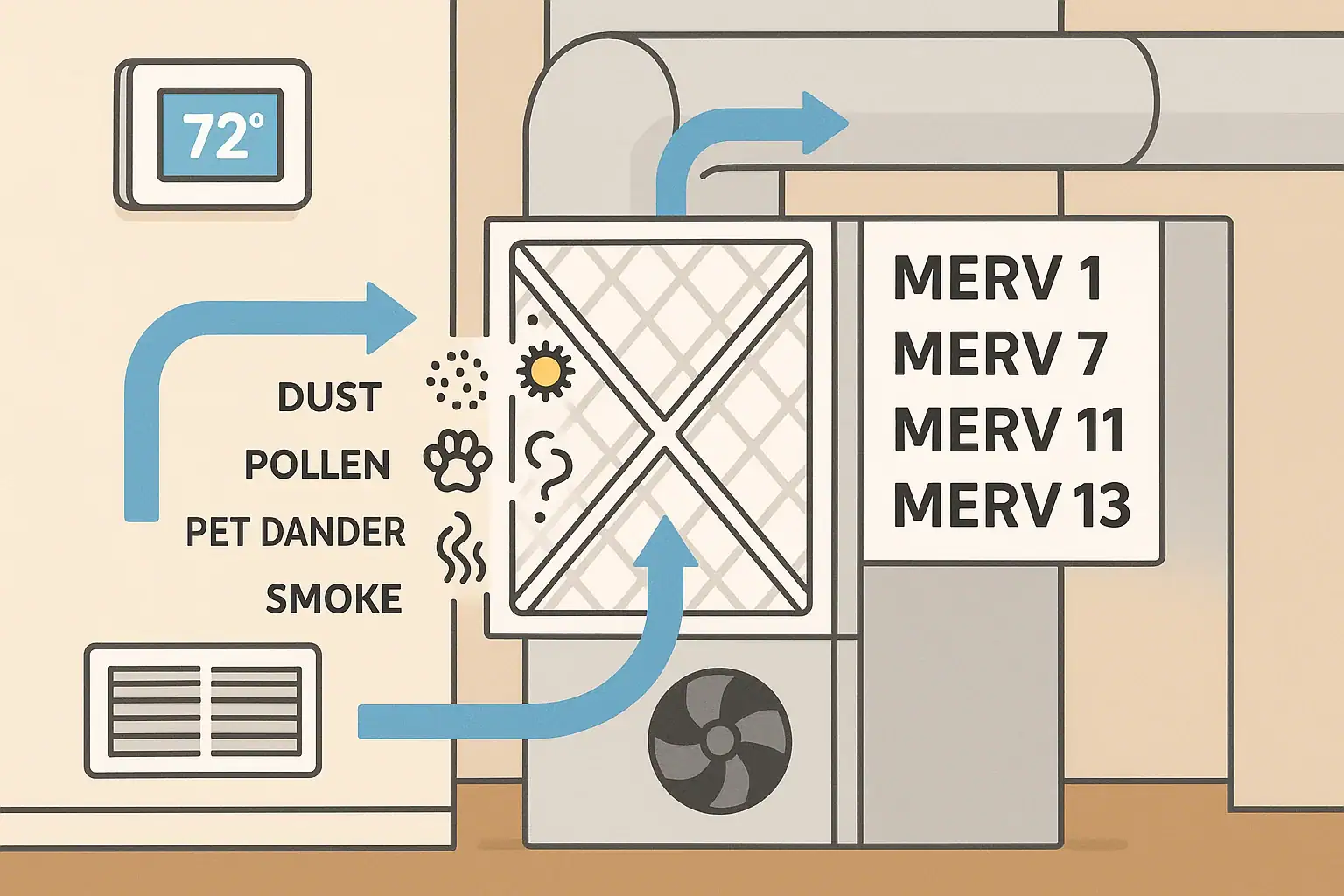
When you shop for a new air filter for your home heating and cooling system, you are almost guaranteed to see the term “MERV” on the packaging. Many homeowners know that a higher number sounds better, but may not be sure what it actually means, how it affects indoor air quality, or whether it is safe for their equipment. Choosing a filter based only on price or the highest number can lead to poor performance, wasted energy, or even damage to your system. On the other hand, going too low can leave dust, pollen, and other particles circulating through your home.
This guide explains what MERV filter ratings are, how they are measured, and how different ratings perform in real homes. You will learn how MERV affects airflow, energy use, and indoor air quality, along with practical tips for choosing the right rating for your family, your climate, and your specific heating and cooling equipment. By the end, you will be able to walk down the filter aisle or shop online with confidence instead of guessing.
What Is a MERV Rating?
MERV stands for Minimum Efficiency Reporting Value. It is a standardized scale used to rate how effectively an air filter captures particles of different sizes as air passes through it. The scale typically runs from 1 to 16 for residential and light commercial filters, with higher numbers indicating better filtration efficiency.
The key idea behind MERV is consistency. Instead of relying on vague marketing terms like “good,” “better,” or “premium,” MERV provides a numeric score based on laboratory testing. This allows you to compare different filters more fairly and select one that balances air quality, airflow, and system performance.
In simple terms:
- Lower MERV = captures larger particles only, less resistance to airflow.
- Higher MERV = captures smaller particles, more resistance to airflow.
How MERV Ratings Are Determined
MERV ratings are based on how well a filter removes particles in specific size ranges, measured in microns (one micron is one-millionth of a meter). During testing, a filter is exposed to particles of known sizes, and the percentage captured is measured. These results are then translated into a single MERV number.
The test looks at three main particle size ranges:
- Large particles (around 3.0–10.0 microns): dust, pollen, carpet fibers, lint.
- Medium particles (around 1.0–3.0 microns): some mold spores, fine dust, pet dander.
- Small particles (around 0.3–1.0 microns): smoke, some bacteria, very fine dust.
A higher MERV filter captures a higher percentage of particles across these ranges, especially in the smaller sizes. However, that increased efficiency usually comes with more resistance to airflow, which is why you cannot simply choose the highest number without considering your system.
Common MERV Filter Ranges for Home HVAC Systems
Most residential heating and cooling systems are designed to work with filters in a certain MERV range. Here is a general overview of what different ranges typically capture and where they are commonly used.
MERV 1–4: Basic Protection
Filters in this range are often the thinnest and least expensive options. They provide basic protection for your equipment but limited improvement to indoor air quality.
- Typical particles captured: large dust, lint, carpet fibers, some pollen.
- Pros: Very low resistance to airflow, low cost.
- Cons: Do little to reduce smaller particles like pet dander or fine dust; not ideal if anyone in the home has allergies or respiratory issues.
- Best for: Short-term use, budget situations, or systems that cannot handle higher resistance. Often not recommended as a long-term solution for indoor air quality.
MERV 5–8: Standard Residential Filters
This range is common in many homes and is often considered a good baseline for general indoor air quality.
- Typical particles captured: dust, pollen, mold spores, some pet dander, larger airborne particles.
- Pros: Better air quality than basic filters; still relatively low resistance when properly sized.
- Cons: May not capture very fine particles such as many smoke particles or some bacteria.
- Best for: Homes without serious allergy concerns, typical suburban or rural environments, and systems where the manufacturer recommends this range.
MERV 9–12: Enhanced Residential Filtration
Filters in this range offer noticeably improved air cleaning and are often chosen by homeowners concerned about allergies, dust, and overall air cleanliness.
- Typical particles captured: finer dust, more pet dander, some bacteria, many mold spores, smoke particles in the larger size range.
- Pros: Significant improvement in indoor air quality compared with lower ratings; good balance of efficiency and performance in many modern systems.
- Cons: Higher resistance than standard filters; may not be suitable for older or undersized equipment if the system was not designed for it.
- Best for: Homes with pets, people with mild to moderate allergies, or areas with higher outdoor pollution when the system can handle the added resistance.
MERV 13–16: High-Efficiency Filtration
These filters approach the performance of specialized systems and are sometimes used in homes where air quality is a major concern.
- Typical particles captured: many bacteria, some viruses attached to larger particles, smoke, fine dust, more of the smallest airborne particles.
- Pros: Excellent filtration; can significantly reduce airborne particles that trigger allergies and respiratory symptoms.
- Cons: Can greatly increase resistance to airflow; not all residential systems are designed to use them without modifications.
- Best for: Homes with serious allergy or respiratory concerns, or areas with persistent smoke or pollution, but only when the system is evaluated and approved for these ratings.
How MERV Ratings Affect Airflow and Energy Use
As MERV ratings go up, filters usually become denser or use more advanced media to capture smaller particles. This can make it harder for air to pass through, which is called pressure drop. Your heating and cooling system is designed to move a specific amount of air. If the filter is too restrictive, several things can happen:
- The blower motor may work harder, increasing energy use.
- Airflow across the heating or cooling coil may decrease, reducing comfort.
- In extreme cases, parts can overheat or freeze, leading to breakdowns.
This does not mean that higher MERV filters are always bad. Many modern systems can handle moderate to high-efficiency filters if they are properly sized and changed on time. The key is to stay within the rating range recommended for your equipment and to monitor how your system performs after a change.
Choosing the Right MERV Rating for Your Home
The best MERV rating for your home depends on several factors: your health concerns, whether you have pets, your local air quality, and the design of your heating and cooling system. Use the steps below to narrow down your choice.
1. Check Your Equipment Specifications
Start by reviewing the documentation that came with your furnace or air handler, or look for a label on the unit. Many manufacturers list a recommended filter type or maximum MERV rating. If you are unsure, consider asking a qualified technician to evaluate your system before moving to a much higher rating.
2. Consider Health and Lifestyle Factors
Think about who lives in your home and how you use the space:
- Allergies or asthma: A MERV rating in the 9–13 range is often helpful for capturing more pollen, pet dander, and fine dust.
- Pets: If you have dogs or cats, a higher MERV filter (often 8–11) can help reduce dander and hair in the air, combined with regular cleaning.
- Smoking or nearby wildfires: In areas with frequent smoke, a higher MERV filter can capture more fine particles, though very small smoke particles may require additional air cleaning strategies.
- Dusty environments: Rural or construction-heavy areas may benefit from moderate to high MERV ratings to reduce dust entering the home.
3. Balance Air Quality with System Performance
Once you know your equipment limits and your air quality needs, aim for the highest MERV rating that your system can handle comfortably. Signs that a filter may be too restrictive include:
- Rooms that used to be comfortable now feel warmer or cooler than before.
- Noticeable reduction in airflow from vents.
- Unusual noises from the blower or more frequent system cycling.
If you notice these issues after switching to a higher MERV filter, you may need to step down to a slightly lower rating or consult a professional.
4. Think About Filter Thickness and Design
Filter thickness also affects performance. Thicker filters with more surface area can provide higher MERV ratings with less resistance than a very thin filter of the same rating. For example, a deeper filter cabinet may allow a higher-efficiency filter to operate with acceptable airflow.
When choosing filters, match the size and thickness specified for your system. Forcing a filter that does not fit correctly can allow air to bypass the media entirely, reducing filtration and potentially pulling dust into the equipment.
How Often to Replace Filters at Different MERV Ratings
All filters, regardless of MERV rating, need to be replaced regularly. As they capture particles, they become more restrictive. A clogged filter can cause many of the same problems as a filter that is too dense from the start.
General guidelines for replacement frequency:
- MERV 1–4: Often every 1 month, sometimes sooner in dusty homes.
- MERV 5–8: About every 1–3 months, depending on use and air quality.
- MERV 9–12: Typically every 2–3 months, or as recommended by the manufacturer.
- MERV 13–16: Often every 2–3 months, but may require more frequent checks in homes with high particle loads.
These are only starting points. Check your filter monthly at first. If it looks heavily loaded with dust or you notice reduced airflow, replace it sooner. Mark your calendar or set reminders to avoid forgetting.
MERV vs Other Filter Rating Systems
When you shop for filters, you may see other rating systems in addition to MERV. While this guide focuses on MERV, it helps to know that many alternative scales are simply different ways to describe similar performance. They may group filters into categories like “good,” “better,” and “best” or use proprietary numbers.
Because MERV is widely recognized and based on standardized testing, it is often the most reliable way to compare filters from different sources. If you see another rating system, look on the packaging or product information for the equivalent MERV range so you can make a fair comparison.
Common Myths About MERV Filter Ratings
Myth 1: A Higher MERV Rating Is Always Better
While higher MERV filters capture smaller particles, they are not automatically better for every home. If your system is not designed for high-efficiency filters, you could reduce airflow, increase energy use, and shorten equipment life. The best filter is one that improves air quality without straining your system.
Myth 2: MERV Only Matters for People with Allergies
Allergy and asthma sufferers often benefit from higher MERV ratings, but everyone in the home can enjoy cleaner air. Even if no one has known respiratory issues, reducing dust, pollen, and other particles can make your home feel fresher and may reduce how often you need to clean surfaces.
Myth 3: You Can Leave High-MERV Filters in Longer
It may be tempting to think that a more efficient filter can stay in place longer, but high-MERV filters can load with particles more quickly because they capture more. Leaving them in too long can cause a sharp drop in airflow. Always follow the recommended change schedule and check them regularly.
Practical Tips for Better Indoor Air with the Right MERV Rating
Choosing the right filter is one part of a broader indoor air quality strategy. Combine an appropriate MERV rating with good habits to get the most from your system.
- Seal air leaks: Gaps around doors, windows, and ducts can bring in unfiltered air. Sealing them helps your filter do its job.
- Use exhaust fans: Run kitchen and bathroom fans to remove moisture and pollutants at the source.
- Vacuum and dust regularly: Use a vacuum with a good filtration system and damp dusting to capture settled particles.
- Keep vents clear: Do not block supply or return vents with furniture or rugs, which can reduce airflow.
- Schedule maintenance: Regular professional inspections can ensure your system is clean, properly sized, and running efficiently with your chosen filter.
Putting It All Together
Understanding MERV filter ratings helps you move beyond guesswork when choosing filters for your home heating and cooling system. Instead of simply grabbing the cheapest option or the highest number, you can make an informed decision that balances indoor air quality, energy use, and equipment protection.
Start by learning what your system is designed to handle, then consider your family’s health needs, whether you have pets, and your local environment. Aim for the highest MERV rating that fits within those limits, and replace filters regularly to maintain airflow and performance. With the right filter and good maintenance habits, your home can be more comfortable, cleaner, and better protected year-round.
If you want to explore more ways to improve comfort and air quality in your home, consider reviewing additional resources on air filtration, ventilation, and humidity control so you can build a complete strategy tailored to your space.
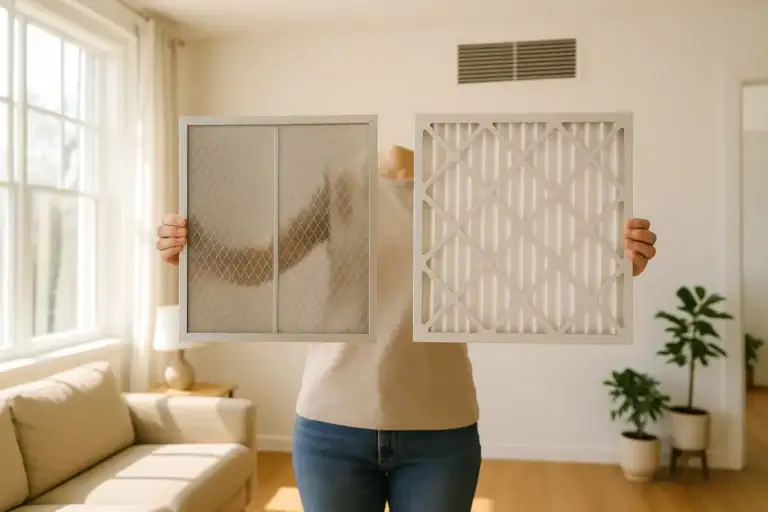 Washable vs Disposable HVAC Filters: Which Is Best for Your Home?
 Radiator Reflector Panels: A Practical Home Guide
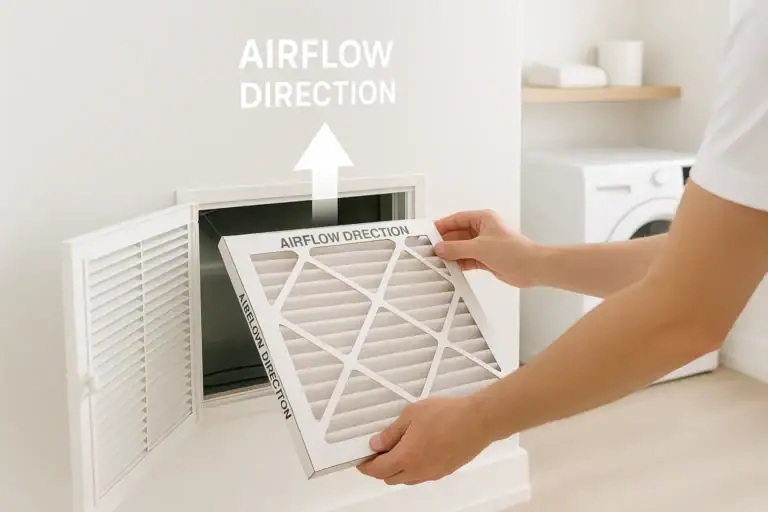 HVAC Filter Arrow Direction: Common Installation Mistakes and How to Fix Them