Home Comfort Hub > Air & Comfort
Return air vents are easy to overlook. They are usually flat grilles on walls, ceilings, or floors that do not blow air, so many people assume they are not important. That is why furniture, rugs, or storage bins often end up directly in front of them. However, blocking a return vent can quietly create a chain reaction of comfort problems, higher energy bills, and even stress on your heating and cooling equipment. Understanding what return vents do, and how to troubleshoot issues when they are blocked, can help you protect your system and keep your home comfortable year-round.
This guide explains what really happens when furniture blocks a return vent, the warning signs to watch for, and practical steps to fix and prevent problems. You do not need technical skills or special tools. With a few simple checks and adjustments, you can restore balanced airflow, improve indoor comfort, and help your system run more efficiently and reliably.
What a Return Vent Does and Why It Matters
To understand why blocking a return vent is a problem, it helps to know its basic job in your heating and cooling system.
Supply vs. Return: Two Sides of the Same System
Most central heating and cooling systems move air in a loop:
- Supply vents blow conditioned air into rooms.
- Return vents pull room air back to the system to be filtered, heated, or cooled again.
For the system to work correctly, air going out through supply vents needs to be balanced by air coming back through return vents. When that balance is disrupted, the equipment has to work harder to move air, and comfort tends to suffer.
How Return Vents Support Comfort and Efficiency
Return vents play several important roles:
- Help maintain steady temperatures from room to room
- Allow air to circulate through the filter, improving indoor air quality
- Reduce pressure imbalances that can cause drafts or whistling around doors and windows
- Help the blower motor move air without excessive strain
When furniture blocks a return vent, all of these benefits are reduced, and problems can start to show up in subtle ways throughout the home.
What Happens When Furniture Blocks a Return Vent?
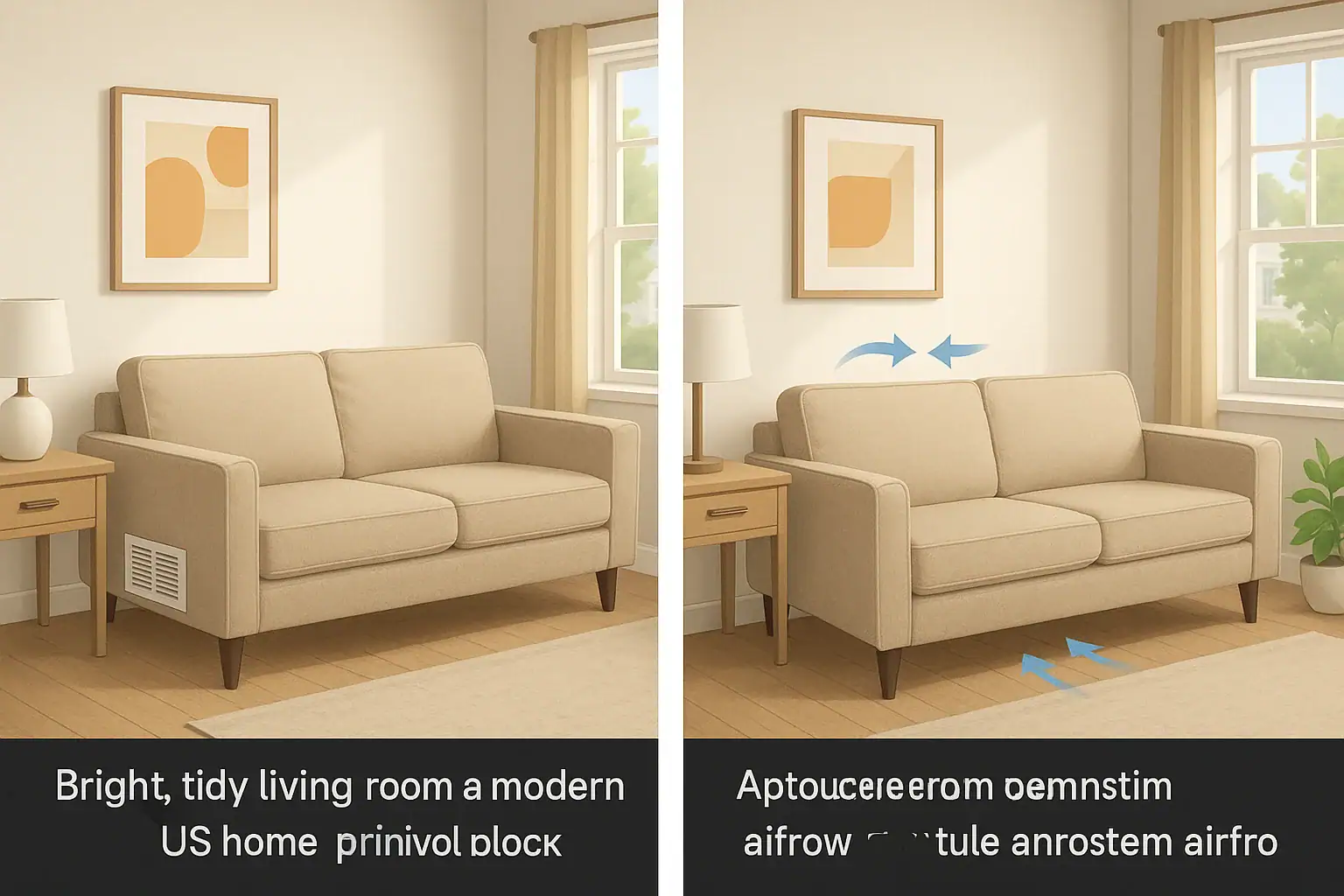
Placing a sofa, bed, dresser, or storage cabinet in front of a return vent might seem harmless, but it changes how air moves through your system. The more tightly the vent is blocked, the more noticeable the effects become.
1. Restricted Airflow and Pressure Imbalance
When a return vent is blocked, the system cannot pull in as much air as it is trying to push out. This can cause:
- Negative pressure in the room with the blocked vent, which can draw in unconditioned air from gaps and cracks
- Reduced airflow through the filter and ductwork, making the blower work harder
- Whistling or drafts around doors, windows, and under walls as air is pulled from other areas
In extreme cases, doors may slam or be harder to open and close when the system is running because of pressure differences.
2. Hot and Cold Spots Around the Home
Blocked return vents interfere with even temperature control. Common comfort issues include:
- Rooms that feel stuffy or stagnant, even when the system is running
- Hot spots in summer and cold spots in winter, especially in the room with the blocked vent
- Uneven temperatures between floors or between rooms on the same floor
Because the system is not getting enough air back, it may run longer trying to reach the thermostat setting, but certain rooms still never feel quite right.
3. Higher Energy Use and Utility Bills
When airflow is restricted, your heating and cooling equipment has to run longer and work harder to move the same amount of air. Over time this can lead to:
- Longer run times to reach the thermostat setpoint
- More frequent cycling on and off as the system struggles to keep up
- Higher energy bills, especially during peak heating and cooling seasons
Even partially blocking a return vent can slowly increase energy use without an obvious change in your daily routine.
4. Added Wear on Equipment and Possible Damage
Heating and cooling systems are designed for a certain amount of airflow. When furniture blocks a return vent, the blower and other components can be stressed:
- Blower motor strain from working against higher resistance
- Overheating in heating mode if air cannot move across the heat exchanger properly
- Coil icing in cooling mode if airflow across the evaporator coil is too low
- Potential for shortened equipment life due to sustained stress
While one blocked vent may not cause immediate failure, it adds to the overall load on the system, especially if other vents or filters are also partially obstructed or dirty.
5. Declining Indoor Air Quality
Return vents help pull air through the filter, which captures dust, pet dander, and other particles. When a return is blocked:
- Less air passes through the filter, so more particles remain in circulating room air
- Stale air can linger in the blocked room, leading to a musty or stuffy smell
- Humidity control can become less effective, especially in tightly closed rooms
For people with allergies or respiratory sensitivities, these changes may be noticeable over time.
How to Tell If a Return Vent Is Blocked
Because return vents do not blow air, it is easy to forget they are there. If you suspect a problem, a quick visual and physical check can reveal a lot.
Visual Checks Around the Home
Walk through your home and look for:
- Large pieces of furniture directly in front of wall or floor grilles
- Beds, sofas, or dressers pushed tightly against wall vents
- Storage bins, boxes, or laundry baskets stacked in front of grilles
- Thick rugs or runners covering floor return grilles
Return vents are often larger than supply vents and may be located in hallways, near staircases, or in central areas of the home. In some homes, each bedroom has its own return vent; in others, there are just a few larger returns.
Simple Airflow Test
You can do a basic test with a tissue or thin piece of paper:
- Turn the system fan to On or set it to run by adjusting the thermostat.
- Hold a tissue or light paper a few inches from the grille.
- If the vent is a return, the tissue should be pulled toward the grille.
- If the pull is very weak or nonexistent compared to other return vents, airflow may be restricted.
Compare the airflow at each return vent. A vent with significantly less pull may be blocked by furniture, dust buildup, or a problem inside the duct.
Comfort and Noise Clues
Other signs that a return vent might be blocked include:
- A room that always feels warmer or cooler than the rest of the home
- Doors that slam shut or swing on their own when the system runs
- Whistling or rushing air noises near small gaps under doors
- Stuffy, stale air in one area even when the system has been running
These clues do not always mean a blocked return, but they are a reason to check furniture placement and vent access.
Troubleshooting a Blocked Return Vent
Once you identify a blocked return vent, there are several steps you can take to restore airflow and improve comfort.
Step 1: Clear Space Around the Vent
As a general guideline, try to keep at least 6 to 12 inches of open space in front of each return vent. For larger vents, more space is better. Practical ways to do this include:
- Pulling sofas or chairs slightly away from the wall instead of pressing them tight
- Shifting a bed or dresser a short distance to uncover the grille
- Relocating storage bins, shoe racks, or hampers to another wall
- Trimming or repositioning rugs so they do not cover floor returns
Even a small gap can significantly improve airflow compared to a fully blocked vent.
Step 2: Clean the Vent Grille
Dust and pet hair can build up on return grilles over time. After you clear the area:
- Turn off the system at the thermostat.
- Use a vacuum with a brush attachment to remove dust from the grille.
- If the grille is removable, you can take it down and gently clean it with mild soap and water, then dry it completely before reinstalling.
Cleaning does not fix a blocked vent by itself, but it helps ensure air can move freely through the opening.
Step 3: Check the Air Filter
A dirty air filter can make the effects of a blocked return vent much worse. With the system off:
- Locate the filter at the air handler, furnace, or filter grille.
- Check for heavy dust buildup or discoloration.
- Replace the filter if it looks dirty or if it has been in place longer than the recommended interval.
Keeping filters clean helps the system handle normal airflow resistance and reduces strain on the blower.
Step 4: Re-Test Airflow and Comfort
After clearing and cleaning, turn the system back on and:
- Repeat the tissue test at the return vent to confirm stronger pull.
- Pay attention to room comfort over the next day or two.
- Listen for reduced whistling or pressure-related noises around doors.
If airflow improves and the room feels more comfortable, you have likely resolved the main issue.
When Furniture Cannot Be Moved Easily
Sometimes a room layout makes it hard to keep furniture away from a return vent. In that case, you may need to get creative while still protecting airflow.
Adjusting the Layout Strategically
Consider these options:
- Rotate the furniture so the back is not flush against the vent area.
- Use a slightly smaller piece of furniture on the wall with the vent.
- Shift the main seating or sleeping area to another wall, if possible.
- Place lower-profile items near the vent instead of tall, solid pieces.
The goal is to create a pathway for air to reach the vent, even if the furniture remains nearby.
Creating Space Under or Behind Furniture
If the vent is low on the wall or on the floor, you may be able to:
- Use furniture with legs that leave several inches of clearance underneath.
- Add risers to lift a bed frame slightly, creating a gap for airflow.
- Pull a sofa or cabinet just a few inches away from the wall to open a channel behind it.
Always make sure the vent grille is not directly pressed against a solid surface. Even a modest gap can help air move into the return.
Preventing Return Vent Problems in the Future
Once you fix a blocked return vent, a few simple habits can help you avoid repeating the issue.
Make Vent Locations Part of Room Planning
Whenever you rearrange a room or bring in new furniture:
- Locate all supply and return vents in the space.
- Plan major furniture pieces so they do not sit directly over or in front of vents.
- Leave clear space around larger returns in hallways or central areas.
It can help to take a quick photo of each wall showing vent locations before you start moving items around.
Keep a Regular Airflow Checkup Routine
Every few months, especially at the start of heating and cooling seasons:
- Walk through the home and confirm all vents are clear.
- Vacuum dust from grilles and nearby floors or walls.
- Inspect air filters and replace them as needed.
- Note any rooms that feel consistently uncomfortable and investigate vent access.
This quick routine can catch blocked vents early, before they lead to noticeable comfort or energy issues.
When to Consider Professional Help
If you have cleared and cleaned your return vents but still notice:
- Very weak airflow at multiple vents
- Persistent hot or cold rooms
- Unusual noises from the ductwork or equipment
- Frequent system cycling or unusually high energy bills
It may be worth having a professional evaluate the system. There could be duct leaks, undersized or poorly placed returns, or other issues contributing to airflow problems.
Key Takeaways: Protecting Your Return Vents and Comfort
Blocking a return vent with furniture is more than a minor inconvenience. It can set off a chain of issues that affect comfort, energy use, and equipment health. To keep your home comfortable and your system running smoothly:
- Remember that return vents are just as important as supply vents.
- Avoid placing large furniture directly in front of or over return grilles.
- Keep at least several inches of open space around each return.
- Clean grilles and replace filters regularly to support healthy airflow.
- Pay attention to signs like stuffy rooms, pressure changes, or uneven temperatures.
With a few simple adjustments and periodic checks, you can prevent problems caused by blocked return vents and enjoy more consistent air comfort throughout your home.
 Door Sweep and Weatherstripping Comfort Upgrade Guide
 Supply Vent vs Return Vent: How to Tell the Difference in Your Home
 Ceiling Fan Direction for Summer vs Winter: A Clear Homeowner’s Guide