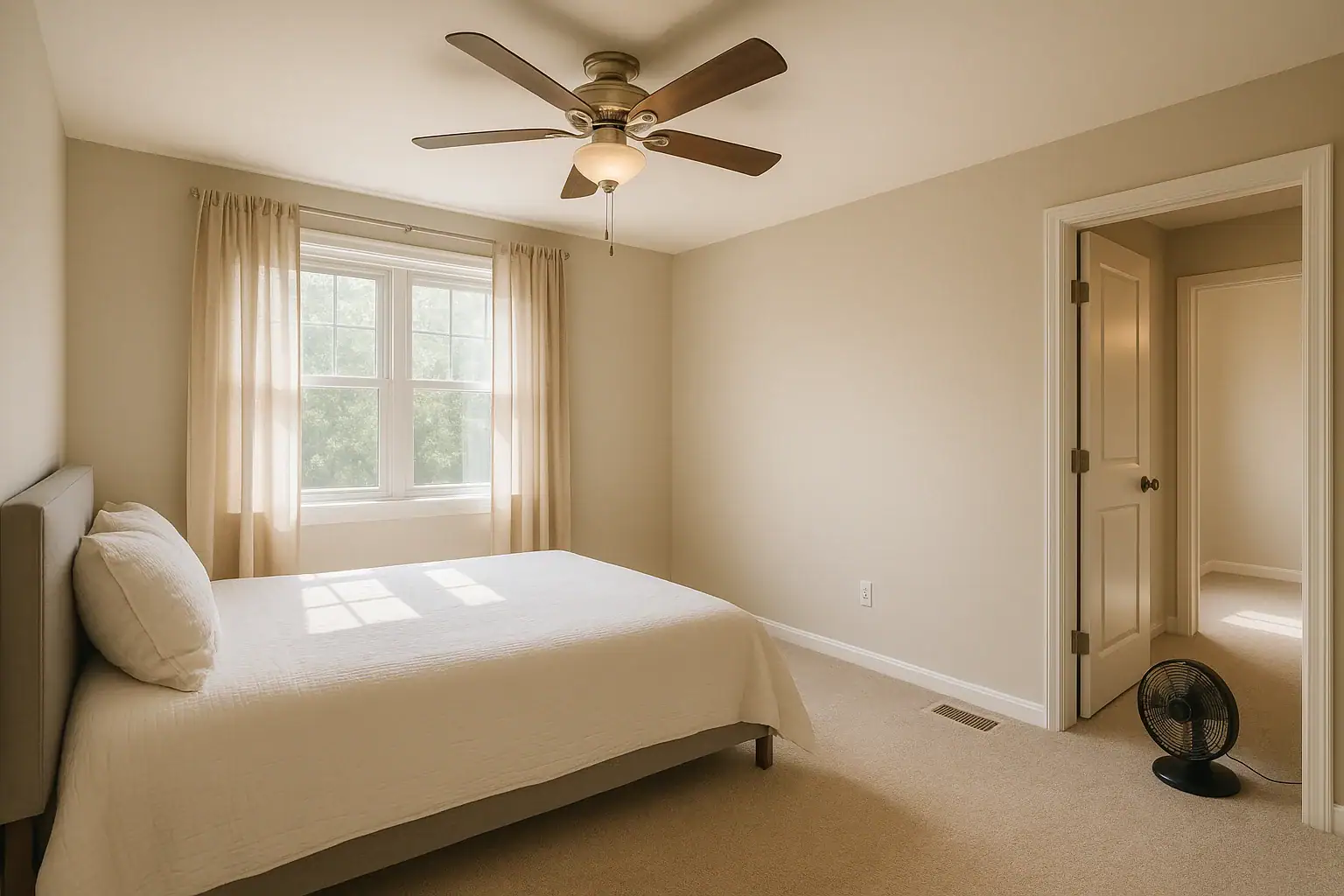
If your upstairs bedroom is too hot while the rest of the house feels comfortable, you are not alone. Two-story homes often struggle with uneven temperatures, especially in summer. Heat rises, roofs absorb sunlight, and ductwork may not be balanced for the upper floor. The good news is that you can usually improve comfort without a full system replacement. By understanding how airflow works and tackling a few key trouble spots, you can bring the upstairs temperature closer to the rest of the home and sleep more comfortably.
This guide walks through a troubleshooting process to figure out why your upstairs bedroom is so warm and what you can do about it. You will learn how to check vents and returns, improve circulation, seal leaks, and consider simple upgrades. Start with the easiest steps first, then move toward more involved projects if needed. Many of these fixes are low-cost and can make a noticeable difference in just a few days.
Why Upstairs Bedrooms Get So Hot
Before jumping into fixes, it helps to understand the main reasons upstairs spaces overheat. Several factors usually stack together to create a hot bedroom while the thermostat downstairs says everything is fine.
Common causes of a hot upstairs bedroom
- Heat rises: Warm air naturally moves upward, collecting on the second floor.
- Roof and attic heat: Sun on the roof heats the attic, which can radiate warmth into upstairs rooms.
- Weak airflow: Undersized or blocked supply vents and return vents limit cool air reaching the bedroom.
- Leaky ducts: Conditioned air can escape into walls or the attic before it reaches upstairs rooms.
- Poor insulation: Thin or missing insulation in the attic or walls lets heat move into the bedroom easily.
- Sun-facing windows: Afternoon sun through windows can quickly raise the room temperature.
- Closed interior doors: When doors stay closed, air cannot circulate well between rooms and returns.
Most homes have a mix of these issues. The troubleshooting steps below help you narrow down which ones matter most in your situation so you can focus your time and money where it counts.
Step 1: Check Vents, Returns, and Basic Airflow
Start with the simplest checks. Many hot bedroom problems come down to blocked vents, closed dampers, or poor circulation that you can correct in minutes.
Make sure supply vents are fully open
Supply vents are the registers where cool air blows into the room. When they are closed or partially blocked, your system cannot deliver enough cool air.
- Locate every supply vent in the bedroom and nearby hallway.
- Move furniture, rugs, and curtains away from vents so air can flow freely.
- Open the vent louvers fully and verify air is blowing out when the system runs.
If the airflow feels weak compared to downstairs vents, you may have an airflow or duct balancing issue, which we will address later.
Confirm return air paths are clear
Return vents pull air back to your system so it can be cooled again. Without a clear return path, pressure builds and cool air cannot circulate properly.
- Find any return vents on the second floor and make sure they are not blocked by furniture, baskets, or dust buildup.
- If your bedroom does not have a dedicated return, it likely relies on air flowing out under the door to a hallway return.
- Check the gap under the bedroom door. A very tight door can restrict airflow; a gap of about three-quarters of an inch often works better.
Try sleeping with the bedroom door slightly open to see if the room feels cooler. If it does, you likely have a return air restriction when the door is closed.
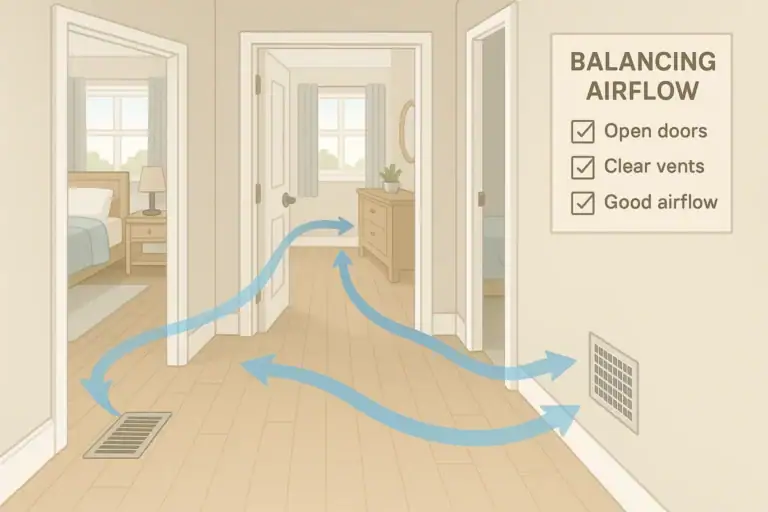
Use interior doors and vents to balance the house
You can sometimes nudge more cool air upstairs by adjusting how air flows through the rest of the home.
- Close or partly close some supply vents in little-used downstairs rooms. Do not close more than about 20 to 30 percent of total vents, as that can stress the system.
- Keep doors open to hot rooms and slightly more closed to cooler rooms to guide airflow.
- Run ceiling fans or portable fans on low settings to help mix air and push warm air off the ceiling.
Give these changes a day or two to see how they affect temperatures before moving on to more involved steps.
Step 2: Improve Air Circulation in the Bedroom
Even if cool air reaches the room, it may not be distributed evenly. Hot air tends to collect near the ceiling and in corners, while cooler air hugs the floor. Improving circulation helps even out these layers.
Set ceiling fans for summer mode
Ceiling fans do not actually lower the room temperature, but they move air across your skin and help mix hot and cool layers.
- Set the fan to rotate counterclockwise in summer so it pushes air downward.
- Use a medium or low speed to avoid drafts while sleeping.
- Position your bed so you feel a gentle breeze without direct blast to your face.
Use portable fans strategically
Small fans can help pull cooler air into the bedroom and push warm air out.
- Place a fan on the floor near the doorway, angled to pull cooler hallway air into the room.
- In the evening, if outdoor air is cooler, place a fan near a window to exhaust hot air out or draw cool air in, depending on conditions.
- A box fan in the hallway can help move cool air from a stronger vent toward the bedroom.
Always use window fans safely, secure them properly, and avoid running them during poor outdoor air quality days.
Step 3: Reduce Heat Gain from Windows and Sun
Even with good airflow, a sun-facing upstairs bedroom can heat up quickly. Reducing how much heat enters the room can make a major difference.
Shade the windows
Window coverings are a simple way to cut heat gain without any changes to your mechanical system.
- Use light-colored blinds or curtains that reflect sunlight instead of absorbing it.
- Close blinds or curtains during the hottest part of the day, especially on south- and west-facing windows.
- Consider layered window treatments, such as blinds plus curtains, to trap more heat near the window.
Seal air leaks around windows
Gaps around window frames can let hot outdoor air leak in and cool air leak out.
- On a windy day, run your hand around window edges to feel for drafts.
- Use weatherstripping or caulk to seal noticeable gaps.
- Check that windows close and latch firmly without visible light around the frame.
These small improvements help year-round by reducing both heat gain in summer and heat loss in winter.
Step 4: Inspect Attic, Insulation, and Ductwork Above the Bedroom
If your upstairs bedroom is directly under the roof, the attic above it plays a big role in how hot the room feels. Poor insulation or leaky ducts can allow extreme attic heat to transfer into the living space.
Check attic insulation level above the bedroom
Insulation slows the movement of heat. When the attic is under-insulated, the ceiling of your bedroom can become warm to the touch and radiate heat downward.
- Safely access the attic and locate the area above the hot bedroom.
- Look at the depth and condition of the insulation. In many US climates, a higher insulation level is recommended for attics.
- If you can easily see the tops of ceiling joists, you likely need more insulation.
Adding insulation is often one of the most effective long-term fixes for hot upstairs rooms and can also reduce energy bills.
Look for duct leaks or crushed sections
Ducts that run through the attic or walls to upstairs rooms can leak cool air before it reaches the bedroom.
- Visually inspect accessible ducts above or near the bedroom.
- Look for loose connections, missing tape, or damaged insulation around ducts.
- Check for crushed or sharply bent flexible ducts that restrict airflow.
Sealing joints and repairing damaged sections can restore airflow to the upstairs vents. For hidden ducts, a professional inspection may be needed.
Consider attic ventilation
Attic ventilation helps move hot air out of the attic so it does not build up and radiate into the rooms below.
- Check that existing attic vents are not blocked by insulation or debris.
- Balanced intake and exhaust ventilation usually works better than exhaust alone.
- Discuss options with a qualified contractor if your attic feels extremely hot and stagnant.
Step 5: Balance and Fine-Tune Your Cooling System
If you have worked through the basic airflow and insulation steps but the bedroom is still much hotter than the rest of the house, your system may need balancing or a small upgrade.
Adjust thermostat settings and schedule
You can sometimes improve upstairs comfort with small thermostat changes.
- Set the fan mode to “on” for a few hours during the hottest part of the day to keep air circulating, if your system allows it.
- Avoid large temperature swings. Keeping a steady setting often helps maintain more even temperatures between floors.
- Lower the thermostat slightly during the evening if the upstairs is still warm at bedtime.
Have dampers and airflow professionally balanced
Many systems have dampers in the ductwork that control how much air goes to each branch. If more air is going downstairs than upstairs, the second floor will stay warmer.
- A qualified technician can measure airflow and adjust dampers to send more cool air to the upstairs bedroom.
- They may also recommend adding or resizing ducts if the current layout cannot deliver enough air.
- Proper balancing can significantly reduce temperature differences between floors.
Consider zoning or supplemental cooling
In some homes, especially older ones, the main system simply cannot keep the upstairs as cool as the downstairs on the hottest days. In that case, targeted solutions can help.
- A separate thermostat for the upper floor, if the system supports zoning, allows more precise control.
- A small supplemental cooling unit for the bedroom can handle the extra load during peak heat.
- Window or wall units should be installed and used safely, following local codes and manufacturer guidance.
These options involve more cost than basic airflow fixes but can be worthwhile if the bedroom remains uncomfortable after other steps.
Step 6: Everyday Habits That Help Keep the Upstairs Cooler
Along with physical changes to your home, daily habits can either help or hurt upstairs comfort. Small adjustments can support all the other improvements you have made.
Use heat-producing appliances wisely
Appliances and lighting add heat to your home, which eventually rises to the second floor.
- Run ovens, dryers, and dishwashers during cooler parts of the day when possible.
- Turn off unnecessary lights, especially older bulbs that give off more heat.
- Unplug electronics you are not using, as they can produce a surprising amount of warmth.
Manage bedroom doors and windows
How you use doors and windows can change airflow patterns significantly.
- Keep the bedroom door open when the cooling system is running if you do not have a dedicated return vent.
- Close windows when the outdoor air is hotter and more humid than indoors, so you do not work against your system.
- Open windows in the evening or early morning when outdoor air is cooler and drier, and use a fan to pull that air in.
Maintain your cooling system regularly
A well-maintained system performs better and is more likely to deliver enough cool air upstairs.
- Change or clean air filters on the recommended schedule, or more often if you have pets or allergies.
- Keep outdoor units clear of leaves, grass, and debris to maintain good airflow.
- Schedule routine professional checkups to catch issues before they reduce performance.
When to Call a Professional for a Hot Upstairs Bedroom
Many airflow fixes are do-it-yourself friendly, but some situations call for expert help. Knowing when to bring in a professional can save time and protect your equipment.
Signs you may need expert help
- The upstairs is consistently more than about 5 to 7 degrees warmer than downstairs, even after basic fixes.
- You notice very weak airflow from upstairs vents compared to downstairs.
- Your system runs constantly on hot days but still cannot cool the upstairs.
- There are signs of duct damage, major air leaks, or moisture problems in the attic.
A professional can measure airflow, inspect ductwork, evaluate insulation, and recommend targeted upgrades. This can be especially helpful if you are considering larger investments such as zoning, duct modifications, or added insulation.
Putting It All Together: A Practical Action Plan
Cooling down a hot upstairs bedroom is often about stacking several small improvements rather than relying on one big fix. Here is a simple sequence you can follow:
- Open and clear all supply and return vents on the second floor.
- Use doors, vents, and fans to guide more cool air toward the bedroom.
- Shade and seal windows to cut down on direct sun and air leaks.
- Check attic insulation and look for obvious duct issues above the bedroom.
- Fine-tune thermostat settings and consider professional balancing if needed.
- Adjust daily habits to reduce heat build-up in the home.
By working through these steps, most homeowners can bring a hot upstairs bedroom much closer in line with the rest of the house. The goal is not perfection on the hottest days, but a noticeable improvement in comfort and sleep quality. For more ideas on creating a comfortable home environment, explore additional resources in the air and comfort section at Signature Home Guide.
 Why One Room Feels More Humid Than the Rest of the House
 How to Balance Airflow Between Rooms at Home: A Practical Checklist
 Best Bedroom Temperature Setup for Sleep Without Cooling Your Whole House