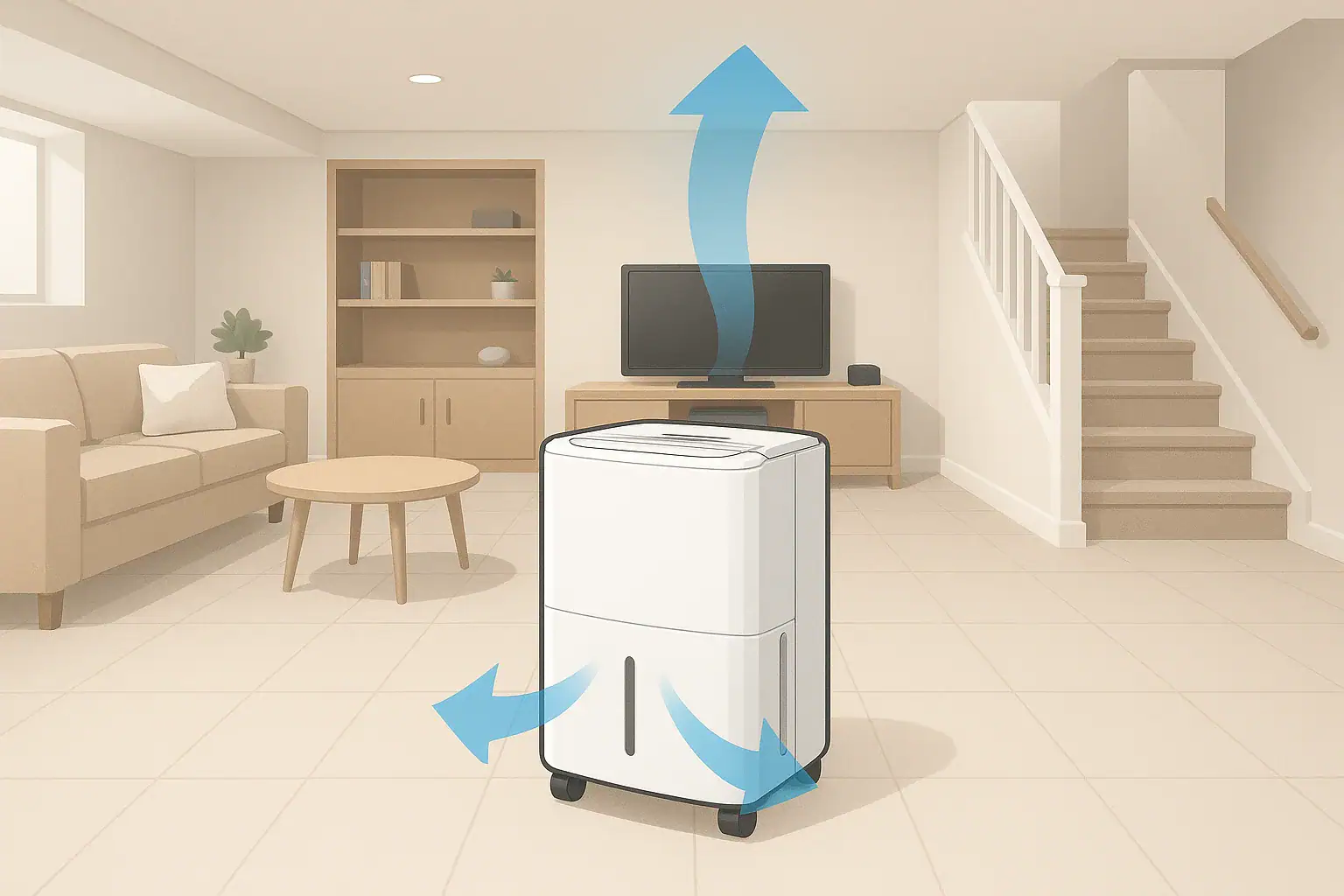
Placing a dehumidifier is not as simple as plugging it in wherever there is an open outlet. Where you position the unit and how air moves around it can make the difference between a comfortable, dry space and a room that still feels damp and musty. Poor placement can also cause short-cycling, where the dehumidifier turns on and off too frequently. This wastes energy, adds wear and tear to the compressor, and can even leave hidden pockets of moisture that lead to mold and odors. With a few practical guidelines, you can set up your dehumidifier so it runs efficiently, lasts longer, and actually solves your humidity problems instead of just masking them.
This guide explains how dehumidifiers work, what short-cycling is, and how to avoid it with smart placement and proper airflow. You will learn where to put a dehumidifier in different rooms, how far it should be from walls and furniture, and how to handle tricky areas like basements and crawl spaces. You will also find tips for using fans, doors, and vents to keep air circulating so your unit can do its job effectively.
How a Dehumidifier Works and Why Placement Matters
Understanding the basics of how a dehumidifier operates helps explain why placement and airflow are so important.
The basics of dehumidification
Most home dehumidifiers work by pulling in humid room air, cooling it over coils so moisture condenses into water, and then reheating and releasing the drier air back into the room. The unit measures humidity with a built-in sensor and cycles on and off to maintain your target level.
For this process to work well, the unit needs:
- Enough air circulation around the intake and exhaust grilles
- A location that reflects the average humidity of the space
- Room for warm, dry air to mix with the rest of the room air
What is short-cycling?
Short-cycling happens when a dehumidifier turns on and off in very short bursts instead of running steady cycles. This usually means the unit is sensing that it has already reached the target humidity, even though the room as a whole is still damp.
Common signs of short-cycling include:
- The unit turns on and off every few minutes
- Humidity readings jump up and down
- The space still feels clammy even though the display shows a low humidity level
- Unusual clicking or humming as the compressor repeatedly starts and stops
Short-cycling is often caused by poor placement and weak airflow, not just equipment problems.
How Poor Placement Causes Short-Cycling
Most short-cycling issues can be traced back to where the dehumidifier is located and how air moves around it.
The bubble of dry air problem
When a dehumidifier is placed in a corner, tight alcove, or closet, it tends to create a small bubble of very dry air right around the unit. The humidity sensor sits inside this bubble, so it thinks the entire room is dry and shuts the unit off. Meanwhile, the rest of the room can still be quite humid.
This dry bubble leads to:
- Frequent on-off cycles as the bubble forms and disperses
- Uneven humidity, with dry air near the unit and damp air farther away
- Extra strain on the compressor and fan motor
Obstructed airflow
Air needs to move freely into the intake and out of the exhaust. If the unit is pushed against a wall, blocked by furniture, or surrounded by storage boxes, it will recirculate the same small pocket of air over and over. This again tricks the sensor into reading a lower humidity than the rest of the room.
Common placement mistakes include:
- Placing the unit directly against a wall or in a tight corner
- Hiding it behind a couch, curtain, or large chair
- Putting it inside a closet or under a low shelf
- Stacking items around it in a basement or storage room
Best Practices for Dehumidifier Placement
Good placement helps the unit sense the true average humidity and distribute dry air evenly. Use these general rules in most rooms.
Give the unit space on all sides
Most manufacturers recommend at least 6 to 12 inches of clearance on all sides, but more is usually better if you have room.
As a starting point, try to provide:
- 12 inches of space behind the unit
- 12 to 18 inches in front of the exhaust
- 6 to 12 inches on each side
- Clear space above it so warm air can rise and circulate
This open area allows the unit to pull in humid air from around the room and push dry air out without immediately re-sucking the same exhaust air back into the intake.
Avoid corners, closets, and dead zones
To reduce short-cycling, avoid placing the dehumidifier in:
- Tight corners where air cannot circulate
- Closets or under desks and tables
- Narrow hallways with little airflow
- Behind curtains or large pieces of furniture
Instead, choose a more open, central location that represents the humidity level of the entire space, not just one small area.
Choose a central, representative location
In most rooms, a good starting point is near the center of the space or along an interior wall with clear airflow paths. Think about where you feel the most humidity and where moisture tends to collect, then place the unit so it can reach those areas.
For example:
- In a basement, place it near the middle of the open area, away from exterior walls if possible.
- In a living room, position it where air can move freely between adjoining rooms.
- In a bedroom, keep it away from the bed and large dressers so airflow is not blocked.
Room-by-Room Placement Tips
Different spaces in a home have different airflow patterns and moisture sources. Adjust placement based on the room you are treating.
Basements and lower levels
Basements are often the dampest areas in a home, with cool surfaces and limited natural airflow. They are also where short-cycling is most common because units are often tucked into corners or surrounded by storage.
For basements:
- Place the dehumidifier near the center of the open floor area, not in a far corner.
- Keep it off the wall by at least 12 inches and away from support posts or shelving.
- If the basement is divided into rooms, place the unit in the largest, dampest room with doors open to adjoining spaces.
- Use a fan to gently move air from remote corners or separate rooms toward the dehumidifier.
- If you have a floor drain, position the unit close enough for a drain hose while still allowing proper clearance.
Living rooms and open-concept spaces
In larger open areas, the main challenge is making sure the dehumidifier is not trapped in one section of the space.
For living areas:
- Avoid hiding the unit behind couches, entertainment centers, or large plants.
- Place it where air naturally flows between rooms, such as near a wide doorway or open archway.
- Keep pathways between rooms open so dry air can spread and humid air can reach the intake.
- If the space is very large, consider using a fan to help move air across the room.
Bedrooms and small rooms
In smaller rooms, it is easier to create a dry bubble around the dehumidifier if it is too close to the bed or a wall.
For bedrooms:
- Place the unit along a side wall with at least 12 inches of clearance behind and in front.
- Keep it several feet away from the bed to reduce noise and drafts.
- Do not push it into a corner or under a desk; allow air to flow around the whole unit.
- If the door is usually open, position it so air can move between the bedroom and hallway.
Bathrooms and laundry areas
These spaces produce a lot of moisture but are often tight and cluttered, which makes placement tricky.
For bathrooms and laundry rooms:
- Only use a portable dehumidifier if there is safe, dry floor space away from water sources.
- Keep it away from tubs, showers, and sinks to avoid splashing.
- Do not block vents or exhaust fans; those should continue to remove moisture at the source.
- If the room is very small, consider placing the dehumidifier just outside the room with the door open.
Optimizing Airflow to Prevent Short-Cycling
Even with good placement, you still need decent airflow throughout the space. Stagnant air can leave pockets of high humidity that the unit never fully addresses.
Use fans to move air
A simple fan can dramatically improve dehumidifier performance and reduce short-cycling by mixing the air in the room.
To use fans effectively:
- Place a small fan across the room from the dehumidifier, angled to push humid air toward the intake.
- Run a ceiling fan on low in the “summer” direction to gently circulate air without creating drafts.
- In basements with multiple rooms, use a fan in doorways to move air between spaces.
Keep interior doors open when possible
Closed doors trap humid air in certain rooms and limit how much of the home a single dehumidifier can treat. When safe and practical, keep interior doors open so moisture can move toward the unit.
This is especially helpful when:
- The dehumidifier is in a hallway or central room
- Bedrooms or offices off that space tend to feel damp
- You want to maintain a more consistent humidity level across the home
Avoid blocking vents and returns
If you use central heating or cooling, be mindful of supply vents and return grilles. Blocking them with a dehumidifier or furniture can disrupt airflow patterns and create hot, cold, or damp spots.
Position the dehumidifier so that:
- It does not sit directly in front of a supply vent blowing air into the intake
- It is not blocking a return grille, which needs open space to pull air
- Air from vents can mix with the room before reaching the unit
Humidity Settings and Run Time: Supporting Good Placement
Placement and airflow are the foundation, but your humidity setting and run schedule also affect how often the unit cycles.
Choose a realistic humidity target
For most homes, a target relative humidity between 40% and 50% is comfortable and helps discourage mold and dust mites. Setting the target too low can cause the unit to run almost constantly, while setting it too high may leave the space feeling damp.
If you notice frequent short cycles even with good placement, try adjusting the target setting slightly higher and see if the unit runs for longer, steadier periods.
Use continuous mode carefully
Many dehumidifiers offer a continuous mode, which runs the unit without relying on the built-in humidity sensor. This can help in very damp areas or when the sensor is affected by local conditions around the unit.
However, continuous mode:
- Uses more energy if left on all the time
- May over-dry smaller spaces
- Still requires good placement and airflow to work well
Consider using continuous mode only in problem areas like very wet basements, and monitor the space with a separate humidity gauge if possible.
Drainage, Filters, and Maintenance
Even with ideal placement and airflow, a poorly maintained dehumidifier can struggle and may short-cycle due to safety shutoffs or restricted airflow.
Manage drainage so the unit can keep running
If the water bucket fills up quickly and the unit shuts off, it may seem like short-cycling even though it is just reaching its capacity. To avoid this:
- Check and empty the bucket regularly if you are not using a drain hose.
- If possible, connect a hose to a floor drain or sink so the unit can run continuously when needed.
- Make sure the hose slopes downward with no kinks or loops that trap water.
Keep filters and coils clean
Dust and lint buildup on the air filter or coils restrict airflow, forcing the unit to work harder and sometimes causing it to shut off early to protect itself.
Basic maintenance includes:
- Rinsing or replacing the air filter as recommended in the manual
- Vacuuming dust around the intake and exhaust grilles
- Checking for visible dirt on the coils and following safe cleaning instructions if needed
When Short-Cycling Might Be a Mechanical Issue
If you have optimized placement, improved airflow, and maintained the unit but still notice very frequent cycling, there may be a mechanical or electrical issue.
Possible causes include:
- A faulty humidity sensor giving inaccurate readings
- A failing compressor or capacitor
- Internal control board problems
- Refrigerant issues in certain types of units
In these cases, consult the manual for troubleshooting steps and consider having a qualified technician inspect the unit, especially if it is still under warranty. Continuing to operate a malfunctioning dehumidifier can waste energy and may shorten its lifespan.
Putting It All Together
Preventing short-cycling is mostly about helping your dehumidifier get an accurate picture of the room and giving it the airflow it needs to do its job. Place the unit in an open, central location with at least a foot of clearance, avoid corners and closets, and keep it away from large furniture and tight alcoves. Use fans and open doors to move air through the space, and keep vents clear so air can circulate naturally.
Combine smart placement with realistic humidity settings and basic maintenance, and your dehumidifier will run in longer, more efficient cycles. The result is a more comfortable home, better protection against moisture damage, and a unit that lasts longer and uses energy more wisely.
If you are planning your overall air and comfort strategy at home, you can explore more guides and tips in the air and comfort hub: visit the hub for more resources.
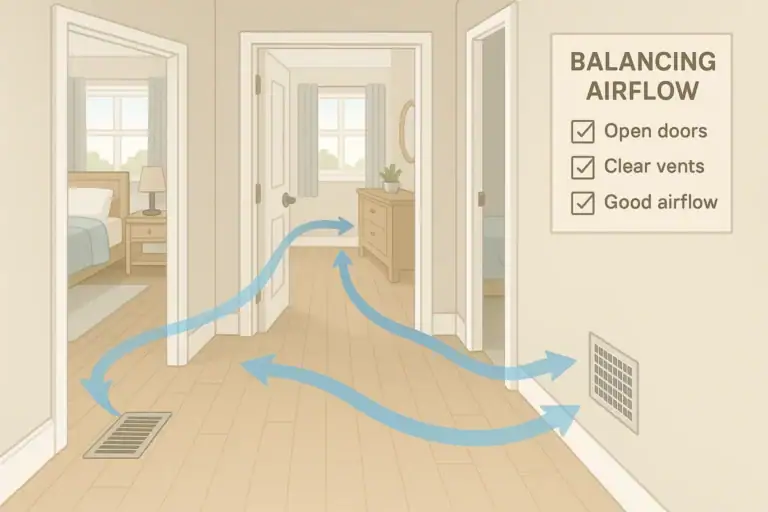 How to Balance Airflow Between Rooms at Home: A Practical Checklist
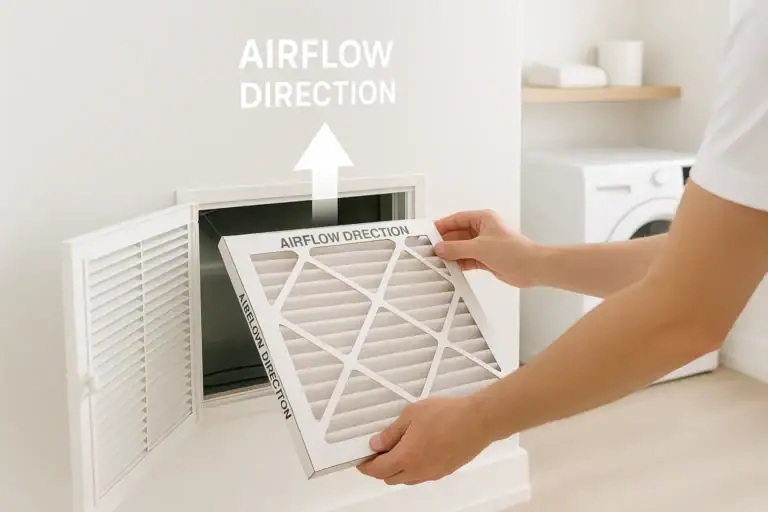 HVAC Filter Arrow Direction: Common Installation Mistakes and How to Fix Them
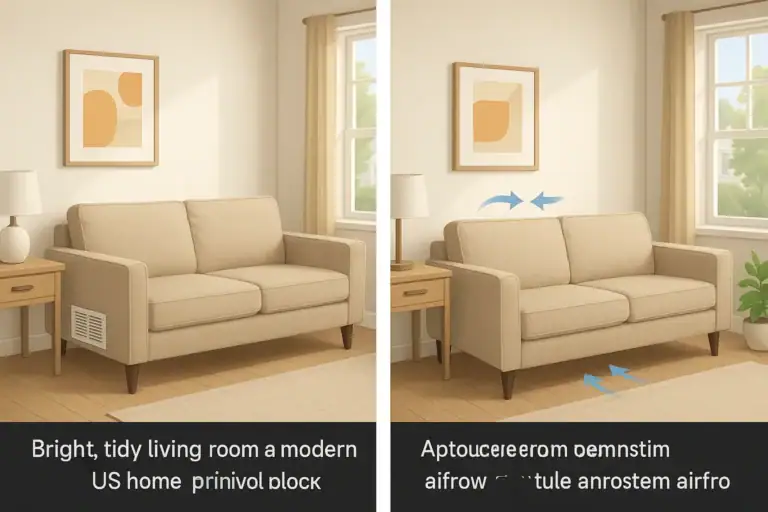 What Happens When Furniture Blocks a Return Vent? Troubleshooting Guide