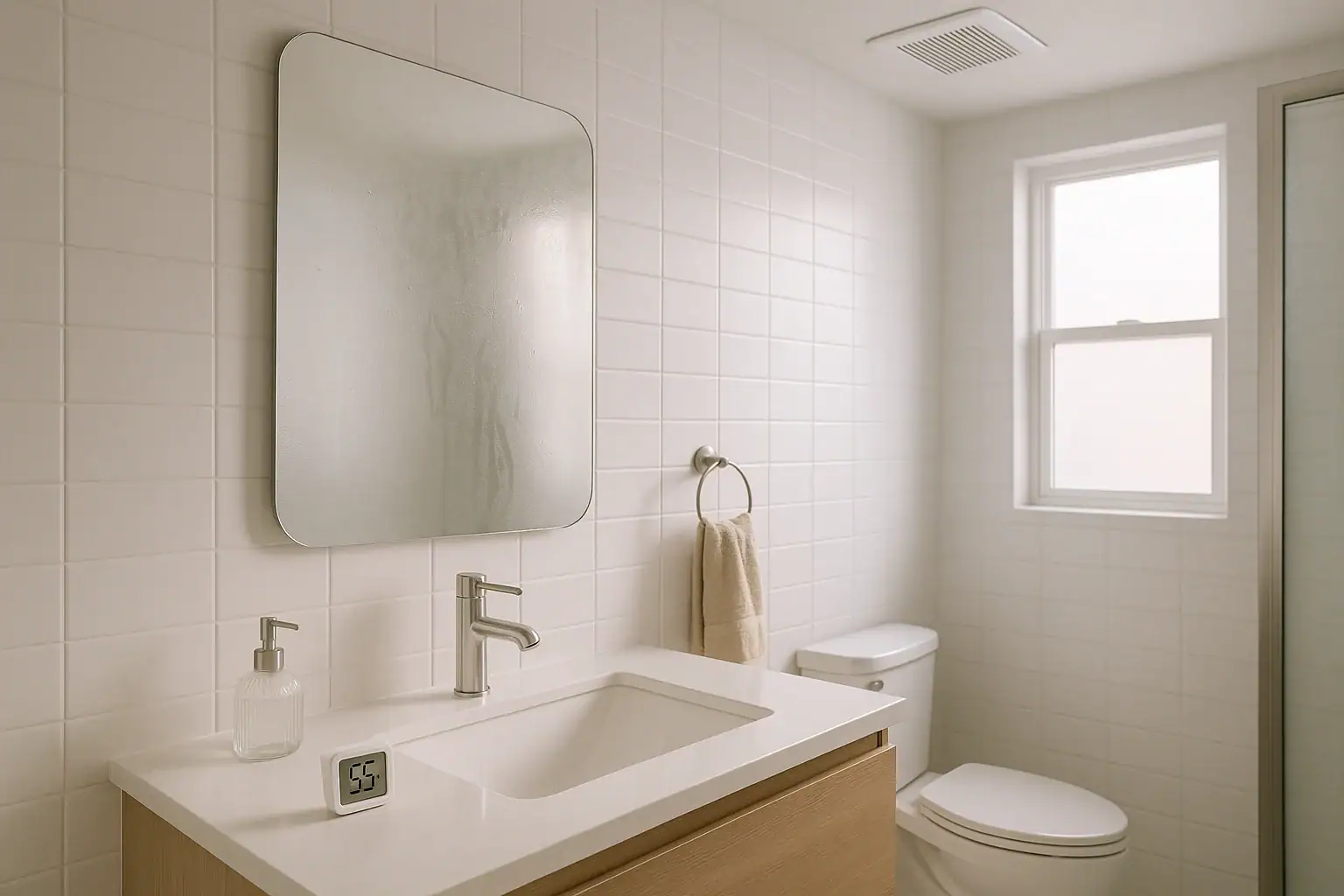
Stepping out of a hot shower into a steamy bathroom is completely normal, but lingering humidity can quietly damage your home. Excess moisture encourages mold, warps wood, peels paint, and can even impact indoor air quality. Understanding what “normal” bathroom humidity looks like after a shower, how long it should take to drop, and what you can do to control it will help you protect both your home and your comfort. This guide explains typical humidity ranges, why your bathroom gets so steamy, how to tell if you have a problem, and practical steps you can take right away to keep moisture in check without giving up long, hot showers.
What Is Humidity and Why It Spikes in the Bathroom
Humidity is simply the amount of water vapor in the air. When you shower, especially with hot water, a large amount of that water evaporates and mixes with the air in a small, enclosed space. Because bathrooms are usually compact and often have limited ventilation, the humidity level can rise quickly.
Two terms are helpful to know:
- Relative humidity (RH): The percentage of water vapor in the air compared to the maximum it can hold at that temperature.
- Condensation: When warm, moist air touches a cooler surface, like a mirror or window, and water droplets form.
During a hot shower, the air temperature and moisture level both increase. Warm air can hold more water vapor, so relative humidity can quickly climb to very high levels, especially if there is no fan running or window open.
Normal Bathroom Humidity After a Shower
Indoor humidity in most homes is typically comfortable between about 30% and 50% relative humidity. Bathrooms are an exception right after a shower, because they are exposed to a burst of moisture.
Typical humidity ranges
Here is what many households experience under common conditions:
- Before a shower: 30% to 50% RH is common in a well-balanced home.
- During a hot shower: 60% to 80% RH is common, and it can briefly reach 90% or higher in a small, closed bathroom.
- 30 minutes after a shower: Ideally back down near 50% to 60% RH with a working exhaust fan or good ventilation.
A short spike in humidity is normal. The key is how high it goes and how long it stays there.
How long should humidity stay high?
In a bathroom with decent ventilation:
- Humidity should begin dropping within 5 to 10 minutes after you turn off the shower.
- It should usually return close to the home’s normal level within about 30 to 60 minutes.
If your bathroom still feels damp, smells musty, or has fogged mirrors more than an hour after a shower, that is a sign that moisture is not being removed effectively.
Signs Your Bathroom Humidity Is Too High
You do not need special tools to notice potential moisture problems. Pay attention to these warning signs:
- Persistent fogged mirrors that stay cloudy long after the shower ends.
- Condensation on walls or ceiling that lingers or forms droplets that run down the paint.
- Peeling or bubbling paint, or soft, swollen drywall.
- Dark spots or fuzzy growth around the ceiling, corners, caulk, or grout lines.
- Musty or damp odors that do not go away even when the bathroom is not in use.
- Warped doors, trim, or cabinets near the shower or tub.
- Window condensation that drips onto the sill or frame regularly.
These signs suggest that humidity is staying elevated for too long, which can lead to mold growth and long-term damage if not addressed.
How to Measure Bathroom Humidity
While your senses can tell you a lot, a simple humidity meter can give you clear numbers to work with.
Using a hygrometer
A hygrometer is a small device that measures relative humidity. Many models also show temperature. To use one in your bathroom:
- Place it on a shelf or counter away from direct water spray.
- Check the reading before you shower to see your baseline humidity.
- Check again during and after your shower to see how high it goes and how fast it drops.
For most homes, a bathroom that peaks around 70% to 80% RH and then drops back below 55% to 60% within an hour is generally considered manageable, as long as there are no signs of moisture damage.
Smart sensors and integrated options
Some homes use smart humidity sensors or thermostats that track humidity in multiple rooms. If your home has this feature, review the history for your bathroom or nearby hallway to see patterns over time, especially in winter when condensation can be more noticeable.
Why High Bathroom Humidity Is a Problem
It is tempting to ignore steam and foggy mirrors, but chronic humidity issues can cause more than just minor annoyance.
Mold and mildew growth
Mold and mildew thrive in warm, damp environments with little airflow. A bathroom that stays humid for hours each day provides ideal conditions. Once mold grows on caulk, grout, or drywall, it can be difficult to remove completely and may require replacement of materials.
Damage to finishes and building materials
Excess moisture can:
- Soften and stain drywall or plaster.
- Cause paint to peel, bubble, or crack.
- Warp wood trim, doors, and cabinets.
- Encourage rust on metal fixtures and fasteners.
Comfort and indoor air quality
Very high humidity can make the bathroom feel stuffy and uncomfortable. Moisture can also carry odors and provide a habitat for dust mites and other allergens. Keeping humidity in a reasonable range helps maintain a fresher, more comfortable space.
Practical Ways to Reduce Bathroom Humidity After a Shower
You do not have to give up warm showers to control humidity. A few simple changes in habits and ventilation can make a big difference.
Use the exhaust fan correctly
A bathroom exhaust fan is one of the most effective tools for removing moist air. To get the most out of it:
- Turn it on before you start the shower so it is already moving air when steam begins to build.
- Run it during the entire shower to capture as much moisture as possible.
- Let it run for at least 15 to 20 minutes afterward to help the room return to normal humidity.
- Keep the fan clean by gently vacuuming or wiping the grille so dust does not reduce airflow.
If the fan is very noisy, weak, or old, it may not be moving enough air. Many homeowners find that upgrading to a properly sized, quieter fan encourages more regular use.
Improve natural ventilation
If your bathroom has a window, it can help remove moist air, especially when used with a fan.
- Crack a window slightly during or right after a shower, if weather allows.
- Open the bathroom door once you are done showering to let moisture escape into the rest of the home, where it can disperse.
- Avoid blocking air gaps under the door, which allow replacement air to enter as the fan exhausts humid air.
Adjust shower habits
Small changes can noticeably reduce the amount of steam produced:
- Lower the water temperature slightly to reduce the amount of vapor released.
- Shorten showers when possible, especially in bathrooms with poor ventilation.
- Use a shower curtain or door properly to keep water in the shower area and reduce splashing on walls and floors.
Dry surfaces promptly
Water that stays on surfaces continues to evaporate into the air, keeping humidity high. After a shower:
- Squeegee shower walls and doors to remove excess water.
- Wipe down wet areas on counters or window sills.
- Hang towels and bath mats so they can dry fully, preferably outside the bathroom if it tends to stay humid.
When a Dehumidifier or Other Help Makes Sense
In some homes, especially in very humid climates or in bathrooms without windows or adequate fans, extra help may be needed.
Portable dehumidifier near the bathroom
Using a small portable dehumidifier in a nearby hallway or just outside the bathroom door can help capture excess moisture that escapes after showers. This can be useful if:
- Your bathroom has no exhaust fan and adding one is not practical.
- The bathroom opens directly into a bedroom or closet that feels damp.
- You notice musty odors or condensation beyond the bathroom itself.
Whole-home humidity control
If your entire home tends to feel humid, especially in summer, the bathroom may just be highlighting a larger issue. In that case, consider:
- Checking that your central air system is working properly and filters are clean.
- Addressing any leaks or standing water in other areas of the home.
- Using a whole-home dehumidifier or other moisture control measures if recommended by a professional.
Bathroom Design Choices That Help Control Humidity
If you are renovating or updating a bathroom, certain design choices can make humidity easier to manage for years to come.
Ventilation and layout
- Install an appropriately sized exhaust fan for the room’s square footage and duct length.
- Vent the fan outdoors, not into an attic or crawl space, to avoid moving moisture elsewhere in the home.
- Consider a fan with a humidity sensor that turns on automatically when moisture rises.
- Plan for airflow with a slight gap under the bathroom door and clear pathways for air to move.
Moisture-resistant materials
- Use moisture-resistant paint on walls and ceilings.
- Choose tile or other water-resistant surfaces in shower areas and on floors.
- Seal grout and caulk properly to reduce water absorption into walls and floors.
- Select cabinetry and trim designed to handle occasional moisture.
Simple Routine to Keep Bathroom Humidity in Check
Consistency matters more than perfection. This basic routine can help keep your bathroom healthier with minimal effort:
- Before showering: Turn on the exhaust fan and, if possible, crack a window slightly.
- During the shower: Keep the fan running and the door mostly closed so steam goes toward the fan, not into the hallway.
- Right after the shower: Squeegee the shower walls and glass, hang towels to dry, and leave the fan on.
- 15 to 20 minutes later: Turn off the fan once the mirror is clear and the room feels less humid.
- Weekly: Wipe down any areas that tend to collect moisture and check for early signs of mold or peeling paint.
When to Seek Professional Help
Most bathroom humidity issues can be improved with better ventilation and simple habit changes. However, consider consulting a professional if you notice:
- Recurring mold growth that returns soon after cleaning.
- Soft or crumbling drywall around the shower or tub.
- Persistent musty odors that spread beyond the bathroom.
- Visible water stains on ceilings or walls below the bathroom.
- Very high humidity readings throughout the home, not just in the bathroom.
An experienced contractor or indoor air specialist can check for hidden leaks, ventilation problems, or structural damage and suggest long-term solutions.
How long should shower humidity last?
A brief spike is expected; lingering condensation is the warning sign. Track the room’s relative humidity before the shower, immediately after it, and again while the exhaust fan runs. The exact recovery time varies with room size, outdoor conditions, shower length, air leakage, and fan capacity, so look for a repeatable return toward the home’s normal range rather than relying on one universal minute count.
If mirrors and walls remain wet, the reading stays high for a long period, or musty odor returns, improve moisture removal and check whether the fan actually vents outdoors. A fan can sound strong while moving little air because of a blocked grille, dirty housing, crushed duct, long duct run, or stuck exterior damper.
Adjust for season and climate
Opening a window may help when outdoor air is cooler and drier, but it can add moisture in humid weather. In cold weather, condensation on windows or exterior walls can occur even when the room average looks acceptable because those surfaces are colder. Use the exhaust fan during the shower and long enough afterward to clear visible moisture; use air conditioning or a dehumidifier when the wider home is humid.
The EPA recommends keeping indoor relative humidity below 60%, ideally around 30% to 50% where practical. Its humidity and mold guidance also emphasizes moisture control. If mold returns after cleaning, fix the moisture source rather than repeatedly treating the surface alone.
Key Takeaways
- Short-term humidity spikes after a shower are normal, especially in small bathrooms.
- Humidity should start dropping within minutes and usually return near normal within an hour.
- Lingering fog, musty smells, peeling paint, or mold spots are signs that moisture is not being removed effectively.
- Using a bathroom fan correctly, improving ventilation, drying surfaces, and adjusting shower habits can greatly reduce humidity.
- Design choices like proper exhaust venting and moisture-resistant materials help keep humidity under control over the long term.
By understanding what normal bathroom humidity looks like and taking a few practical steps, you can enjoy comfortable showers while protecting your home from hidden moisture damage.
 Static Electricity in Winter: Humidity Fixes and Home Troubleshooting Guide
 How to Reduce Heat From Sunny Windows Without Blocking Natural Light
 Why Your Home Feels Dry Even When Humidity Is Normal