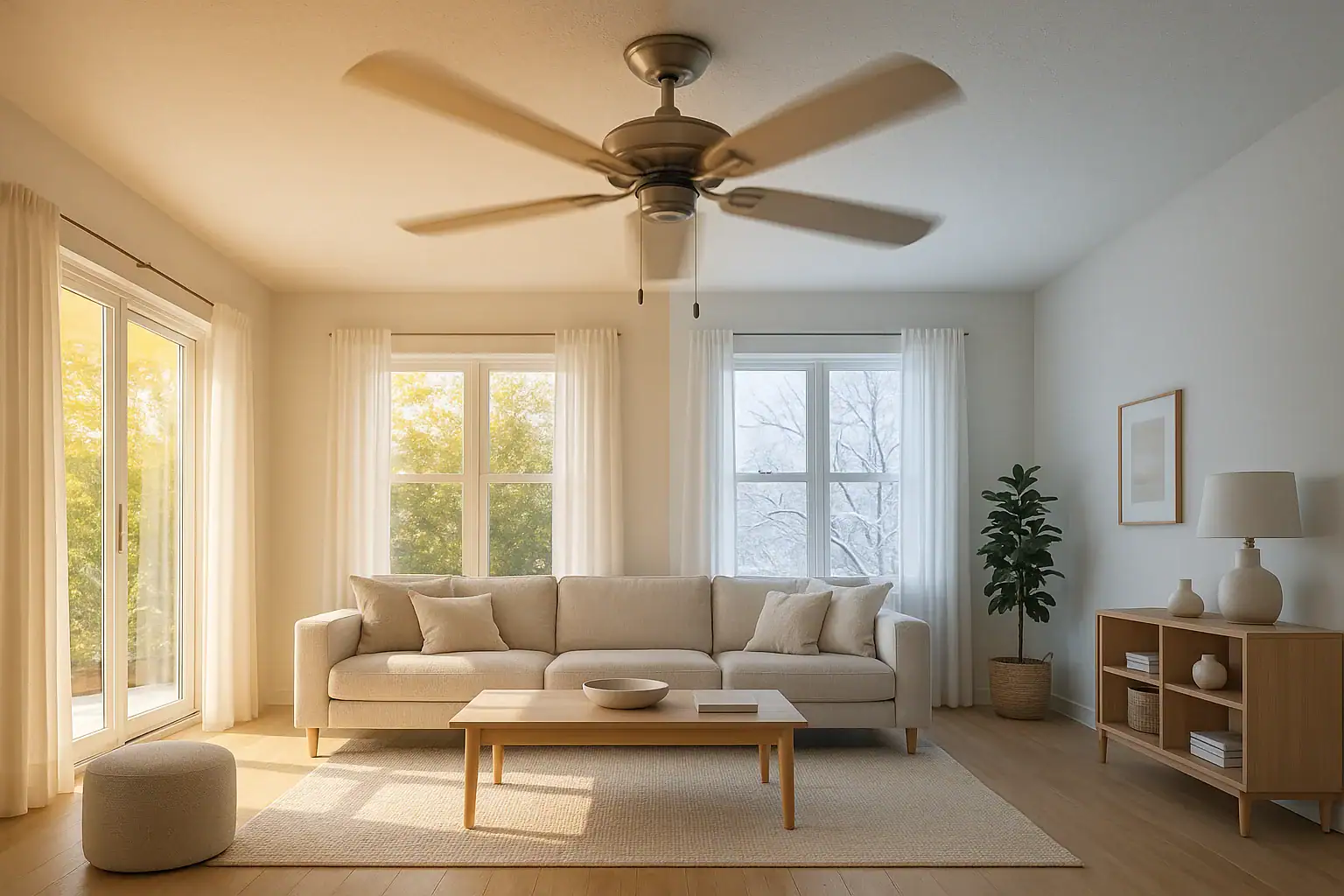
Knowing which way your ceiling fan should spin in summer vs winter is one of those small home details that makes a big difference. The right direction can help rooms feel cooler in hot weather, warmer in cold weather, and may even help you use your heating and cooling systems more efficiently. The good news: once you understand the basic rule and how to adjust your fan, it becomes a quick seasonal habit that takes just a few minutes.
On this page(click to collapse)
- Why Ceiling Fan Direction Matters
- Ceiling Fan Direction in Summer
- Ceiling Fan Direction in Winter
- How to Tell Which Way Your Fan Is Spinning
- How to Change Ceiling Fan Direction
- Quick Seasonal Rule to Remember
- Adjusting Fan Direction for Different Ceiling Heights
- Common Ceiling Fan Direction Mistakes
- Energy and Comfort Tips with Ceiling Fans
- Safety Tips When Adjusting Your Fan
- Troubleshooting Direction and Airflow Issues
- Make Fan Direction Part of Your Seasonal Routine
- Related guides
This guide explains how ceiling fan direction works, what setting you should use in summer and winter, how to test your fan, and how to adjust your routine for different room types and ceiling heights. You will also find safety tips and simple troubleshooting steps so you can feel confident every time you flip that switch.
Why Ceiling Fan Direction Matters
Ceiling fans do not change the temperature of the air, but they change how the air feels on your skin and how heat moves around a room. The direction of the blades controls the pattern of airflow. That airflow pattern determines whether you feel a cooling breeze or a gentle mixing of warm air.
In summer, you want air moving downward to create a wind-chill effect. In winter, you want to gently recirculate warm air that collects near the ceiling without creating a draft. Using the correct direction helps you:
- Feel cooler in summer without lowering the thermostat as much
- Feel warmer in winter without raising the thermostat as high
- Reduce hot and cold spots in rooms with high or vaulted ceilings
- Make your heating and cooling systems work more efficiently
Ceiling Fan Direction in Summer
In summer, your ceiling fan should spin counterclockwise when you look up at it. This direction pushes air downward, creating a noticeable breeze that helps sweat evaporate from your skin. That evaporation is what makes you feel cooler, even though the actual room temperature does not change.
How Summer Fan Direction Helps You Feel Cooler
When the fan rotates counterclockwise at a higher speed, the blades scoop air and push it straight down. This movement:
- Increases air movement around your body
- Makes the room feel about 4–8 degrees cooler
- Lets you raise the thermostat a few degrees while staying comfortable
For example, if you usually set your air conditioning to 72°F, you may be able to set it to 75–76°F with a ceiling fan running in the correct direction and still feel just as comfortable.
Best Summer Settings by Room
- Living rooms and family rooms: Use medium to high speed when people are in the room. Turn the fan off when the room is empty.
- Bedrooms: Use low to medium speed at night so the breeze feels comfortable but not too intense while you sleep.
- Home offices: Use low to medium speed to stay comfortable without drying your eyes or blowing papers around.
- Porches or covered patios: Use higher speeds to help move humid air and discourage insects.
Ceiling Fan Direction in Winter
In winter, your ceiling fan should spin clockwise at a low speed. This direction pulls air upward toward the ceiling, then gently pushes the warm air that rises back down along the walls. When done correctly, you should not feel a strong breeze or draft.
How Winter Fan Direction Helps You Feel Warmer
Warm air naturally rises and collects near the ceiling. In rooms with high or vaulted ceilings, the air near the ceiling can be several degrees warmer than the air at sitting or standing level. A clockwise fan direction at low speed:
- Gently mixes the warm air at the ceiling with cooler air below
- Reduces cold spots at floor level
- Helps the room feel more evenly heated
- May allow you to lower the thermostat a degree or two
The key is to keep the fan on low so you are not creating a cooling breeze. You want air circulation, not wind-chill.
Best Winter Settings by Room
- Rooms with high or vaulted ceilings: A low, clockwise setting can make a noticeable difference in comfort and may reduce how often your heating system runs.
- Open-concept spaces: A low fan setting helps move warm air into corners and away from just the area near the thermostat.
- Bedrooms: Use low speed if the room feels chilly near the floor or if you have tall ceilings.
How to Tell Which Way Your Fan Is Spinning
It can be hard to see blade direction at full speed. Use this simple method to check your fan direction in any season:
- Stand directly under the fan. Turn it on at a low speed so you can see the blades clearly.
- Look up and observe the rotation.
- If the blades move from left to right in a counterclockwise motion, that is the summer setting.
- If the blades move from right to left in a clockwise motion, that is the winter setting.
- Pay attention to how it feels.
- If you feel a strong breeze directly below the fan, it is in the summer (cooling) direction.
- If you feel very little air movement but the room feels more evenly warm over time, it is in the winter (circulating) direction.
How to Change Ceiling Fan Direction
Most ceiling fans have a small direction switch on the motor housing, near the base of the fan. Newer models may also offer direction control on a wall switch or remote. Always follow your product’s instructions, but these general steps apply to most fans:
Changing Direction with a Manual Switch
- Turn the fan off. Wait until the blades come to a complete stop.
- Locate the direction switch. It is usually a small sliding switch on the side of the fan’s motor housing.
- Flip the switch.
- One position is for counterclockwise (summer).
- The other position is for clockwise (winter).
- Turn the fan back on at a low speed. Confirm the direction visually and adjust speed as needed.
Changing Direction with a Remote or Wall Control
If your fan uses a remote or wall control, look for a button labeled “direction,” “reverse,” or an icon with two arrows forming a circle. Press it once while the fan is off, then turn the fan on at low speed and confirm the new direction.
Quick Seasonal Rule to Remember
Here is an easy way to remember ceiling fan direction in summer vs winter:
- Summer: Counterclockwise, feel the breeze.
- Winter: Clockwise, no strong breeze.
Another memory trick: in summer, you want the air to come down on you; in winter, you want the air to move up and around the room.
Adjusting Fan Direction for Different Ceiling Heights
Ceiling height changes how your fan’s airflow feels and how you should use it in each season.
Standard 8-Foot Ceilings
- Summer: Counterclockwise at low to medium speed is usually enough to feel a comfortable breeze.
- Winter: Clockwise at the lowest speed. If you feel any draft, turn the speed down or turn the fan off.
High or Vaulted Ceilings
- Summer: Counterclockwise at medium to high speed helps bring cool air down to seating level.
- Winter: Clockwise at low to medium speed can help pull warm air down from the ceiling and spread it through the room.
Low Ceilings or Flush-Mount Fans
- Summer: Use low to medium speed so the breeze feels comfortable and not overwhelming.
- Winter: If the fan is very close to head height, use the lowest speed or consider turning it off if it feels drafty.
Common Ceiling Fan Direction Mistakes
Even experienced homeowners sometimes use the wrong setting without realizing it. Here are common mistakes and how to fix them:
- Running the fan counterclockwise in winter: This can make a room feel cooler and cause you to raise the thermostat. Switch to clockwise on low speed.
- Running the fan clockwise on high speed: In winter, this can create a draft and actually make you feel colder. Always use the lowest speed in winter.
- Leaving fans on in empty rooms: Fans cool people, not rooms. Turn them off when you leave to avoid wasting electricity.
- Not checking direction after power outages: Some fans may reset or behave differently after electrical work or outages. Recheck direction at the start of each season.
Energy and Comfort Tips with Ceiling Fans
Using the correct ceiling fan direction is just one part of staying comfortable year-round. Combine it with these simple habits for better comfort and potential energy savings:
- Pair fans with your thermostat: In summer, try raising your thermostat by 2–4 degrees when using fans. In winter, see if you can lower it by 1–2 degrees when using a clockwise fan on low.
- Use fans only when needed: Turn fans off when you leave a room. The cooling effect only works when air is moving across your skin.
- Balance airflow with doors and windows: In mild weather, combine ceiling fans with open windows to move fresh air through the home.
- Keep blades clean: Dust buildup can reduce efficiency and spread particles into the air. Gently clean blades a few times a year, especially at seasonal changeovers.
Safety Tips When Adjusting Your Fan
Changing the direction switch is simple, but take a few precautions, especially if you need a step stool or ladder.
- Always turn the fan off and wait for the blades to stop completely.
- Use a sturdy step stool or ladder on a flat surface if you cannot reach the switch.
- Avoid leaning on the fan or pulling on the blades.
- If the fan wobbles or makes unusual noises, turn it off and check that all screws and mounting hardware are secure.
Troubleshooting Direction and Airflow Issues
If your fan does not seem to be helping, even in the correct direction, check for these common issues:
- Weak airflow: Try a higher speed setting in summer or confirm that the blades are not coated in dust.
- Uneven comfort in the room: Make sure furniture is not blocking airflow directly under the fan. In large rooms, you may need more than one fan.
- Fan does not change direction: Confirm that the fan is completely off before flipping the switch. If it still will not reverse, consult a qualified electrician.
Make Fan Direction Part of Your Seasonal Routine
The easiest way to stay on top of ceiling fan direction in summer vs winter is to treat it like any other seasonal home task. When you switch from heating to cooling or vice versa, take a few minutes to adjust your fans.
- In spring, set fans to counterclockwise and test speeds for comfort.
- In fall, set fans to clockwise on low and check for any wobbling or noise.
Once this becomes a habit, you will spend less time wondering which way the blades should spin and more time enjoying a comfortable home in every season.
Recommended next:
Related posts
Browse this topic →
Radiator Heat Balancing Tips for Older Homes: A Practical Guide
Supply Vent vs Return Vent: How to Tell the Difference in Your Home
Static Electricity in Winter: Humidity Fixes and Home Troubleshooting Guide
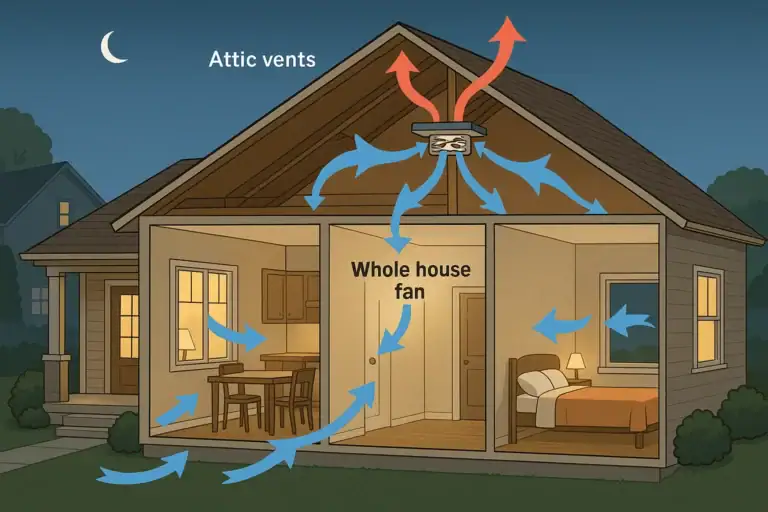
Whole House Fan Ventilation Guide for Cool Evenings

HVAC Condensate Drain Line Maintenance Checklist for a Dry, Healthy Home
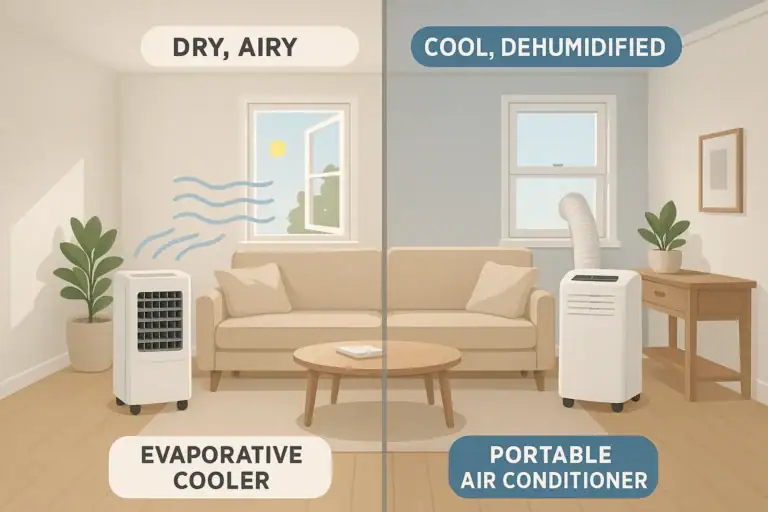
Evaporative Cooler vs Portable AC for Home Comfort: Which Is Better?
Keep reading
About this site
Signature Home Guide publishes practical, independent home guides. We aim to be clear, helpful, and transparent.
Affiliate disclosure
As an Amazon Associate, we earn from qualifying purchases. Some links on this site may be affiliate links. If you buy through these links, we may earn a small commission at no extra cost to you. This helps support our content. Learn more.