On many evenings in much of the United States, outdoor temperatures drop while homes stay warm and stuffy from the day’s heat. A whole house fan can turn those cool evenings into free, fresh air conditioning, reducing your reliance on mechanical cooling and improving indoor air quality. This guide explains how whole house fans work, when they make sense, and how to use them safely and effectively so you can enjoy a more comfortable home with lower energy use.
What Is a Whole House Fan?
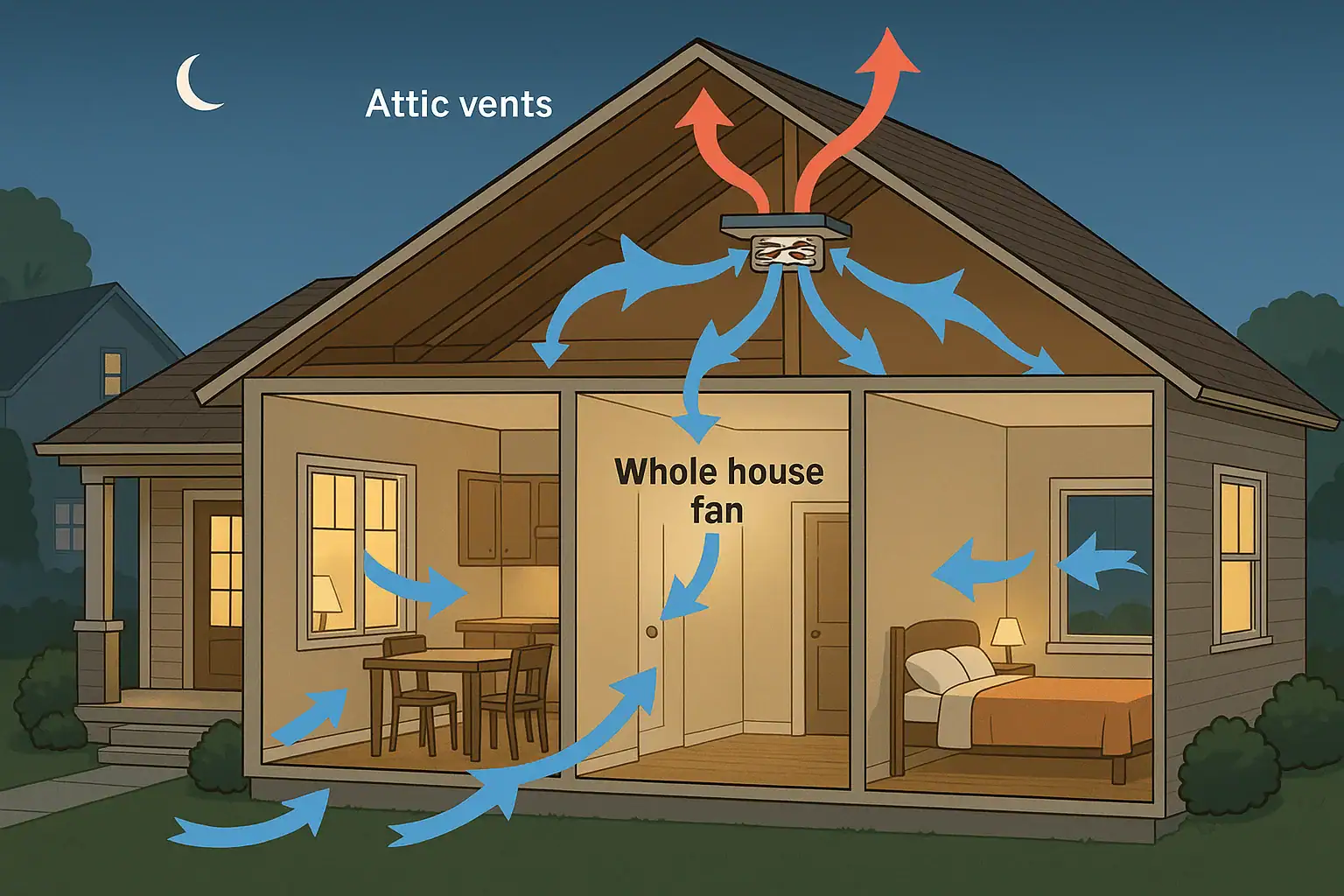
A whole house fan is a powerful, ceiling-mounted fan that pulls cool outdoor air into your home through open windows and exhausts warm indoor air into the attic and out through attic vents. It is usually installed in a central hallway ceiling and is designed to move a large volume of air quickly.
Unlike a standard ceiling fan, which mainly circulates air within a room, a whole house fan creates a complete air exchange throughout the home. When used on cool evenings or early mornings, it can drop indoor temperatures several degrees in a short period of time.
Basic Components
- Fan unit: Mounted in the ceiling, typically between the living space and the attic.
- Intake grille or shutters: Located in the hallway ceiling; they open when the fan runs.
- Attic space: Acts as a pathway for air to exit the home.
- Attic vents: Roof, ridge, or gable vents that allow air to escape to the outdoors.
- Controls: Wall switch, speed control, or timer that turns the fan on and off.
How a Whole House Fan Cools Your Home
The cooling effect of a whole house fan comes from two main actions: flushing out hot air and bringing in cooler outside air. This process is most effective when the outdoor temperature is noticeably lower than the indoor temperature.
Step-by-Step Airflow
- You open selected windows around the home, usually in the rooms you want to cool the most.
- You switch on the whole house fan.
- The fan pulls cool evening air in through those open windows.
- Warm indoor air is drawn upward into the attic through the fan opening.
- The warm air exits the attic through roof or gable vents.
This continuous airflow can replace the air in your home several times per hour, which can quickly reduce indoor temperatures and make rooms feel fresher and less humid.
Comfort Benefits
- Rapid cooling: Many homes feel noticeably cooler within 15–30 minutes of operation.
- Improved air quality: Stale, stuffy air is replaced with outdoor air, helping to reduce odors and indoor pollutants.
- Enhanced comfort: The moving air creates a wind-chill effect that makes you feel cooler, even if the temperature drop is modest.
When a Whole House Fan Makes Sense
A whole house fan is not ideal for every climate or home, but in the right conditions it can be a valuable addition to your comfort strategy.
Best Climate Conditions
Whole house fans work best in areas where:
- Evening and overnight temperatures regularly drop below indoor temperatures.
- Humidity is moderate or low during the cooler hours.
- There is a significant difference between daytime highs and nighttime lows.
Many regions with warm days and cooler nights, including parts of the West, Mountain states, and some inland areas, are good candidates. In very hot and humid regions where nights stay warm and muggy, the benefit may be limited.
Home Features That Help
Your home is more likely to benefit from a whole house fan if it has:
- A reasonably sized attic with adequate venting to the outdoors.
- Accessible central hallway ceiling space for installation.
- Windows that open easily in multiple rooms.
- Safe, secure surroundings where you are comfortable opening windows in the evening.
Whole House Fan vs. Air Conditioning
Whole house fans and air conditioning systems serve different roles. Understanding how they compare can help you use each one more efficiently.
Key Differences
- Cooling method: Air conditioning removes heat and moisture from indoor air. A whole house fan replaces indoor air with outdoor air and relies on cooler outside temperatures.
- Operating cost: Whole house fans generally use much less electricity than central or window air conditioning units, especially when used during naturally cool periods.
- Temperature control: Air conditioning can maintain a precise set temperature. Whole house fans follow outdoor conditions and cannot cool below the outdoor temperature.
- Seasonal use: Whole house fans are most useful during spring, fall, and cooler summer evenings. Air conditioning is often needed during hot, humid days and nights.
Using Both Together Strategically
Many homeowners get the best results by using a whole house fan to reduce the need for air conditioning, rather than replacing it entirely. For example:
- Use the whole house fan in the evening to cool the house and attic after a hot day.
- Turn off the fan and close windows in the morning to trap the cool air inside.
- Rely on air conditioning later in the day only if indoor temperatures become uncomfortable.
Sizing a Whole House Fan
Choosing the right size fan is important for both comfort and noise levels. A fan that is too small will not move enough air, while an oversized fan can be unnecessarily loud and may overwhelm your attic ventilation.
Understanding Air Changes per Hour
Whole house fans are often sized based on the number of air changes per hour (ACH). This measures how many times the entire volume of air in your home is replaced in one hour.
- For effective cooling, many guidelines suggest 15–20 air changes per hour.
- Homes in hotter regions may prefer the higher end of that range.
Basic Sizing Steps
- Estimate your home’s square footage. Include the main living areas you want to cool.
- Estimate ceiling height. Many homes have ceilings around 8–9 feet.
- Calculate home volume. Multiply square footage by ceiling height.
- Choose a target ACH. For many homes, 15–20 ACH is a reasonable goal.
- Convert to fan capacity. Fan capacity is usually listed in cubic feet per minute (CFM). A professional or online calculator can help you translate your home’s volume and target ACH into a recommended CFM range.
If you are unsure, consult a qualified installer who can assess your home’s size, layout, and attic ventilation to recommend an appropriate fan capacity.
Attic Ventilation Requirements
Proper attic ventilation is essential for safe and effective whole house fan operation. When the fan pushes large amounts of air into the attic, that air needs a clear path to escape outdoors.
Why Attic Venting Matters
- Prevents pressure buildup: Without enough vent area, pressure can build in the attic, straining the fan and potentially forcing air back into the living space.
- Protects roofing materials: Excess heat and moisture in the attic can shorten the life of roofing components.
- Improves performance: Adequate venting allows the fan to move air freely, improving cooling effectiveness.
Types of Attic Vents
Common attic vent types include:
- Ridge vents along the roof peak
- Gable end vents
- Roof-mounted exhaust vents
- Soffit vents along the eaves
A professional can evaluate whether your existing vents provide enough free area for the fan you plan to install and recommend any needed upgrades.
How to Use a Whole House Fan on Cool Evenings
Getting the most from a whole house fan is largely about timing and window management. A few simple habits can make a big difference in comfort and efficiency.
Best Times to Run the Fan
- Evenings: Turn on the fan when outdoor temperatures fall below your indoor temperature.
- Overnight: If security allows, you may run the fan on a low setting to maintain cooler temperatures.
- Early mornings: Use the fan to pull in cool morning air before the day heats up.
Window Strategy for Effective Cooling
For safe and efficient operation:
- Open windows in the rooms you want to cool first, such as bedrooms and living areas.
- Crack windows on opposite sides of the house to encourage cross-ventilation.
- Avoid opening too many windows wide; slightly open windows can increase air speed and cooling in targeted rooms.
- Close doors to rooms you do not need to cool to focus airflow where you want it.
Coordinating with Your Cooling System
Before running the fan:
- Turn off your central or window air conditioning to avoid wasting energy.
- Close any fireplace dampers or wood stove doors to prevent drawing ashes or odors into the home.
Safety and Indoor Air Quality Considerations
Because whole house fans move large amounts of air, it is important to use them in a way that protects indoor air quality and safety.
Backdrafting Risks
If your home has fuel-burning appliances such as gas water heaters, furnaces, or fireplaces, a powerful fan can create negative pressure that pulls exhaust gases back into the home instead of venting them outdoors. To reduce this risk:
- Ensure adequate windows are open before starting the fan.
- Avoid running the fan at high speed when fuel-burning appliances are operating.
- Have combustion appliances inspected regularly and confirm proper venting.
- Install and maintain carbon monoxide detectors on each level of your home.
Outdoor Air Quality
Because a whole house fan pulls outdoor air directly into your home, be mindful of local conditions:
- Avoid running the fan during heavy outdoor smoke, dust, or poor air quality alerts.
- Consider limiting use during high pollen periods if household members have allergies.
- Keep window screens clean to reduce insect and debris entry.
Noise and Comfort Tips
Modern whole house fans can be relatively quiet, but any high-volume fan will produce some sound. A thoughtful setup can keep noise at a comfortable level.
Reducing Noise
- Choose a fan designed for quiet operation with appropriate sizing.
- Use multiple speed settings, running on low when possible.
- Ensure the fan is properly mounted and insulated to reduce vibration.
- Close doors to bedrooms if the fan is located in a nearby hallway and noise is a concern.
Improving Comfort
To make the most of the breeze created by your whole house fan:
- Position beds and seating areas where airflow from open windows is strongest.
- Use interior doors to direct airflow through specific rooms.
- Combine with ceiling or portable fans to enhance air movement in larger spaces.
Basic Maintenance and Care
Routine care helps keep your whole house fan running efficiently and extends its lifespan.
Simple Maintenance Tasks
- Clean the grille: Dust the intake grille or shutters regularly to maintain good airflow.
- Inspect the fan: Periodically check for dust buildup on blades and around the housing. Turn off power before any inspection.
- Listen for changes: Pay attention to new noises or vibration, which may indicate loose mounting hardware or wear.
- Check attic vents: Make sure vents remain clear of insulation, nests, or debris.
For any internal service or electrical work, use a qualified professional to ensure safe repairs and code compliance.
Seasonal Use and Off-Season Steps
Whole house fans are typically used during milder months. In colder seasons, a few extra steps can help preserve energy.
During the Cooling Season
- Use the fan on cool evenings and mornings to reduce air conditioning run time.
- Experiment with which windows you open to find the most comfortable airflow patterns.
- Monitor indoor humidity; if air feels damp or sticky, rely more on air conditioning.
During the Heating Season
- Ensure the fan opening is well sealed or insulated when not in use to prevent heat loss.
- Check weatherstripping or covers designed to reduce drafts around the fan grille.
- Confirm that attic insulation around the fan housing is intact and undisturbed.
Is a Whole House Fan Right for Your Home?
Deciding whether to add a whole house fan depends on your climate, home layout, and comfort preferences. It can be especially appealing if you:
- Experience warm days but reliably cooler evenings.
- Prefer fresh outdoor air over closed-window cooling whenever possible.
- Want to reduce electricity use associated with mechanical cooling.
- Have an attic and window layout that support strong, safe airflow.
If you are considering an installation, a home energy professional or licensed contractor can evaluate your attic ventilation, recommend an appropriate fan size, and discuss placement and controls that match your household’s habits. With proper sizing, venting, and operation, a whole house fan can turn cool evenings into one of your most valuable comfort tools.
 Best Bedroom Temperature Setup for Sleep Without Cooling Your Whole House
 Upstairs Bedroom Too Hot? Practical Airflow Fixes That Actually Help
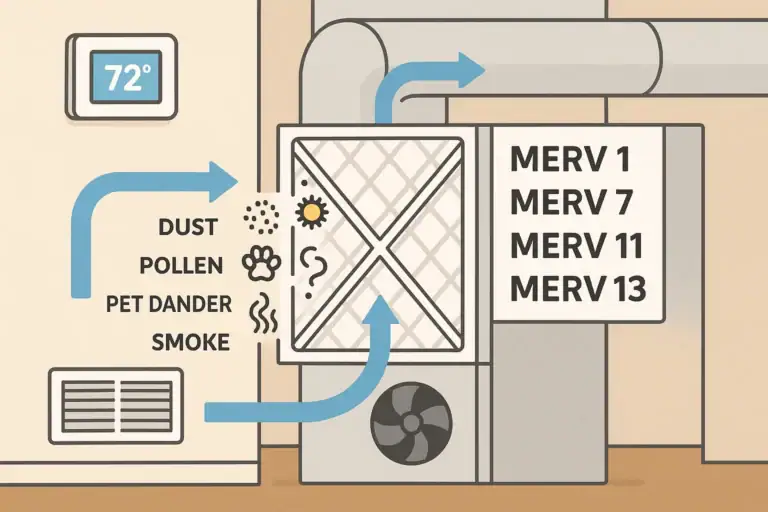 Understanding MERV Filter Ratings for Your Home HVAC System