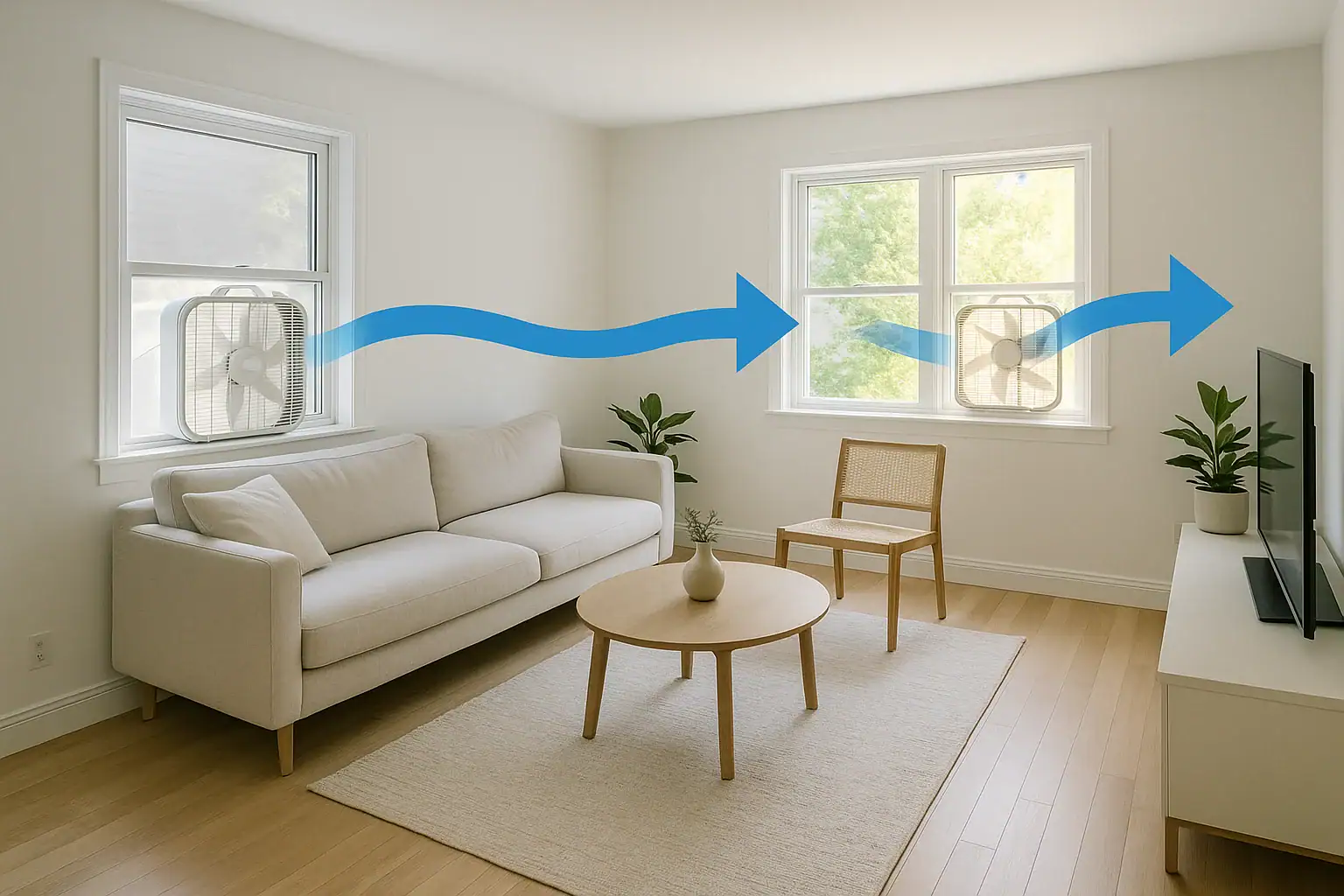
Getting good airflow in an apartment can be tricky. You may have limited windows, neighbors above and below you, and rules about what you can install. Still, with a smart fan setup, you can create powerful cross-ventilation that moves hot, stale air out and pulls cooler, fresher air in. This guide walks you through how cross-ventilation works, how to place fans in different apartment layouts, and how to stay safe and efficient while doing it. You will learn simple setups you can test in a single afternoon, plus tips for day versus night use, humid climates, and small spaces with only one window.
Whether you are trying to stay comfortable in summer, reduce reliance on air conditioning, or just improve indoor air quality, the right fan placement makes a big difference. You do not need complicated equipment. With a few portable fans, some trial and error, and an understanding of airflow, you can turn your apartment into a more comfortable and breathable space.
What Is Cross-Ventilation and Why It Matters
Cross-ventilation is the movement of air through a space from one side to another. Fresh air enters from one opening, such as a window, and exits through another opening on the opposite or adjacent side. Fans help push and pull air along this path, creating a steady breeze that carries heat, moisture, and odors out of your apartment.
In apartments, cross-ventilation is especially useful because:
- Heat builds up quickly in upper floors and interior units.
- Cooking and showering add moisture and odors that linger without airflow.
- Stale indoor air can feel stuffy and uncomfortable, even at moderate temperatures.
- Running air conditioning less can lower energy bills and reduce noise.
The goal is to create a clear path for air to travel through your apartment, using fans to guide and strengthen that movement.
Basic Principles of an Effective Fan Setup
Before you start placing fans, it helps to understand a few basic principles. These ideas apply to almost every apartment layout.
1. You Need an Intake and an Exhaust
Cross-ventilation only works if air can both enter and leave your apartment. Think in terms of:
- Intake: Where cooler or fresher air comes in.
- Exhaust: Where warm or stale air is pushed out.
Fans should be arranged so that at least one is helping pull air in and another is helping push air out, using windows or doors as openings.
2. Air Takes the Easiest Path
Airflow will follow the path of least resistance. If there is a large open doorway between two windows, most of the air will move through that path. Closed doors, cluttered hallways, and heavy curtains can block or weaken flow.
3. Think of Air as a River
Imagine air flowing like water from one side of your apartment to the other. You want a clear upstream (intake), a steady channel (hallway or open rooms), and a downstream (exhaust). Fans act like pumps that help move that river along.
4. Use the Natural Temperature Difference
Hot air rises and cool air sinks. In many cases, it works best to:
- Pull cooler air from shaded or lower-level sides of the building.
- Exhaust warmer air from sunnier or higher sides of the apartment.
Step-by-Step: Planning Your Cross-Ventilation Path
Before you move any fans, take a minute to map your airflow.
-
Identify all possible openings.
List your windows, balcony doors, and any interior doors you can leave open. Note which sides of the building they face and which are usually shaded.
-
Choose one side as intake and one as exhaust.
Pick the cooler, shaded side as your main intake whenever possible. Use the warmer or sun-exposed side as your exhaust.
-
Trace a path between them.
Imagine a line of airflow from intake opening to exhaust opening. That line should pass through the rooms you most want to cool, such as the living room or bedroom.
-
Clear the path.
Open interior doors, move large objects away from doorways, and pull curtains aside so air can move freely.
Best Fan Setups for Common Apartment Layouts
Every apartment is different, but most fall into a few common patterns. Use these examples as starting points and adjust based on your space.
1. Long, Narrow Apartment with Windows at Both Ends
This layout is ideal for cross-ventilation because air can travel in a straight line.
Setup idea:
- Place a fan at the cooler, shaded end of the apartment, facing inward to pull fresh air in.
- Place a second fan at the warmer, sunnier end, facing outward to push air out the window.
- Keep interior doors along the path fully open.
This creates a strong push-pull effect, drawing air through the entire length of the apartment.
2. Corner Apartment with Windows on Adjacent Walls
Corner units often have windows on two different sides, which can be used to your advantage.
Setup idea:
- Use the shadier side as intake with a fan blowing into the room.
- Use the brighter or warmer side as exhaust with a fan blowing out.
- If rooms are offset, angle the intake fan slightly toward the interior doorway to guide air deeper into the space.
This setup helps create diagonal airflow across the main living area.
3. One Main Window and Smaller Secondary Windows
Some apartments have one large window in the living room and smaller ones in the bedroom or kitchen.
Setup idea:
- Place a strong fan in the large window as your main exhaust, facing out.
- Use a smaller fan near a secondary window or door as intake, facing inward.
- Keep the hallway or connecting doors open so air can reach the exhaust fan.
If the large window faces the sun, exhausting hot air there can significantly reduce heat buildup.
4. Apartment with Only One Exterior Window
When you only have one window, you cannot create classic cross-ventilation, but you can still improve airflow.
Setup idea:
- Use one fan in the window blowing out to remove hot air.
- Place a second fan inside, near the interior doorway, blowing toward the window to push air from the rest of the apartment toward the exhaust.
- Leave the apartment door slightly open if allowed and safe, so fresh air can enter from the hallway.
This creates a mini circulation system that pulls air from deeper inside the apartment toward the window.
How to Position Fans for Maximum Effect
Small adjustments in fan placement and angle can make a big difference in how well your cross-ventilation works.
Use One Fan as Intake and One as Exhaust
Whenever possible, dedicate at least one fan to each role:
- Intake fan: Place near a window or door on the cooler side, blowing air into the room.
- Exhaust fan: Place near a window on the warmer side, blowing air out.
This creates a pressure difference that pulls air through the apartment.
Adjust Fan Height
Because warm air rises, fan height matters:
- Set exhaust fans higher when possible to pull out warm air near the ceiling.
- Keep intake fans lower to bring in cooler air from lower levels.
Angle Fans to Guide Air Through Rooms
If rooms are not lined up in a straight path, angle your fans slightly:
- Point the intake fan toward the next doorway or hallway.
- Use a small fan in the hallway to push air around corners.
- In a bedroom off the main path, angle a fan to pull air from the corridor into the room.
Use Doors Strategically
Doors can either block or shape airflow:
- Keep doors fully open along your main airflow path.
- Close doors to rooms you do not need to cool to concentrate airflow where you want it.
- If a door tends to swing shut, use a doorstop so it stays open during peak heat hours.
Day vs. Night: Adjusting Your Fan Strategy
Outdoor temperatures and sun exposure change throughout the day, and your fan setup should adapt.
During the Day
- Use exhaust fans on the sunniest, hottest side of the apartment to remove heat.
- Limit intake from very hot, sun-exposed windows. Use shaded windows or doors instead.
- Close blinds or curtains on direct sun windows to reduce heat gain while fans move air.
During the Night
- When outdoor air is cooler, switch to strong intake from the coolest side of the building.
- Keep an exhaust fan running on the opposite side to pull cool air through the entire apartment.
- If it is safe, open more windows at night to maximize natural cooling.
Special Considerations for Humid or Hot Climates
In very humid or hot regions, simply moving air may not be enough to feel comfortable, but cross-ventilation still helps.
- Focus on nighttime cooling: Use fans to pull in cooler night air and flush out heat stored in walls and furniture.
- Vent moisture quickly: After cooking or showering, run an exhaust fan near the kitchen or bathroom window to remove humid air.
- Avoid pulling in very hot air: During peak afternoon heat, reduce intake from outdoors and use fans mainly to circulate indoor air and support any cooling system you use.
Safety Tips for Window and Door Fan Setups
When using fans near windows and doors, keep safety in mind, especially in upper-floor apartments or homes with children or pets.
- Secure fans firmly: Make sure window fans or fans on sills cannot tip or fall. Use brackets or stable surfaces.
- Use screens where possible: Keep insects and debris out while windows are open.
- Watch cords and outlets: Avoid running cords where people walk. Use grounded outlets and avoid overloading power strips.
- Consider child and pet safety: Keep fan blades out of reach and use models with tight grills.
- Check building rules: Some buildings have guidelines about window devices or open doors in shared hallways.
Fine-Tuning Your Setup: Testing and Adjusting
Every apartment behaves a little differently. The best fan setup often comes from small adjustments over a few days.
Simple Ways to Test Airflow
- Use a tissue or light paper: Hold it near doors or openings to see which way the air is moving.
- Walk the airflow path: Slowly move from intake to exhaust and notice where the breeze feels strongest or weakest.
- Check different fan speeds: Sometimes a lower speed on one fan and higher speed on another improves the balance.
Signs Your Setup Is Working Well
- You feel a noticeable breeze along the main path between windows.
- Rooms down the hall feel less stuffy, even if they are not directly next to a window.
- Cooking odors and bathroom humidity clear more quickly.
Practical Examples: Room-by-Room Tips
Once your main cross-ventilation path is set, you can refine comfort in specific rooms.
Living Room
- Place the strongest intake or exhaust fan here if it is your main gathering space.
- Aim a fan across seating areas rather than directly at faces for a more even breeze.
- Keep pathways between the living room and other rooms open so air can continue to move.
Bedroom
- At night, position a fan so that fresh air passes across the bed rather than directly at your head.
- If your bedroom is on the intake side, use a fan to gently pull in cool air and let the exhaust fan in another room draw it through.
- If noise is a concern, use a lower fan speed and rely more on the exhaust fan in another room.
Kitchen and Bathroom
- Use temporary exhaust setups while cooking or showering to remove heat and humidity.
- Open the window and point a fan outward during and shortly after these activities.
- Once the space clears, return the fan to your main cross-ventilation path.
When to Combine Fans with Other Cooling Methods
Cross-ventilation does not replace all other cooling methods, but it supports them and can reduce how often you rely on them.
- With air conditioning: Use cross-ventilation in the cooler parts of the day and close windows when the air conditioner is running in very hot weather.
- With shades and curtains: Block direct sunlight during peak hours while using fans to move air through shaded areas.
- With dehumidifiers: In very humid climates, use fans to distribute drier air from a dehumidified room through the rest of the apartment.
Key Takeaways for the Best Fan Setup
Creating effective cross-ventilation in an apartment comes down to a few core ideas:
- You need a clear intake and exhaust path.
- Use at least one fan to pull air in and one to push air out.
- Place fans at different heights to move both cooler and warmer air.
- Adjust your setup for day and night conditions.
- Test and fine-tune the arrangement until the airflow feels consistent.
With a little planning and experimentation, you can turn simple fans into a powerful cross-ventilation system that keeps your apartment more comfortable, fresher, and easier to live in throughout the warmer months.
If you want to explore more ways to improve comfort and air quality at home, you can continue with related home air and comfort guides at this resource hub.
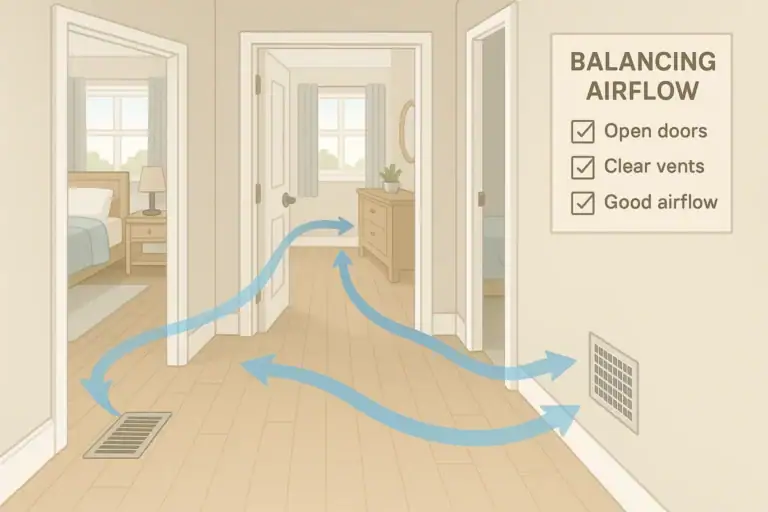 How to Balance Airflow Between Rooms at Home: A Practical Checklist
 Radiator Heat Balancing Tips for Older Homes: A Practical Guide
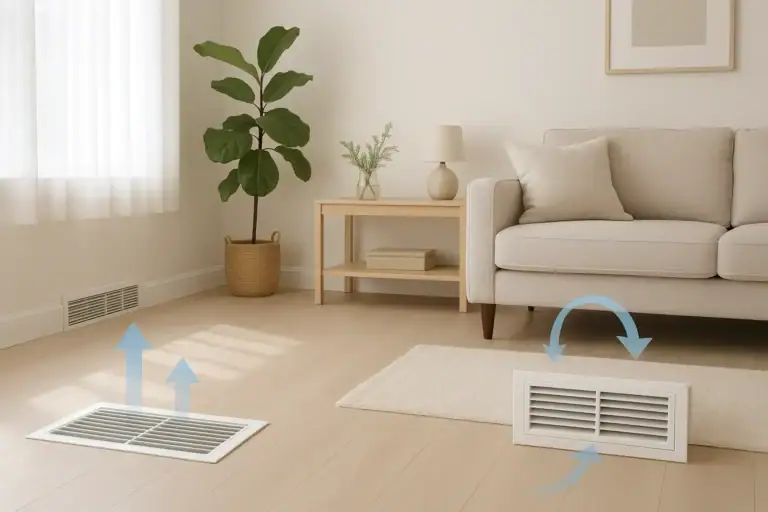 Supply Vent vs Return Vent: How to Tell the Difference in Your Home