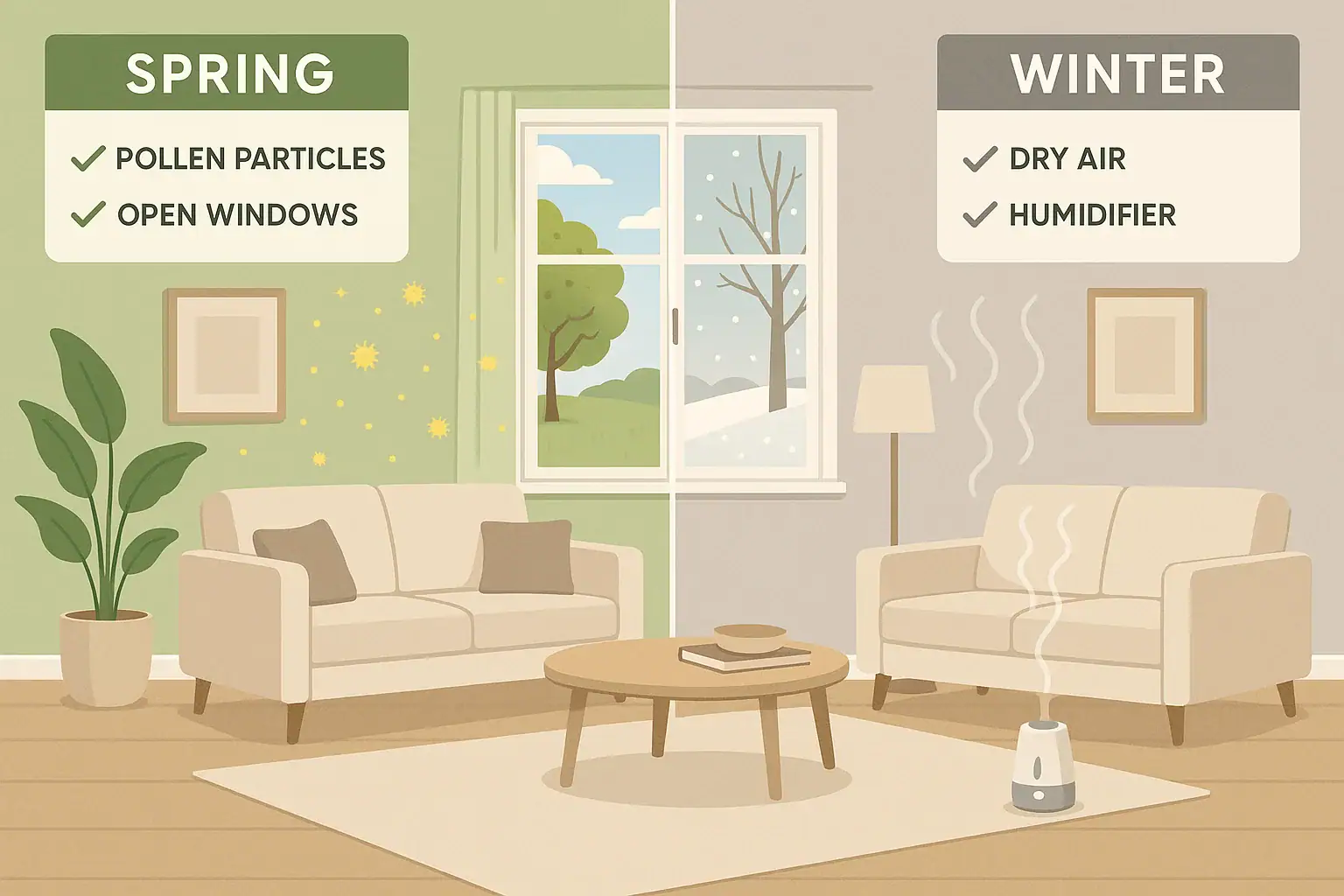
Indoor air can feel completely different from one season to the next. In spring, pollen and outdoor allergens sneak into your home and settle on every surface. In winter, dry heated air can irritate your skin, throat, and sinuses while shrinking wood and stressing your home. A simple, seasonal indoor air checklist helps you stay ahead of both problems so your home feels more comfortable and your air feels easier to breathe.
This guide walks you through practical steps to manage spring pollen and winter dryness, with clear checklists you can follow every year. You will learn what to clean, what to inspect, and which simple habits make the biggest difference. Use this as a reference each season so you can spend less time reacting to sneezing, dry air, and dust, and more time enjoying a comfortable home.
Why Seasonal Indoor Air Care Matters
Indoor air quality is not a one-time project. It changes with temperature, humidity, and what is happening outside your windows. Pollen levels spike in spring, grass and mold can rise in summer, and heated air dries everything out in winter. Your home’s air system, fabrics, and surfaces all respond to these shifts.
Without a plan, you may notice:
- More sneezing, itchy eyes, and congestion during high-pollen months
- Dry skin, chapped lips, and scratchy throat during cold, dry weather
- Static shocks, creaking floors, and gaps in wood trim when humidity drops
- Dust buildup and stale, stuffy rooms year-round
A seasonal checklist helps you match your actions to the season. Instead of guessing, you can follow a routine that supports more comfortable, balanced air in your home.
Spring Indoor Air Checklist: Tackling Pollen and Fresh-Air Allergens
Spring brings fresh air, longer days, and a big wave of pollen. Even if you keep windows closed, pollen can enter on shoes, clothing, pets, and through small gaps around doors and windows. The goal in spring is to reduce what comes in and remove what settles.
1. Entryway and Clothing Habits
Start where pollen first enters your home: the doors and entry areas.
- Set up a “drop zone” near the main door for shoes, jackets, and bags.
- Ask family members and guests to remove shoes at the door.
- Keep a small mat outside and inside each entry to catch pollen and dust.
- Hang a dedicated hook or rack for outdoor jackets so pollen does not spread into bedrooms and living areas.
- Change clothes after yard work or outdoor activities during high-pollen days.
2. Windows, Doors, and Screens
Fresh air is welcome, but you want to control when and how it comes in.
- Check local pollen forecasts and open windows when levels are lower, often after rain or later in the day.
- Wipe window sills and frames weekly to remove yellow or green pollen dust.
- Vacuum or gently wash window and door screens at the start of spring.
- Check weatherstripping around doors and windows and replace any cracked or loose sections to limit outdoor air leaks.
3. Dusting and Vacuuming for Pollen Control
Pollen settles on horizontal surfaces, fabrics, and carpets. Regular, gentle cleaning helps keep it from becoming airborne again.
- Dust from top to bottom using a slightly damp cloth or a microfiber duster so particles stick instead of floating.
- Focus on often-overlooked spots: ceiling fan blades, light fixtures, window sills, and baseboards.
- Vacuum carpets and rugs at least once per week, more often if anyone in the home is sensitive to pollen.
- Use the brush attachment to vacuum upholstered furniture, cushions, and fabric headboards.
- Wash throw blankets, pillow covers, and washable slipcovers every few weeks during peak pollen season.
4. Bedding and Soft Surfaces
Pollen and dust collect where you spend the most time: your bed and favorite seating areas.
- Wash sheets and pillowcases weekly in warm or hot water, following care labels.
- Wash lightweight comforters, duvet covers, and mattress protectors at the start of spring.
- Consider using barrier-style covers for pillows and mattresses to reduce buildup of dust and allergens.
- Keep bedroom windows closed on very high pollen days, especially if you are sensitive.
- Shower and change clothes before bed after spending time outdoors to keep pollen out of bedding.
5. Ventilation and Air Circulation
Good air circulation helps dilute indoor pollutants, but you want to avoid pulling in extra pollen.
- Use kitchen and bathroom exhaust fans to remove moisture and stale air.
- On mild days with lower pollen counts, open windows on opposite sides of the home for short periods to create cross-ventilation.
- Use ceiling fans on a low setting to keep air moving without stirring up too much dust.
- Clean fan blades and air vents at the start of each spring.
6. HVAC Filters and Spring Maintenance
Your heating and cooling system can either trap or spread pollen and dust, depending on how you maintain it.
- Replace or clean your main air filter at the start of spring and then on a regular schedule recommended for your system.
- Vacuum floor and wall registers and return vents to remove dust and debris.
- Make sure furniture and rugs are not blocking vents or returns.
- If you use any room air cleaners, clean or replace their filters according to the manufacturer’s instructions.
7. Spring Indoor Air Checklist: Quick Summary
Use this short list as a seasonal reminder:
- Set up a shoe and jacket drop zone at entries
- Check pollen forecasts before opening windows
- Dust weekly with a damp cloth or microfiber
- Vacuum carpets, rugs, and upholstery regularly
- Wash bedding and soft surfaces often
- Clean fan blades, vents, and screens
- Replace or clean HVAC and room air filters
Winter Indoor Air Checklist: Managing Dryness and Comfort
Winter air tends to be dry, and heating systems can make it even drier. Low humidity can irritate your nose, throat, and skin, and it can also affect your home’s materials. The goal in winter is to add moisture carefully, maintain clean air, and avoid stuffiness.
1. Monitor Indoor Humidity
Knowing your home’s humidity level is the first step to managing winter dryness.
- Use a simple humidity gauge to track indoor levels in main living areas and bedrooms.
- Aim for a general range of about 30 to 50 percent relative humidity to balance comfort and mold prevention.
- Check humidity in the coldest rooms, since windows and exterior walls may show condensation if levels are too high.
2. Add Moisture Safely
When air is very dry, adding moisture can make breathing more comfortable and reduce static.
- Run portable moisture-adding devices according to the instructions and clean them regularly to prevent buildup.
- Use distilled or filtered water if recommended to reduce mineral deposits.
- Place units on a stable, water-resistant surface away from electronics, and watch for any dampness on nearby walls or windows.
- Do not aim for very high humidity; too much moisture can encourage mold and dust mites.
3. Reduce Dry-Air Irritation
Small habit changes can help your body handle dry winter air more comfortably.
- Stay hydrated throughout the day, especially when indoor heat is running constantly.
- Use fragrance-free moisturizers on hands and face after washing to help protect your skin barrier.
- Consider using a simple saline nasal rinse or spray if recommended by your healthcare provider.
- Run moisture-adding devices in bedrooms at night if the air feels especially dry, watching humidity levels closely.
4. Heating System and Filter Care
Heating systems run for long stretches in winter, circulating air and any dust or particles in the ducts.
- Replace or clean your main air filter at the start of the heating season and on a regular schedule.
- Have your heating system inspected and serviced as recommended to keep it running efficiently and safely.
- Vacuum around floor and wall vents to remove dust that can blow into the room.
- Keep flammable materials away from heat sources and vents.
5. Prevent Stuffy, Stale Air
When windows stay closed for months, indoor air can feel heavy and stale, even if it is technically clean.
- Use bathroom and kitchen exhaust fans to remove moisture and odors from daily activities.
- On milder winter days, briefly open a window for a few minutes to let in fresh air, especially in crowded rooms.
- Run ceiling fans on a low, reverse setting if available to gently push warm air down without creating a draft.
- Avoid burning heavily scented candles or using strong sprays that can add extra particles or fumes to the air.
6. Protect Your Home from Dryness
Very dry air affects more than your comfort. It can impact wood, fabrics, and finishes in your home.
- Watch for gaps or cracks forming in wood floors, trim, or furniture as humidity drops.
- Use area rugs in high-traffic spots to reduce wear and help with warmth and comfort.
- Keep houseplants away from direct heat sources to prevent rapid drying of soil and leaves.
- Check caulking around windows and doors to reduce drafts that can make rooms feel colder and drier.
7. Winter Indoor Air Checklist: Quick Summary
Keep this list handy for the start of each heating season:
- Monitor indoor humidity with a simple gauge
- Add moisture carefully and clean devices often
- Stay hydrated and moisturize skin regularly
- Replace or clean heating system filters
- Use exhaust fans to remove moisture and odors
- Air out rooms briefly on milder days
- Watch for signs of wood and fabric dryness
Year-Round Indoor Air Habits That Support Every Season
Some habits help in both spring pollen season and winter dryness. Building these into your routine makes seasonal shifts easier to handle.
1. Regular Filter Changes
Whether you are heating or cooling, clean filters are one of the simplest ways to support better indoor air.
- Set reminders to check your main air filter every one to three months, depending on your system and household needs.
- Mark filter change dates on a calendar or in a phone reminder app.
- Do the same for any room air cleaners or other devices that use filters.
2. Consistent Cleaning Routine
Small, regular cleaning tasks are more effective than occasional deep cleaning when it comes to air quality.
- Dust with a microfiber cloth weekly, focusing on high-traffic and high-touch areas.
- Vacuum floors and rugs at least once a week, more often if you have pets.
- Wipe down hard surfaces such as tables, counters, and window sills to remove settled particles.
- Wash or shake out entry rugs regularly to keep dirt and pollen from spreading.
3. Manage Moisture and Ventilation
Balanced moisture and fresh air flow are just as important as removing pollen and dust.
- Run bathroom exhaust fans during and after showers to reduce excess moisture.
- Use kitchen exhaust fans when cooking, especially when boiling water or frying.
- Address any leaks or water damage quickly to prevent mold growth.
- Consider slightly opening interior doors to allow air to circulate more freely between rooms.
4. Pet and Fabric Care
Pets and soft surfaces can hold onto pollen, dust, and dander throughout the year.
- Brush pets regularly in a designated area that is easy to clean.
- Wash pet bedding and blankets on a regular schedule.
- Rotate and wash throw pillows, blankets, and curtains according to care labels.
- Consider limiting pets on beds if anyone in the home is sensitive to allergens.
Creating Your Personalized Seasonal Indoor Air Plan
Every home is different. The size of your space, the climate where you live, your heating and cooling system, and your family’s sensitivities all shape what you need from your indoor air checklist.
To build a plan that works for you:
- Note which months bring the most pollen or dryness in your area.
- List any symptoms you notice in different seasons, such as sneezing, dry throat, or headaches.
- Match those concerns to steps in the spring and winter checklists above.
- Decide on a simple routine, such as “filter check on the first weekend of each month” or “deep dusting at the start of each season.”
- Save or print your checklist and keep it in a household binder or on a bulletin board.
With a clear, seasonal plan, you can stay ahead of spring pollen and winter dryness instead of scrambling to fix problems after they appear. Over time, these small, steady habits can make your home feel more comfortable, calmer, and easier to breathe in every month of the year.
If you want to explore more ways to improve your home’s air and comfort, you can continue learning at this indoor air and comfort hub: Air & Comfort Resource Center.
 How Often to Change HVAC Filters With Pets: A Practical Homeowner Checklist
 Static Electricity in Winter: Humidity Fixes and Home Troubleshooting Guide
 Air Purifier Placement in an Open Floor Plan: Practical Guide and Realistic Expectations