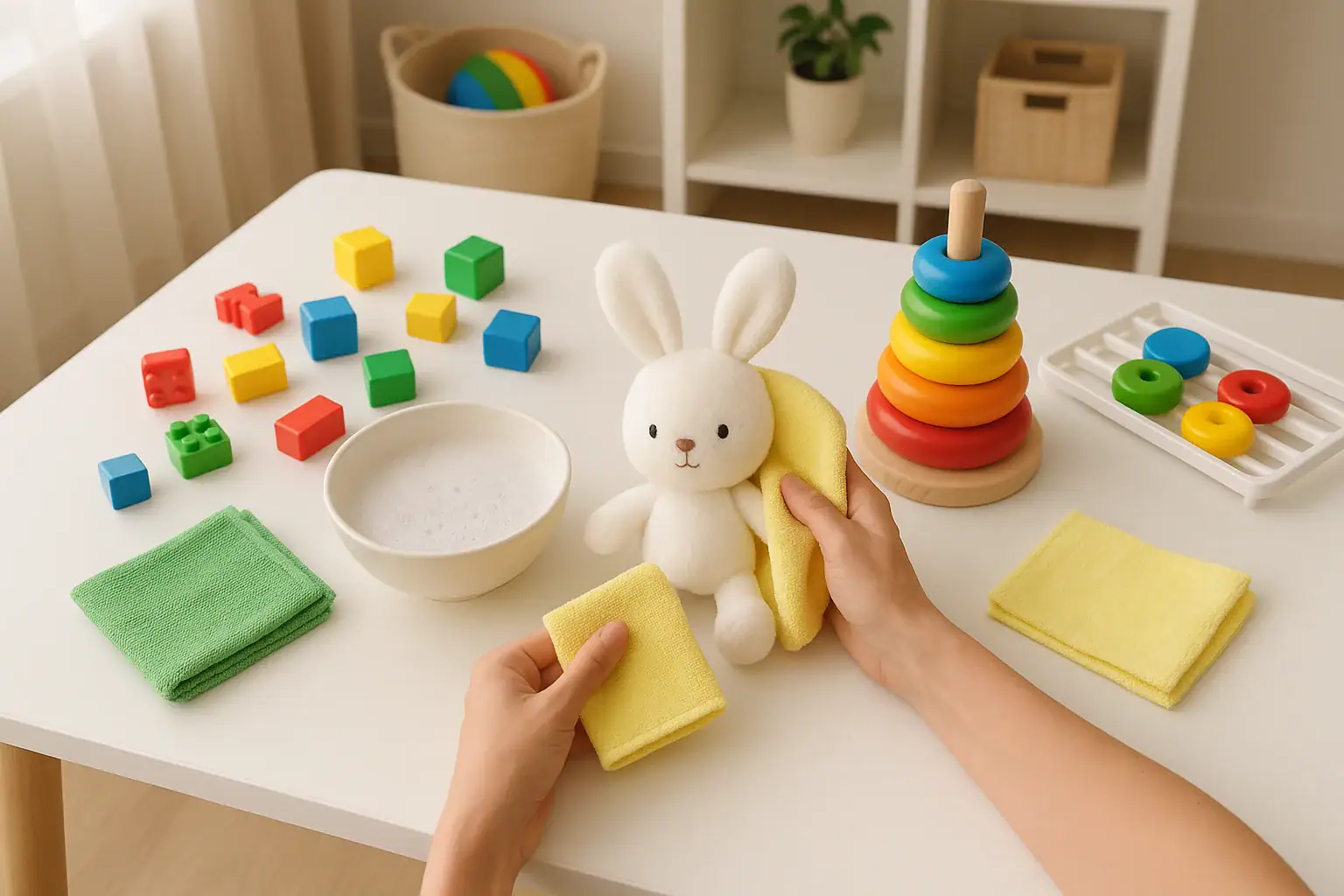
Kids’ toys are handled, chewed, dropped, and shared all day long, which makes them magnets for germs and grime. At the same time, children have more sensitive skin and developing immune systems, so using harsh products or the wrong cleaning method can do more harm than good. The goal is to reduce germs and dirt while keeping toys safe to touch and mouth. With a few simple routines and the right techniques for each material, you can keep your child’s playthings fresh without over-sanitizing or damaging them.
This guide walks you through how to sanitize plastic, wooden, and plush toys safely at home. You will learn how to tell when toys need a basic cleaning versus a deeper sanitizing, which ingredients to avoid around kids, and how to handle special situations like bath toys, teething toys, and shared toys after illness. Everything here uses common household methods that are gentle, effective, and practical for busy families.
Cleaning vs. Sanitizing vs. Disinfecting: What Parents Should Know
Before you start, it helps to understand the difference between cleaning, sanitizing, and disinfecting. These terms are often used interchangeably, but they are not the same.
- Cleaning: Removes dirt, food, and some germs from surfaces using soap and water. This is your everyday routine.
- Sanitizing: Lowers the number of germs to safer levels, usually after cleaning. This is ideal for most kids’ toys.
- Disinfecting: Kills a higher percentage of germs on surfaces. This is stronger than you usually need and is best reserved for times of illness or contamination.
For most toys used by healthy children, regular cleaning plus occasional sanitizing is enough. Save stronger disinfecting methods for toys that were exposed to bodily fluids, used by a sick child, or shared in group settings during an outbreak of illness.
General Safety Tips Before You Sanitize Toys
These basic guidelines apply to almost every toy, regardless of material.
- Check labels first: Look for care instructions, especially on electronic, plush, or specialty toys.
- Avoid harsh chemicals: Skip products with added fragrance, strong fumes, or abrasive ingredients around young children.
- Rinse and dry well: Residue left on toys can irritate skin or end up in kids’ mouths.
- Test a small area: If you are unsure how a toy will react, test your method on a hidden spot first.
- Remove batteries: Take out batteries and unplug any cords before cleaning electronic toys.
- Separate toy types: Clean plastic, wood, and fabric toys using methods designed for each material.
Always inspect toys as you clean. If you see cracks, broken pieces, mold, or loose parts that could become choking hazards, it may be time to repair or discard the toy.
How Often Should You Clean and Sanitize Toys?
Not every toy needs daily sanitizing. Use this simple guide to set a realistic schedule.
Daily or Every Few Days
- Teething toys and toys that go in the mouth
- High chair toys and toys used around food
- Bath toys that stay damp
- Toys used by babies who crawl on the floor
Weekly or Biweekly
- Favorite plastic toys handled often
- Blocks, cars, and figures used on play mats
- Plush toys that are cuddled daily but not chewed
After Illness or Exposure
- Toys shared with a sick child
- Toys exposed to bodily fluids (vomit, saliva, mucus, or stool)
- Toys used in group settings during an outbreak at school or daycare
During and after illness, focus on sanitizing high-touch toys and surfaces more often, then return to your regular routine once everyone is well.
How to Sanitize Plastic Toys Safely
Plastic toys are usually the easiest to sanitize because they tolerate water and gentle cleaning solutions. Think of building blocks, hard plastic figures, stacking cups, and bath toys.
Step 1: Basic Cleaning with Soap and Water
- Fill a basin or sink with warm water.
- Add a small amount of mild dish soap and mix to create suds.
- Place plastic toys in the soapy water. Avoid submerging toys with batteries or electronic parts.
- Scrub with a soft cloth, sponge, or soft-bristled brush, paying attention to crevices and textured areas.
- Rinse thoroughly under running water until all soap is gone.
Step 2: Gentle Sanitizing for Plastic Toys
After cleaning, you can use a mild sanitizing solution that is safe for nonporous surfaces. For a simple, kid-friendly option, many parents use a diluted white vinegar solution on hard plastic toys.
- Mix equal parts white vinegar and water in a clean spray bottle.
- Spray the solution onto the clean plastic toy surfaces.
- Let it sit for several minutes to work on germs.
- Rinse with clean water and dry thoroughly with a clean towel or allow to air-dry.
Vinegar has a noticeable smell, but it fades as the toy dries. Always rinse after using vinegar to remove any lingering taste or odor.
Can You Use the Dishwasher for Plastic Toys?
Many solid plastic toys without electronics can go on the top rack of the dishwasher. The hot water and detergent provide a strong cleaning and sanitizing cycle.
- Check that the toy is heat-safe and has no glued-on parts that could loosen.
- Place smaller pieces in a mesh bag or dishwasher-safe basket so they do not fall through.
- Use a normal wash cycle and allow toys to dry completely before returning them to play areas.
Special Case: Bath Toys
Bath toys are prone to mold because they stay damp and often have small holes that trap water.
- Squeeze out as much water as possible after each bath.
- Store bath toys in a well-ventilated container so they can drain and dry.
- Clean and sanitize bath toys weekly using the steps above.
- Discard any toy that smells musty, shows black spots, or leaks discolored water when squeezed.
How to Sanitize Wooden Toys Safely
Wooden toys are beautiful and durable but more sensitive to moisture than plastic. Too much water can cause swelling, warping, or cracking. Many wooden toys also have natural finishes or light sealants that you want to protect.
Step 1: Light Cleaning for Wooden Toys
- Prepare a small bowl of warm water with a drop of mild dish soap.
- Dip a soft cloth into the solution and wring it out very well so it is just damp, not wet.
- Wipe the wooden toy gently, focusing on sticky or dirty spots.
- Immediately wipe again with a second cloth dampened with plain water to remove soap.
- Dry the toy thoroughly with a clean towel.
Step 2: Gentle Sanitizing for Wooden Toys
Because wood is porous, avoid soaking or spraying it heavily. Instead, use a lightly dampened cloth with a mild solution.
- Mix one part white vinegar with three parts water.
- Lightly dampen a clean cloth with the solution. Do not saturate it.
- Wipe the surface of the wooden toy, covering all sides.
- Follow with a dry cloth to remove excess moisture.
- Allow the toy to air-dry completely before use.
For unfinished or natural wood, spot test in a hidden area first to make sure the solution does not change the color or texture.
What to Avoid with Wooden Toys
- Do not soak wooden toys in water or cleaning solutions.
- Avoid harsh chemicals or strong disinfectants that can strip finishes.
- Keep wooden toys out of the dishwasher and washing machine.
- Do not leave wooden toys drying in direct sunlight for long periods, as this can cause cracking.
How to Sanitize Plush and Fabric Toys Safely
Plush toys, stuffed animals, and fabric dolls often become comfort items that kids sleep with, chew on, and drag around the house. They collect dust, skin oils, and sometimes allergens. The good news is that many fabric toys can be cleaned in a standard washing machine.
Step 1: Check the Care Tag
Look for washing instructions on the tag. Common labels include machine-washable, hand-wash only, or surface clean only. Follow those instructions whenever possible to avoid damage.
Machine-Washing Plush Toys
- Place the plush toy in a mesh laundry bag or pillowcase and tie it loosely. This helps protect delicate parts.
- Use a gentle cycle with cold or warm water and a mild laundry detergent.
- Avoid fabric softeners and heavy fragrances, which can irritate sensitive skin.
- After washing, reshape the toy and either air-dry or tumble dry on low heat if the tag allows.
The combination of detergent and water helps remove germs, dust, and allergens. A warm dryer cycle can add an extra sanitizing boost, as long as the toy can tolerate the heat.
Hand-Washing Plush Toys
- Fill a basin with lukewarm water and add a small amount of mild detergent.
- Submerge the toy and gently squeeze it to work the soapy water through the fabric.
- Drain and refill the basin with clean water, then squeeze repeatedly to rinse out soap.
- Press the toy gently with a towel to remove excess water. Do not wring or twist.
- Lay flat or hang to air-dry completely before returning it to your child.
Surface-Only Plush Toys
Some plush toys have internal electronics, delicate accessories, or materials that cannot be submerged.
- Mix a small amount of mild detergent with warm water.
- Dip a cloth into the solution, wring it out, and gently wipe the surface.
- Use a second cloth dampened with plain water to remove any soap residue.
- Allow the toy to air-dry fully. For faster drying, place it in a well-ventilated area.
Extra Sanitizing for Plush Toys After Illness
After a child has been sick, focus on the plush toys they slept with or held frequently.
- Wash machine-safe plush toys on the warmest cycle recommended on the tag.
- Dry completely on medium or low heat to help reduce remaining germs.
- For non-washable favorites, consider setting them aside for a few days in a clean, dry place so germs can naturally decline over time.
Safe Sanitizing for Teething Toys and Toys That Go in the Mouth
Teething toys and other items that regularly go into your child’s mouth need extra attention. You want them very clean but also free from strong tastes, fragrances, or residues.
Daily Cleaning Routine
- Rinse toys under warm running water after each use to remove saliva and debris.
- Wash with mild dish soap and water, scrubbing gently with a soft brush if needed.
- Rinse thoroughly until the water runs clear and no soap remains.
- Air-dry on a clean towel.
Occasional Sanitizing
For extra sanitizing, especially after illness or heavy use:
- Use hot, soapy water and extend the wash time.
- Rinse very well and allow to air-dry completely.
- Avoid strong disinfectants, alcohol-based products, or bleach solutions on items that will go directly into the mouth.
Always follow the manufacturer’s instructions for any teething toy, especially those that can be chilled or frozen.
Sanitizing Shared Toys and Toys After Illness
Toys shared in playgroups, classrooms, or with visiting children can spread germs quickly. A simple plan helps keep shared toys safer.
Shared Toys in the Home
- Set aside a bin for toys that have been handled by visiting children, especially during cold and flu season.
- After the visit, clean and sanitize plastic toys using soap, water, and a gentle sanitizing solution.
- Wash plush toys that were used heavily during the visit.
Toys After a Child Has Been Sick
- Focus on toys that were near the child’s bed, couch, or favorite resting spot.
- Clean and sanitize plastic toys and hard surfaces.
- Wash bedding, plush toys, and blankets in warm water with mild detergent.
- Wipe down high-touch surfaces like doorknobs, crib rails, and light switches.
You do not need to deep-clean every item in your home after a short illness. Prioritize the toys and surfaces your child touched the most.
What to Avoid When Sanitizing Kids’ Toys
Some common cleaning habits can be too harsh or risky around children. Keep these points in mind when planning your routine.
- Avoid strong fumes: Do not use products with strong odors in small, enclosed spaces where children play.
- Skip abrasive tools: Steel wool or rough scrubbers can scratch plastic and remove finishes from wood.
- Do not mix cleaners: Mixing different cleaning products can create irritating or unsafe fumes.
- Store products safely: Keep all cleaning and sanitizing products out of reach of children, even if they are labeled as gentle or natural.
- Watch for allergies: If your child has sensitive skin, test new products on a single toy and watch for redness or irritation.
Simple Toy Sanitizing Routine for Busy Parents
Keeping every toy perfectly sanitized all the time is not realistic, and it is not necessary. A consistent, manageable routine is more helpful than occasional deep-cleaning marathons.
Weekly Routine
- Gather high-use plastic toys and wash them in warm, soapy water.
- Wipe wooden toys with a damp cloth and a mild solution, then dry thoroughly.
- Wash a small batch of plush toys, rotating favorites so your child always has something to cuddle.
Monthly or Seasonal Routine
- Sort through toy bins and remove broken or worn-out items.
- Wipe down storage bins, shelves, and play tables.
- Deep-clean bath toys and discard any that show signs of mold.
By combining quick daily wipe-downs with weekly and monthly routines, you can keep toys clean and safe without feeling overwhelmed.
 Scent Free Cleaning Routine for Sensitive Noses: A Practical Guide
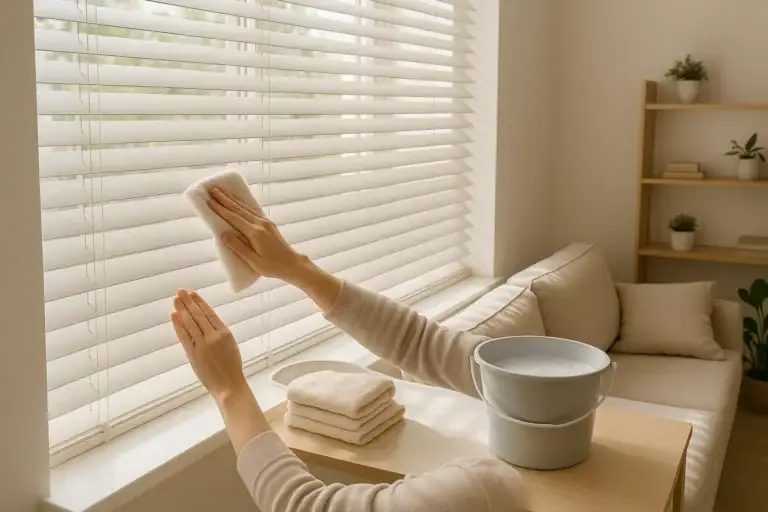 How to Clean Blinds Without Removing Them: A Simple Step-by-Step Guide
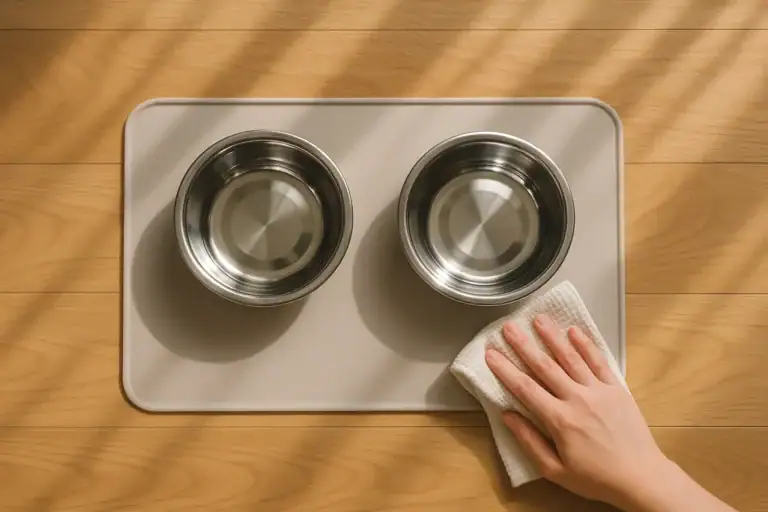 How to Clean Pet Bowls, Mats, and Feeding Areas Safely