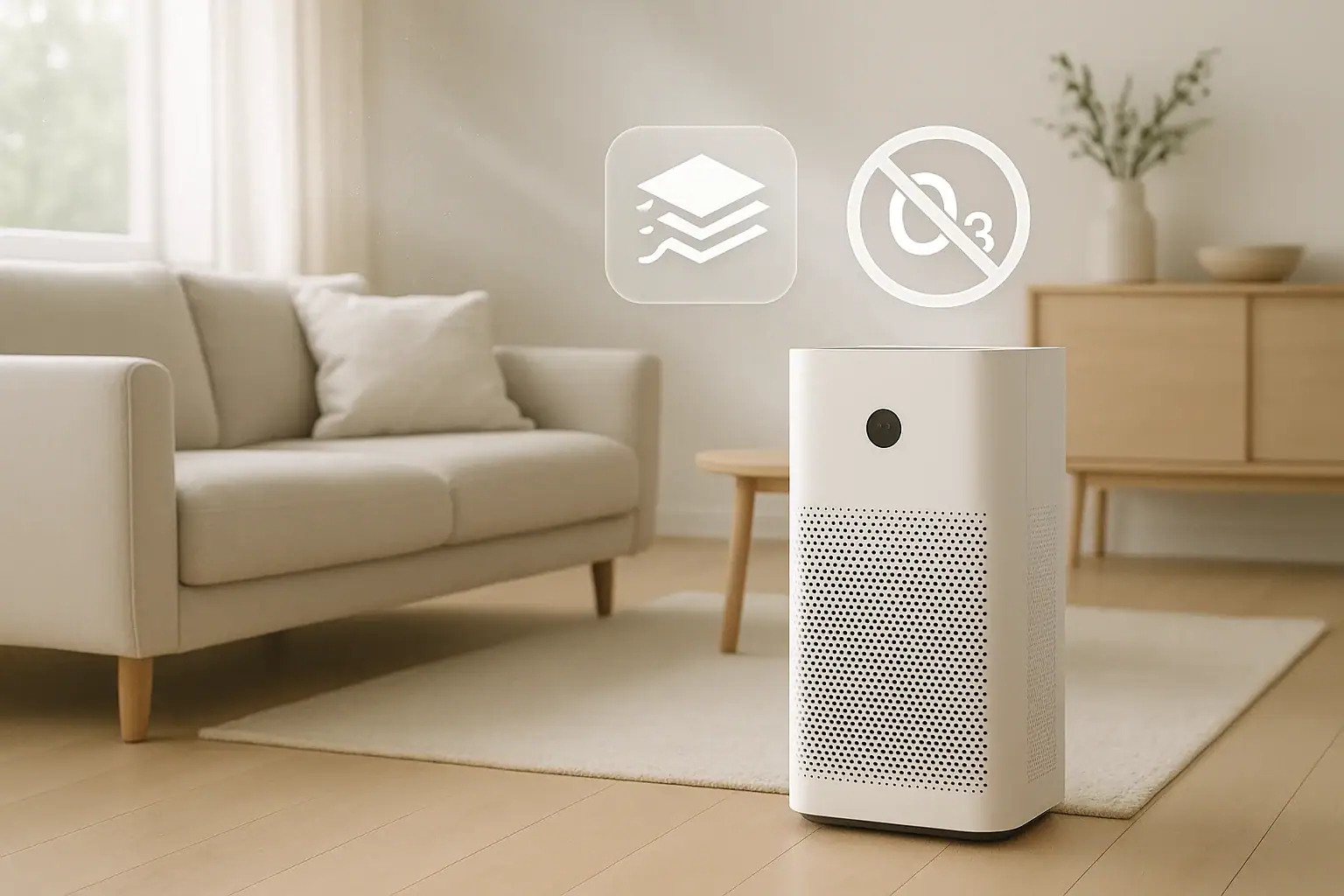
Indoor air quality matters for comfort, health, and peace of mind. Many people turn to air purifiers to help reduce dust, smoke, and allergens. But not all devices clean the air in the same way. Some machines intentionally create ozone or release it as a byproduct, and that can work against your goal of a healthier home. Understanding how ozone works, how to spot it in product descriptions, and what to avoid will help you choose safer options for your living space.
This guide explains what ozone is, why it can be a concern indoors, and how different air cleaning technologies work. You will learn how to read labels and marketing claims, what certifications to look for, and how to avoid devices that may add irritating gases to your air instead of removing them. Whether you are dealing with seasonal allergies, wildfire smoke, or just want fresher air at home, you can use these tips to choose an air purifier that supports your comfort without unnecessary risks.
What Is Ozone and Why It Matters Indoors
Ozone is a gas made of three oxygen atoms (O3). High in the atmosphere, ozone forms a protective layer that helps block some of the sun’s ultraviolet radiation. At ground level, however, ozone is a lung irritant and a component of smog. It can trigger or worsen breathing problems, especially for children, older adults, and people with asthma or other respiratory conditions.
When ozone is generated indoors, it has nowhere to disperse easily. It can accumulate in enclosed spaces, especially in tightly sealed homes or small rooms. Even levels that meet some regulatory limits can still bother sensitive individuals, causing symptoms such as:
- Coughing or throat irritation
- Chest tightness or shortness of breath
- Worsening asthma or allergy symptoms
- Headaches or general discomfort
Because of these risks, it is wise to avoid devices that intentionally produce ozone for use in occupied spaces, particularly in bedrooms, nurseries, or rooms used by anyone with breathing issues.
How Air Purifiers Work: The Main Technologies
Air purifiers use different technologies to remove particles and gases from the air. Some are mechanical filters that physically trap pollutants. Others use electrical charges or chemical reactions that can create ozone as a side effect. Knowing the basics helps you choose options that fit your needs while limiting unwanted byproducts.
Mechanical Filtration (HEPA and Particle Filters)
Mechanical filtration pulls air through a dense filter that traps particles like dust, pollen, pet dander, and smoke. These systems do not rely on chemical reactions or electrical charges to clean the air.
Common features include:
- High-efficiency particle filters: Designed to capture very small particles from the air.
- Pre-filters: Capture larger dust and hair, helping the main filter last longer.
- Optional gas filters: Some units add media that can adsorb certain odors or gases.
Mechanical filtration is generally considered a low-ozone or ozone-free approach because it does not rely on processes that intentionally create ozone.
Activated Carbon and Other Gas Filters
Some purifiers use activated carbon or similar materials to reduce certain gases and odors. Air passes through the material, which holds on to some volatile compounds from cooking, smoke, or household products.
Key points:
- These filters target gases and smells, not just dust and pollen.
- They do not rely on ozone to work.
- They eventually fill up and need replacement to stay effective.
Electronic Air Cleaners (Ionizers and Electrostatic Devices)
Electronic air cleaners use electrical charges to attract particles. Some designs can generate small amounts of ozone as a byproduct. The amount depends on how the device is built and how it is operated.
Common types include:
- Ionizers or negative ion generators: Release charged ions into the air that attach to particles, causing them to settle or stick to surfaces.
- Electrostatic precipitators: Pull air through charged plates that capture particles.
Some electronic devices are designed to meet strict ozone limits, while others are not. If you are sensitive to respiratory irritants, be cautious with products that rely heavily on ionization and do not clearly state that they produce negligible ozone.
Devices That Intentionally Produce Ozone
Some machines are marketed specifically as ozone generators or use terms that suggest they create large amounts of oxidizing gases. These devices are sometimes promoted for odor removal or “shock treatment” in unoccupied spaces. Using such equipment in everyday living areas can lead to elevated ozone levels indoors.
For routine home use, especially in occupied rooms, it is safer to avoid devices that rely on ozone as the primary cleaning method.
Why Ozone-Producing Devices Are a Concern in Homes
Ozone is reactive. That means it does not just float in the air; it interacts with other chemicals and surfaces in your home. Those reactions can create new compounds, some of which may also be irritating or unpleasant.
Potential issues include:
- Respiratory irritation: Even moderate levels can bother people with asthma, allergies, or other lung conditions.
- Increased sensitivity: Children and older adults may feel effects at lower levels than healthy adults.
- Chemical byproducts: Ozone can react with cleaning products, fragrances, and building materials to form additional pollutants.
- False sense of security: A strong “fresh” smell may make air seem cleaner even when particles or gases are still present.
Because of these concerns, many health and environmental organizations advise avoiding ozone generators in occupied indoor spaces and focusing instead on filtration-based solutions.
How to Spot Ozone in Air Purifier Marketing
Ozone-producing devices are not always labeled clearly. Instead of using the word “ozone,” some products rely on appealing terms that suggest freshness or advanced technology. Learning to recognize these clues will help you make a more informed choice.
Words and Phrases to Watch For
Be cautious when you see the following terms in product descriptions or packaging, especially when they are not paired with clear ozone limits:
- “Ozone generator” or “ozone output”
- “Super-oxygenated air” or “activated oxygen”
- “Oxidizing air cleaner” used as the main cleaning method
- “Shock treatment” or “high-output ozone” for odor removal
- “Ionizing and oxidizing” as the primary feature
These terms often signal that the device is intentionally producing ozone or similar reactive gases.
How to Read Product Specifications
When reviewing a product listing or user manual, look for:
- Ozone emission information: Some manufacturers list a maximum ozone level, often in parts per million (ppm) or parts per billion (ppb).
- Technology description: Check whether the main cleaning method is mechanical filtration, ionization, or ozone generation.
- Usage warnings: Warnings about operating the device only in unoccupied spaces can be a sign that it produces higher ozone levels.
If you cannot find clear information about ozone emissions, treat that as a reason to be cautious, especially if the device relies heavily on ionization or oxidation.
Certifications and Labels That Can Help
Independent testing and certification programs can provide additional assurance that a device meets certain safety and performance standards. While no single label guarantees that a product is perfect for every situation, certifications can be a useful part of your decision-making process.
Ozone Emission Limits
Some certification programs set strict limits on how much ozone a portable air cleaner can emit during normal operation. When reviewing labels or product literature, look for statements such as:
- “Meets recognized ozone emission limits for portable air cleaners”
- “Ozone emissions below established safety thresholds”
- “Certified for low ozone emissions”
If a device is marketed as “ozone-free,” read the details to confirm what that means in practice. Some products use this term to indicate that ozone emissions are below a specific test limit, not necessarily zero.
Performance and Safety Testing
In addition to ozone limits, look for indications that the device has been tested for:
- Electrical safety and fire safety
- Particle removal efficiency
- Long-term reliability under normal household conditions
While these tests do not focus solely on ozone, they can help you avoid low-quality devices that may not perform as promised.
Practical Steps to Choose a Low-Ozone Air Purifier
When you are ready to choose an air purifier, use a simple checklist to stay focused on options that support cleaner air without unnecessary ozone.
Step 1: Define Your Main Air Quality Concerns
Different problems call for different solutions. Before shopping, identify your top priorities:
- Allergies to pollen, dust, or pet dander
- Smoke from wildfires, cooking, or nearby traffic
- General dust and household particles
- Odors from pets, cooking, or hobbies
If your main concern is particles, a mechanical filter is usually the most straightforward choice. For odors and some gases, look for a purifier that combines particle filtration with a gas-adsorbing filter, not ozone.
Step 2: Prioritize Filtration Over Ozone or Ionization
When comparing models, focus on devices that rely on:
- Mechanical particle filters as the primary cleaning method
- Optional gas filters for odors and certain chemicals
- Fan speeds and room size ratings that match your space
If ionization is included as a minor feature, check whether the manufacturer clearly states that ozone emissions are very low and within recognized limits. If ozone or ionization is highlighted as the main selling point, consider other options.
Step 3: Check for Clear Ozone Information
Before purchasing, review the product description, manual, or technical sheet for:
- Statements about ozone emissions or ozone-free operation
- Any warnings about using the device only in unoccupied spaces
- Details on the technologies used inside the purifier
If you cannot find this information or if it is vague, it may be safer to choose a different model.
Step 4: Match the Purifier to Your Room Size
Even a low-ozone purifier will not help much if it is too small for the space. Look for:
- The recommended room size in square feet
- Clean air delivery rate (CADR) or similar performance ratings
- Fan speeds that allow you to adjust noise and airflow
Using the right size purifier can help you run the fan at a moderate setting, which often reduces noise and energy use while still improving air quality.
Safe Use Tips for Any Air Purifier
Once you have chosen a purifier that fits your needs, a few simple habits can help you get the most benefit while keeping indoor air as comfortable as possible.
- Place it thoughtfully: Position the purifier where air can flow freely around it, away from walls or heavy furniture.
- Run it regularly: Continuous or frequent use on a lower setting is often more effective than short bursts on the highest speed.
- Keep filters clean: Follow the manufacturer’s schedule for cleaning or replacing filters so performance does not drop over time.
- Ventilate when possible: When outdoor air quality is good, opening windows can help dilute indoor pollutants.
- Limit new pollutants: Choose low-emission cleaning products and avoid unnecessary fragrances to reduce the load on your purifier.
If anyone in your home notices irritation, headaches, or breathing discomfort after you start using a new purifier, turn it off and ventilate the room. Review the device’s features to confirm that it is not generating ozone, and consider switching to a model that relies purely on filtration.
When Ozone Devices Are Sometimes Used
In some specialized situations, such as professional odor removal after a fire or flood, high-output ozone machines may be used in unoccupied buildings. These applications are typically handled by trained professionals who follow strict safety procedures and ensure that people and pets are not present.
For everyday home air cleaning, this type of equipment is not necessary and can create more problems than it solves. For most households, a combination of source control, ventilation, and filtration provides a safer and more practical approach to better indoor air.
Key Takeaways for Healthier Indoor Air
Improving indoor air quality does not have to be complicated. By focusing on a few core principles, you can support a more comfortable home environment without relying on ozone-producing devices.
- Ozone can irritate the lungs, especially for sensitive groups, and is best avoided in occupied rooms.
- Mechanical filtration and gas-adsorbing filters are generally safer choices for routine home use.
- Be cautious of products marketed with terms like “ozone generator,” “activated oxygen,” or “shock treatment.”
- Look for clear information on ozone emissions and independent testing or certification where available.
- Combine filtration with good ventilation and source control for the best overall results.
By understanding how air purifiers work and learning to recognize ozone-related claims, you can make more confident choices for your home. For additional guidance on creating a more comfortable indoor environment, you can explore related air and comfort resources at Signature Home Guide.
 Radiator Reflector Panels: A Practical Home Guide
 Air Purifier Placement in an Open Floor Plan: Practical Guide and Realistic Expectations
 HVAC Filter Arrow Direction: Common Installation Mistakes and How to Fix Them