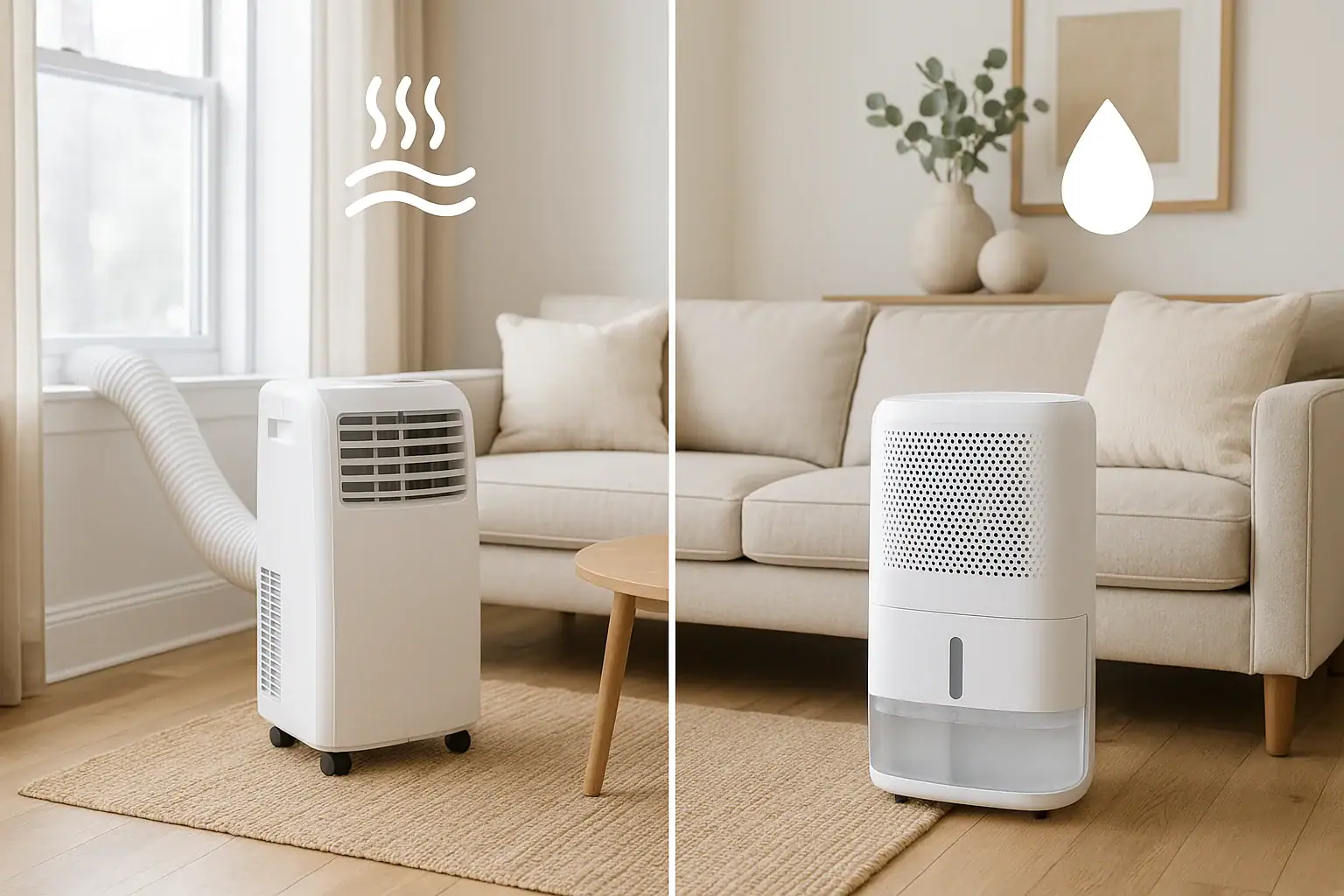
Excess moisture in your home can lead to musty odors, sticky air, and even mold growth. If you are trying to decide between a portable air conditioner and a dehumidifier, the choice can be confusing. Both appliances can change how the air feels, but they do it in different ways and are better suited for different problems. Understanding how each one works, where it performs best, and what it costs to run will help you choose the right solution for your space and climate.
This guide compares portable air conditioners and dehumidifiers with a clear focus on one key question: which one actually reduces dampness better in real-world home situations? We will look at how each unit removes moisture, how much humidity they can handle, and when it makes sense to use one, the other, or both together. By the end, you will be able to match the right appliance to your room, budget, and comfort goals.
How Dampness and Humidity Affect Your Home
Before comparing appliances, it helps to understand what dampness really is. Indoor air always holds some water vapor. When there is too much, the air feels heavy, sticky, and uncomfortable. This is usually described as high humidity.
Relative humidity is a simple way to measure this. It is the percentage of water vapor in the air compared to the maximum amount the air can hold at a given temperature. In most homes, a relative humidity level between 30 and 50 percent is considered comfortable and healthy.
Signs You Have a Dampness Problem
- Windows fogging or collecting water on the inside
- Musty or earthy odors, especially in basements or closets
- Visible mold or mildew on walls, ceilings, or around windows
- Clothes, bedding, or towels that never feel fully dry
- Peeling paint, bubbling drywall, or warped wood
- Feeling sticky or clammy even when the temperature is not very high
If you notice several of these signs, you likely need more than just cooling. You need a way to remove moisture from the air. That is where portable air conditioners and dehumidifiers come in.
How a Portable Air Conditioner Reduces Dampness
A portable air conditioner is designed primarily to cool a room, but it also removes some moisture as a side effect of the cooling process. Warm, humid indoor air is pulled into the unit, passes over cold coils, and then cooler air is blown back into the room.
What Happens to the Moisture?
When humid air hits the cold coils inside a portable air conditioner, water vapor condenses into liquid water, similar to how water beads on a cold glass. This water is then:
- Collected in an internal tank that must be emptied periodically, or
- Drained through a hose to a floor drain or condensate pump, or
- Partially evaporated and exhausted outdoors with the warm air, depending on the design
Because of this process, portable air conditioners do remove moisture, but their main goal is to lower temperature rather than aggressively dry the air.
Strengths of Portable Air Conditioners for Dampness
- Cools and dries at the same time: Good for hot, humid rooms where you want both lower temperature and lower humidity.
- Spot cooling: Can be moved to different rooms as needed, such as living rooms by day and bedrooms at night.
- Comfort boost: Lowering both temperature and humidity can make a room feel more comfortable even if the humidity is not perfectly controlled.
Limitations for Moisture Control
- Less precise humidity control: Most portable air conditioners do not allow you to set a specific humidity level.
- Requires venting: They must exhaust hot air outdoors through a window or wall. If installed poorly, they can draw humid air back into the room.
- Less efficient at pure drying: Compared to a dehumidifier, they usually remove less moisture per hour for the same amount of energy.
- Seasonal use: They cool the air, so they are not ideal for cooler seasons when you still have a dampness problem.
How a Dehumidifier Reduces Dampness
A dehumidifier is built specifically to remove moisture from the air. While it may change the room temperature slightly, its main job is to bring humidity down to a healthy range and keep it there.
How a Dehumidifier Works
Most home dehumidifiers use a process similar to air conditioners. Humid air is drawn into the unit, passes over cold coils, and water condenses into a collection bucket or drain hose. The drier air is then reheated slightly and released back into the room.
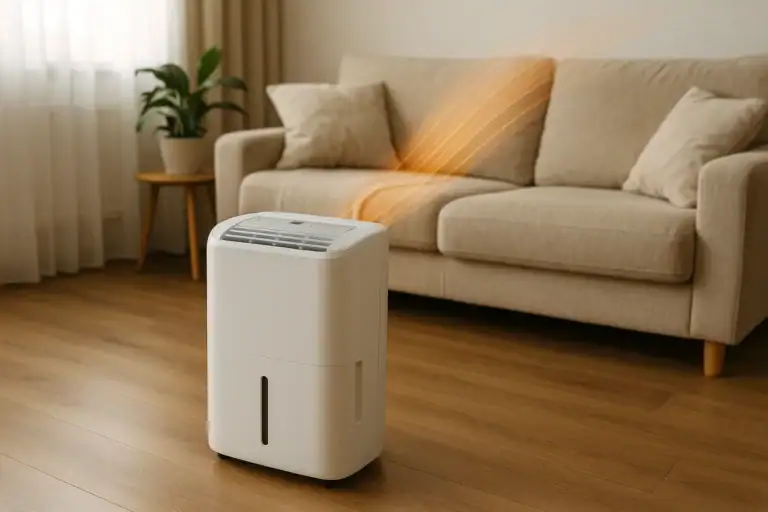
Because the air is warmed a bit on its way out, a dehumidifier can make a cool, damp space feel warmer and drier. This is often helpful in basements and lower levels that feel chilly and clammy.
Strengths of Dehumidifiers for Dampness
- Focused moisture removal: Designed to remove large amounts of water from the air, often measured in pints per day.
- Humidity control: Many units allow you to set a target humidity level, such as 45 percent, and maintain it automatically.
- Year-round use: Can be used in spring, fall, and even winter in damp spaces without overcooling the room.
- Flexible placement: Does not require a window vent; only needs a place to drain or a bucket to empty.
Limitations of Dehumidifiers
- Limited cooling: They may make a room feel slightly warmer, not cooler, which can be uncomfortable in very hot weather.
- Noise and heat: Like portable air conditioners, they produce fan and compressor noise and release some heat into the room.
- Ongoing maintenance: Filters need cleaning and water tanks need to be emptied or connected to a drain.
Portable Air Conditioner vs Dehumidifier: Direct Moisture Comparison
When the main goal is reducing dampness, it helps to compare how each appliance actually performs in terms of moisture removal and comfort.
Moisture Removal Power
- Portable air conditioner: Removes some moisture as it cools, but the amount is usually lower than a similarly sized dehumidifier. It is most effective when the air is both hot and humid.
- Dehumidifier: Typically removes more pints of water per day than a portable air conditioner, especially in moderately warm or cool but damp spaces.
If your top priority is to pull as much water as possible out of the air, a dehumidifier usually wins.
Humidity Control and Consistency
- Portable air conditioner: Often runs based on temperature settings. Once the temperature is reached, it may cycle off even if the humidity is still high.
- Dehumidifier: Often includes a built-in humidistat that turns the unit on and off to maintain your chosen humidity level.
For steady, predictable control over dampness, a dehumidifier is generally more reliable.
Comfort in Different Seasons
- Summer in hot, humid climates: A portable air conditioner can be very helpful because it cools and dries at the same time. However, in extremely humid areas, pairing it with a dehumidifier may give better results.
- Spring, fall, or cool basements: A dehumidifier is usually better because it dries the air without making the space uncomfortably cold.
Energy Use and Operating Costs
Energy efficiency matters when you plan to run an appliance for many hours a day. While exact costs depend on the size of the unit and your local electricity rates, some general patterns can help you compare options.
Portable Air Conditioner Energy Use
- Uses energy to both cool and dehumidify the air.
- Often draws more power than a dehumidifier of similar capacity.
- May need to run longer in very humid conditions to keep the room comfortable.
Dehumidifier Energy Use
- Uses energy mainly to remove moisture, not to cool.
- Often more efficient at lowering humidity per kilowatt-hour used.
- Can be set to cycle on and off based on humidity, which can reduce total run time.
If you are focused on lowering humidity at the lowest ongoing cost, a properly sized dehumidifier is usually more economical than running a portable air conditioner for moisture control alone.
Choosing the Right Appliance for Your Space
The best choice depends on your room, climate, and comfort priorities. Use the scenarios below to match your situation.
Choose a Portable Air Conditioner If:
- You live in a hot, humid climate and the room becomes uncomfortably warm in summer.
- You need both noticeable cooling and some humidity reduction.
- You can vent the unit through a window or wall without leaks.
- You plan to move the unit between rooms for flexible cooling.
Choose a Dehumidifier If:
- Your main problem is dampness, musty odors, or mold risk, not high temperature.
- You have a cool or moderately warm basement, crawl space, or first floor that feels clammy.
- You want to set a specific humidity level and maintain it automatically.
- You need year-round moisture control, not just summer cooling.
When Using Both Together Makes Sense
In some homes, the most comfortable and effective setup is to use both a portable air conditioner and a dehumidifier, especially in:
- Very humid regions where the air conditioner alone cannot keep humidity low enough.
- Large open areas where a single appliance struggles to cover the entire space.
- Homes with moisture sources such as unfinished basements, laundry rooms, or bathrooms that add extra humidity.
In these cases, the dehumidifier handles the bulk of the moisture removal, while the portable air conditioner focuses on cooling and fine-tuning comfort.
Practical Tips for Reducing Dampness Effectively
Regardless of which appliance you choose, a few simple steps can improve results and reduce strain on your equipment.
Size the Unit Correctly
- Measure the room in square feet and use manufacturer guidelines to choose capacity.
- For dehumidifiers, look at pints of moisture removed per day.
- For portable air conditioners, check the cooling capacity rating and match it to room size and insulation quality.
Control Moisture Sources
- Fix plumbing leaks, roof leaks, or foundation cracks that let water in.
- Use exhaust fans in bathrooms and kitchens when showering or cooking.
- Dry clothes in a vented dryer or outdoors instead of air-drying indoors.
- Improve drainage around your home to keep water away from the foundation.
Place and Maintain the Unit Properly
- Keep a portable air conditioner close to the window or vent opening to reduce hose length and heat gain.
- Place a dehumidifier in a central, open area of the damp space for better air circulation.
- Clean or replace air filters regularly to maintain airflow and efficiency.
- Set up continuous drainage for dehumidifiers if possible to avoid frequent emptying.
Summary: Which Reduces Dampness Better?
When the priority is lowering humidity and tackling dampness, a dehumidifier is usually the more effective and efficient choice. It is designed to pull significant amounts of water from the air, maintain a target humidity level, and operate in a wide range of temperatures without overcooling the room.
A portable air conditioner does reduce moisture, but its primary job is cooling. It works best when you need to make a hot, humid room more comfortable during warm weather. In that situation, it can provide both cooling and some dehumidification, but it may not control humidity as precisely as a dedicated dehumidifier.
For many homes, the ideal solution depends on the space:
- Hot and humid bedrooms or living rooms: Start with a portable air conditioner and add a dehumidifier if the air still feels damp.
- Cool, musty basements or lower levels: Choose a dehumidifier as your main tool for reducing dampness.
By matching the appliance to your specific conditions and using basic moisture control habits, you can create a drier, healthier, and more comfortable home environment.
For more ways to improve comfort and air quality throughout your home, explore additional air and comfort guides at Signature Home Guide.
 Why Your Dehumidifier Makes the Room Feel Warmer
 Evaporative Cooler vs Portable AC for Home Comfort: Which Is Better?
 Thermostat Fan Auto vs On: Best Settings for Comfort and Less Dust