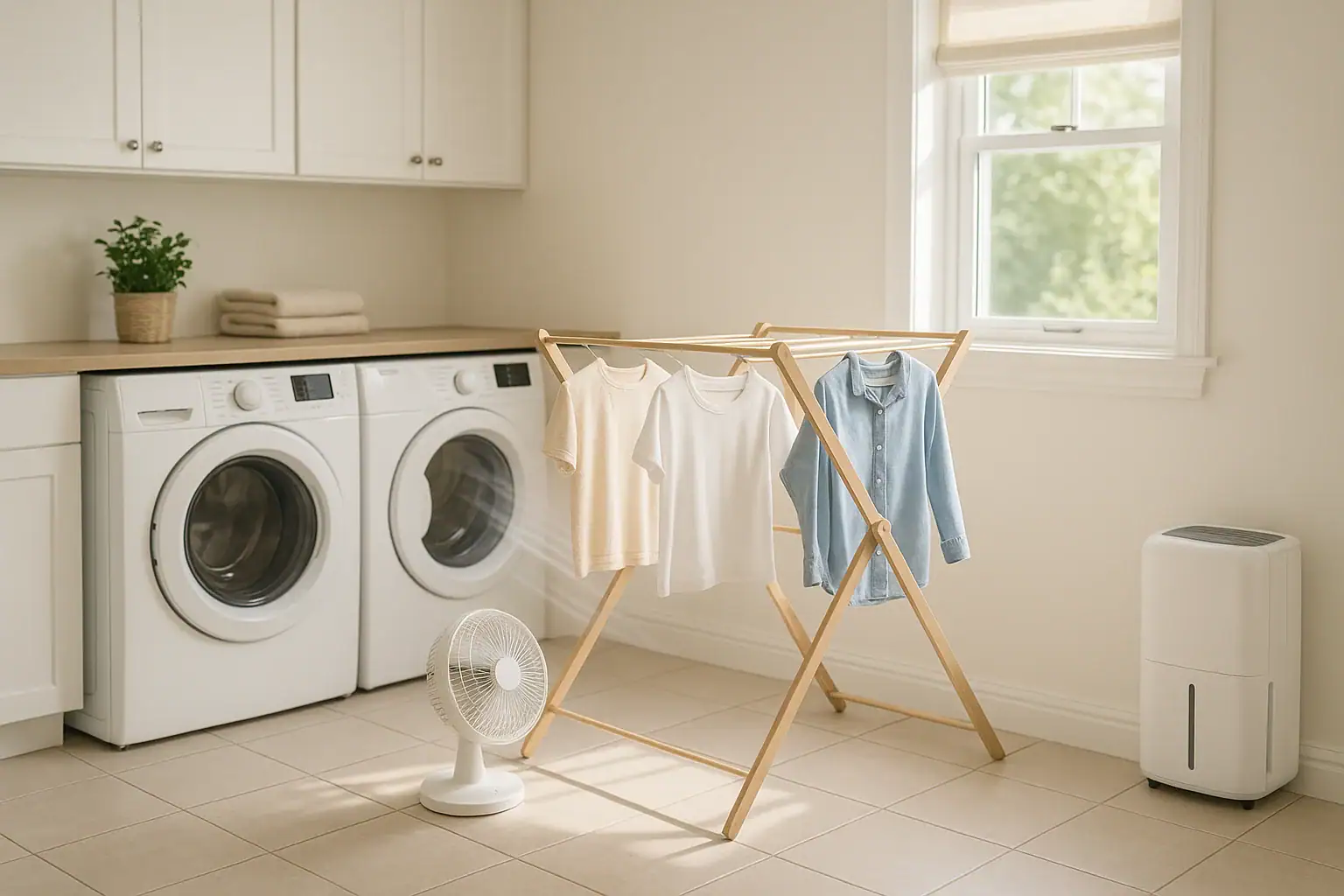
Drying clothes inside is sometimes unavoidable, especially during cold winters, rainy seasons, or if you live in an apartment without outdoor space. But hanging wet laundry indoors can quickly raise humidity, leaving your home feeling damp and stuffy. Over time, that extra moisture can lead to condensation on windows, musty odors, and even mold or mildew on walls, ceilings, and fabrics. The good news is that you can dry laundry indoors while keeping humidity under control with a few smart strategies and simple habits.
This guide walks you through how indoor drying affects humidity, how to set up a low-moisture drying routine, and which tools and techniques make the biggest difference. You will learn how to choose the best drying location, improve airflow, and protect your home’s air quality while still getting your laundry done efficiently.
How Indoor Laundry Drying Affects Humidity
Every load of laundry holds a surprising amount of water, even after a strong spin cycle. When you hang those clothes inside, that moisture has to go somewhere. If it cannot escape outdoors or be removed from the air, it settles into your indoor environment.
Common signs that indoor drying is raising your humidity too much include:
- Condensation forming on windows, especially in the mornings
- Rooms feeling stuffy or clammy even when the temperature is comfortable
- Musty or damp smells near where laundry is drying
- Visible mold or mildew on walls, ceilings, or around window frames
- Allergy or respiratory discomfort that seems worse on laundry days
Ideally, indoor humidity should stay around 30% to 50% for comfort and health. Drying laundry indoors without a plan can easily push levels higher, especially in smaller or poorly ventilated spaces. The goal is not to avoid indoor drying altogether, but to manage where the moisture goes.
Step 1: Start With the Driest Laundry Possible
The less water your clothes hold when they come out of the washer, the less moisture they will release into your home. A few simple changes to your washing routine can significantly reduce indoor humidity from laundry.
Use the Highest Effective Spin Speed
Most washers have multiple spin speed options. Using a higher spin speed pulls more water out of fabrics before you hang them.
- Select the highest spin speed that is safe for the fabric type.
- For delicate items, use the highest spin allowed by the care label.
- Consider running an extra spin-only cycle for heavy items like towels and jeans.
Clothes that feel just slightly damp instead of dripping wet will dry faster and release less moisture into the air.
Avoid Overloading the Washer
When the washer is too full, clothes cannot spin properly and stay wetter. Washing slightly smaller loads allows the machine to remove more water, which pays off later when you hang items to dry indoors.
Use an Extra Towel for Heavy Items
For very heavy or bulky pieces, you can remove extra moisture before hanging:
- Lay a large, dry towel on a flat surface.
- Place the damp item (such as a sweater or sweatshirt) on top.
- Roll them together and press firmly to absorb water.
This simple step can noticeably reduce drying time and humidity.
Step 2: Choose the Best Place to Dry Laundry Indoors
Where you dry your clothes matters as much as how you dry them. The right location helps moisture leave your home instead of building up.
Prioritize Rooms With Good Ventilation
Whenever possible, dry laundry in a room that has:
- A window you can open, even a small amount
- An exhaust fan that vents to the outside (such as in a bathroom)
- A door you can close to keep moisture from spreading through the home
Bathrooms, laundry rooms, and some kitchens can work well if they have an exhaust fan or window to help move humid air outside.
Avoid Bedrooms and Closets
It may be tempting to hang laundry in a bedroom or closet, but these spaces often have poor ventilation and soft surfaces that absorb moisture. Drying clothes where you sleep can also make the room feel damp and uncomfortable at night.
Keep Laundry Away From Cold Surfaces
Cold surfaces like exterior walls and single-pane windows are more likely to collect condensation. Try to place drying racks away from these areas so that moisture does not settle and cause mold growth.
Step 3: Use Drying Racks and Layout That Reduce Moisture
How you arrange your laundry can make a big difference in how quickly it dries and how much humidity it adds to the room.
Choose the Right Drying Rack
A good drying rack allows air to circulate freely around each item. Look for features like:
- Multiple levels or bars with space between them
- Sturdy construction so clothes do not bunch together
- Foldable or movable design so you can place it near a window or fan
A wall-mounted or ceiling-mounted rack can also work well in small spaces, as long as air can move around the clothes.
Give Clothes Space to Breathe
Overcrowding the rack keeps clothes wet longer and increases humidity. To reduce moisture:
- Leave a small gap between each item.
- Avoid double-layering clothes over the same bar.
- Hang heavier items like jeans and towels at the edges where air flow is better.
It is often better to dry two smaller loads separately than one large, crowded load that takes much longer to dry.
Use Hangers for Faster Drying
For shirts, blouses, and lightweight tops, hanging them on individual hangers can speed up drying and reduce moisture build-up. Hang the hangers on a shower rod, garment rack, or a dedicated rod near a window or fan so air can circulate freely.
Step 4: Maximize Airflow While Laundry Dries
Good airflow is one of the most effective ways to dry clothes indoors without raising humidity too much. Moving air helps carry moisture away from fabrics and out of your living space.
Use Fans to Keep Air Moving
A simple fan can make a big difference:
- Place a small fan a few feet away from the drying rack, aimed across (not directly at) the clothes.
- Use a ceiling fan set to a low or medium speed to keep air circulating.
- Avoid pointing a strong fan directly at delicate fabrics that might stretch or warp.
Even gentle air movement helps clothes dry faster and keeps moisture from lingering in one spot.
Create a Cross-Breeze When Possible
If weather and safety allow, open a window in the drying room and another window or door elsewhere in the home to create a cross-breeze. This helps pull humid air out and replace it with drier air from outside.
Use Exhaust Fans Wisely
If you dry clothes in a bathroom or laundry area with an exhaust fan that vents outdoors, turn it on while laundry is drying and for a while afterward. This helps remove humid air before it spreads through the house.
Step 5: Control Humidity With Simple Tools
Along with good airflow and smart placement, a few basic tools can help keep indoor humidity in a comfortable range while you dry laundry.
Consider a Dehumidifier
A dehumidifier can be very effective for regular indoor drying, especially in small homes or damp climates. To get the most benefit:
- Place the dehumidifier in the same room as your drying rack.
- Close doors and windows to let it work efficiently.
- Empty the water tank regularly or connect a drain hose if the unit allows.
This helps pull moisture out of the air before it can settle on surfaces or spread through the home.
Use a Humidity Monitor
A small digital humidity monitor can show you how laundry affects your indoor air. Place it in the room where you dry clothes and check:
- Humidity level before you hang laundry
- Peak humidity while clothes are drying
- How long it takes to return to your normal range
Aim to keep indoor humidity generally between 30% and 50%. If levels stay higher for long periods, consider adjusting your drying routine or adding more ventilation and moisture control.
Absorb Moisture Near the Drying Area
In smaller spaces, moisture-absorbing products can help reduce dampness around the drying rack. While they will not replace good ventilation, they can support your other efforts to keep humidity in check.
Step 6: Time Your Laundry for Lower Humidity Impact
When you dry laundry indoors can be almost as important as how you dry it. With a little planning, you can choose times that are less likely to cause problems.
Dry During the Day When Possible
Daytime drying usually works better than overnight drying because:
- You can open windows or run fans more easily.
- Sunlight, even indirect, can help warm the room and speed evaporation.
- You are awake to monitor humidity and adjust as needed.
Avoid Drying Multiple Loads at Once
Drying several loads back-to-back can flood your home with moisture. Instead:
- Spread laundry over several days if possible.
- Wait until the first load is mostly dry before hanging another.
- Give the room time to return to normal humidity between loads.
Coordinate With Weather Conditions
If outdoor air is dry and cool, even a slightly open window can help pull moisture outside. On very humid or rainy days, focus more on fans and dehumidifiers and avoid leaving windows open if they let damp air in.
Step 7: Protect Your Home From Moisture Damage
Even with good habits, it is important to watch for early signs of moisture problems so you can act quickly.
Check Windows and Walls Regularly
Inspect the area around your drying setup every week or so:
- Look for water droplets or fogging on windows.
- Check walls and ceilings for dark spots, peeling paint, or bubbling.
- Pay attention to any musty smells that do not go away.
If you notice these signs, increase ventilation, move your drying rack, or reduce how much laundry you dry in that space.
Keep Surfaces Clean and Dry
Wipe away condensation on windowsills, tile, and other hard surfaces as soon as you see it. Regular cleaning with mild cleaners can also help prevent mold spores from taking hold.
Rotate Drying Locations if Needed
If one area of your home seems to stay damp or show early signs of mold, try rotating to a different room with better ventilation or more sunlight. Sometimes a simple change of location is enough to protect your home from moisture buildup.
Step 8: Keep Clothes Fresh While Drying Indoors
Drying laundry inside does not have to mean clothes that smell damp or take forever to dry. A few extra habits can keep everything smelling clean and feeling fresh.
Hang Clothes Promptly After Washing
Do not let wet laundry sit in the washer. The longer it sits, the more likely it is to develop odors that are hard to remove. Hang items as soon as the cycle ends.
Separate Heavy and Lightweight Items
Mixing very heavy items with light ones can slow everything down. Instead:
- Dry towels and jeans together, using extra space and airflow.
- Dry lighter items like t-shirts and undergarments in a separate batch.
- Move items that dry quickly off the rack to make space for heavier pieces.
Flip and Rearrange Clothes During Drying
Halfway through the drying time, gently flip or rotate items so the side that was facing the rack or bar is now facing out. This exposes damp areas to more air and can shorten overall drying time.
Quick Checklist: Drying Laundry Indoors With Less Humidity
Use this simple checklist on laundry days to keep your home comfortable and dry:
- Use a high spin speed and avoid overloading the washer.
- Choose a room with a window or exhaust fan and close the door.
- Set up a drying rack with plenty of space between items.
- Run a fan to keep air moving; open a window if outdoor air is dry.
- Use a dehumidifier in the drying room if humidity tends to run high.
- Monitor humidity levels and watch for condensation or musty smells.
- Dry smaller loads and avoid overlapping too many loads in one day.
When to Consider Alternative Drying Options
In some situations, indoor drying may be too challenging to manage without raising humidity too much. You might want to explore alternatives if:
- Your home already has persistent moisture or mold issues.
- Rooms are very small with no windows or exhaust fans.
- Family members have respiratory conditions that are worsened by humidity.
When possible, using an outdoor line, a shared laundry facility, or a vented dryer for at least part of your laundry can reduce the amount you need to dry indoors. Even combining methods, such as partly drying items in a machine and finishing them on an indoor rack, can cut down on moisture.
Bringing It All Together
Drying laundry indoors does not have to mean living in a damp, uncomfortable home. By starting with well-spun clothes, choosing a ventilated drying area, giving items space on a good rack, and keeping air moving with fans or a dehumidifier, you can manage moisture effectively. Paying attention to humidity levels and early signs of condensation or musty odors helps you adjust your routine before problems develop.
With a thoughtful approach, you can enjoy the convenience of indoor drying while protecting your home’s air quality and comfort all year long.
 Bathroom Humidity After a Shower: What Is Normal and What Actually Helps
 Static Electricity in Winter: Humidity Fixes and Home Troubleshooting Guide
 How to Reduce Heat From Sunny Windows Without Blocking Natural Light