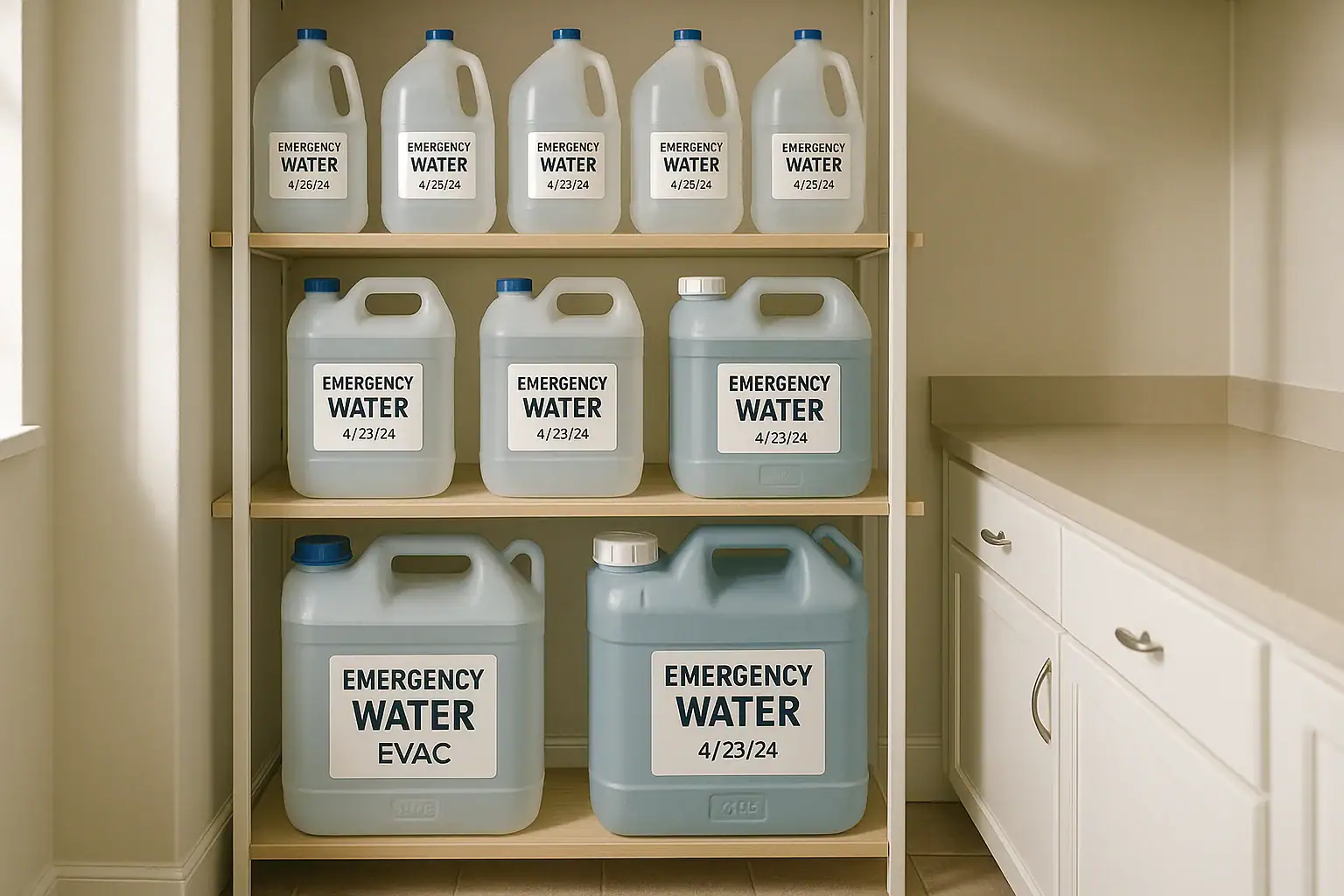
Safe drinking water is one of the most important parts of any emergency plan. Power outages, storms, boil-water advisories, and plumbing failures can all limit access to clean tap water with little warning. Having a well-planned emergency water supply gives you peace of mind and protects your household from dehydration and waterborne illness. This guide walks you step by step through how to store emergency water safely, which containers to use, how much to store, how to rotate it, and what to do about taste so your water is both safe and drinkable when you need it most.
How Much Emergency Water Do You Need?
Before you buy containers or start filling anything, decide how much water you want to have on hand. Recommendations can vary, but most emergency planners suggest at least:
- 1 gallon of water per person per day for drinking and basic sanitation
- Minimum 3 days of water (short-term emergency)
- Better: 7–14 days of water if you have the space and budget
For a family of four planning for two weeks, that looks like:
- 4 people × 1 gallon × 14 days = 56 gallons of water
Consider extra water if you have:
- Infants or young children (formula, extra cleaning)
- Pregnant or nursing adults
- Older adults or anyone with medical needs
- Pets (plan at least 1 quart per pet per day)
- Hot climates or physically demanding work
It is better to build your supply gradually than to feel overwhelmed. Start with three days, then expand as space and budget allow.
Choosing Safe Containers for Emergency Water Storage
The container you choose is just as important as the water itself. Unsafe containers can leach chemicals, grow algae, or allow bacteria to multiply. Focus on containers that are food-safe, durable, and easy to handle.
Best Types of Containers
Look for containers that meet these criteria:
- Food-grade plastic or stainless steel
- Tight-sealing lids or caps that prevent contamination
- Opaque or dark-colored to limit light and algae growth
- Strong handles for easy lifting and moving
Common options include:
- Factory-sealed water jugs designed for drinking water storage
- Food-grade plastic jugs (1–7 gallons) with screw-on caps
- Larger water storage barrels (typically 15–55 gallons) for long-term storage
- Stainless steel containers for special situations (not for chlorinated water if they are not rated for it)
How to Identify Food-Grade Plastic
Not all plastic is safe for long-term water storage. To identify food-grade plastic:
- Look for a recycling symbol with the numbers 1, 2, 4, or 5
- Check for labels such as food safe or for potable water
- Choose containers originally used for food or beverages, not chemicals
Containers to Avoid
Skip any container that could leach chemicals or is hard to sanitize. Avoid:
- Used containers that held non-food items like cleaners, paint, or automotive products
- Milk jugs for long-term storage (they are thin, degrade quickly, and are hard to clean fully)
- Containers that let in a lot of light, which can encourage algae growth
- Glass containers for large volumes (heavy, breakable, and risky in earthquakes)
Preparing Containers: Cleaning and Sanitizing
Even new containers need cleaning before you fill them. Proper preparation helps keep your water safe for months or years.
Step 1: Wash With Soap and Water
- Wash hands thoroughly.
- Rinse the container with clean tap water to remove dust or debris.
- Fill partway with warm water and a few drops of dish soap.
- Scrub all interior surfaces, including the cap and threads.
- Rinse several times until no soap remains.
Step 2: Sanitize With a Mild Bleach Solution
Use an unscented household bleach that lists sodium hypochlorite as the active ingredient. Make a sanitizing solution:
- Mix 1 teaspoon of unscented liquid bleach with 1 quart of clean water.
- Pour the solution into the container.
- Close and shake so the solution touches all surfaces.
- Let it sit for at least 30 seconds.
- Pour out the solution.
- Rinse with clean tap water if desired, especially if you are sensitive to chlorine taste.
Filling Containers: Tap Water vs. Other Sources
In many US communities, tap water is already treated and safe for storage. How you fill your containers depends on the quality and source of your water.
Using Municipal Tap Water
If your home receives treated municipal water that is safe to drink:
- Run the cold water tap for a few seconds to clear the line.
- Fill the sanitized container, leaving about 1–2 inches of space at the top to allow for expansion.
- Cap tightly without touching the inside of the cap or container opening.
- Label with the date filled and the words drinking water.
In many cases, properly treated tap water does not need additional disinfectant before storage.
Using Well Water or Questionable Sources
If you use a private well or are unsure about water quality, disinfect the water before storage. A common method is to add unscented liquid bleach:
- Use 8 drops (about 1/8 teaspoon) of unscented liquid bleach per gallon of clear water.
- If the water is slightly cloudy, use 16 drops (about 1/4 teaspoon) per gallon.
- Add bleach to the filled container.
- Cap and shake gently to mix.
- Let sit for at least 30 minutes before storing.
Filling During an Emergency
If a storm or other event is approaching, fill containers before any boil-water advisory or contamination notice. If you are told the water is unsafe, follow local guidance for boiling or disinfecting before storage.
Where and How to Store Emergency Water
Location and conditions matter. The right environment helps keep water fresh and safe for longer periods.
Ideal Storage Conditions
- Cool temperatures, generally between 50°F and 70°F
- Dark or low-light areas to prevent algae and slow breakdown of plastic
- Dry spaces to reduce mold and corrosion on metal parts
- Off the ground on shelves, pallets, or boards to avoid contact with chemicals or floodwater
Good Storage Locations in a Typical Home
- Interior closets
- Under beds (for smaller containers)
- Basements that stay dry and cool
- Pantries or utility rooms
- Garage shelves away from direct sunlight and chemicals
Safety Considerations
- Keep water away from gasoline, pesticides, and other strong chemicals.
- Do not store heavy containers on high shelves where they could fall.
- In earthquake-prone areas, secure large barrels and avoid storing glass containers.
Rotation: How Often to Replace Stored Water
Even well-stored water should be rotated. A simple rotation schedule keeps your supply fresh and gives you a chance to inspect containers for leaks or damage.
General Rotation Guidelines
- Factory-sealed bottled water: Follow the date on the package. Many people rotate every 1–2 years.
- Home-filled containers: Plan to rotate about every 6–12 months.
Water itself does not “expire,” but containers can slowly break down, and small amounts of contamination can affect taste or safety over time.
Simple Rotation System
- Label each container with the fill date and a use-by date.
- Organize containers so the oldest water is easiest to reach.
- Use older water for non-emergency purposes as you approach the use-by date, such as:
- Watering plants
- Flushing toilets
- Cleaning floors or outdoor equipment
- Refill, disinfect if needed, and relabel containers as you rotate.
Keeping Stored Water Safe to Drink
Water that looks clear can still contain bacteria or other contaminants. Use safe handling practices and know how to treat water if you are unsure about its quality.
Safe Handling Tips
- Wash hands before handling caps or openings.
- Do not dip cups or hands directly into large containers; pour water into a clean container instead.
- Keep caps closed tightly when not in use.
- Do not top off old water with new; empty, clean, and refill instead.
When to Disinfect Stored Water Before Drinking
Consider disinfecting stored water before drinking if:
- It has been stored longer than your planned rotation period.
- The container was not fully sanitized before filling.
- The water has an off smell, taste, or appearance.
- You are unsure about the original source quality.
Boiling Method
Boiling is one of the most reliable ways to disinfect water.
- Bring water to a rolling boil.
- Boil for at least 1 full minute (3 minutes at higher elevations).
- Let it cool naturally and store in a clean, covered container.
Bleach Disinfection Method
If boiling is not practical, you can disinfect clear water with unscented liquid bleach:
- Use 8 drops (about 1/8 teaspoon) per gallon of clear water.
- Use 16 drops (about 1/4 teaspoon) per gallon if the water is slightly cloudy.
- Add bleach and stir or shake.
- Let it stand for at least 30 minutes.
- The water should have a slight chlorine smell. If not, repeat the dose and wait another 15 minutes.
Improving the Taste of Stored Water
Stored water can taste flat or slightly different from fresh tap water. This does not always mean it is unsafe. Taste changes often come from a lack of dissolved oxygen or from chlorine used to keep water safe.
Why Stored Water Tastes Flat
Over time, water loses some of the dissolved oxygen that gives it a fresh taste. Sealed containers also prevent the natural aeration that happens in plumbing systems.
Simple Ways to Improve Taste
- Aerate the water: Pour it back and forth between two clean containers several times to add oxygen.
- Chill it: Cold water often tastes better and can mask minor off-flavors.
- Use a home filter pitcher just before drinking to reduce chlorine taste and odors.
- Add flavor: In an emergency, you can use powdered drink mixes or electrolyte packets to improve taste and encourage hydration.
When to Discard Stored Water
Do not drink stored water if you notice:
- Strong or unusual odors that do not improve after aeration
- Visible particles, cloudiness, or slime inside the container
- Algae growth (green tint or film)
- Damaged, cracked, or bulging containers
When in doubt, use questionable water only for non-drinking purposes or discard it safely.
Special Situations and Extra Tips
Using Large Barrels or Tanks
Large barrels can store a lot of water in a small footprint, but they require planning:
- Place them where the floor can support the weight (a full 55-gallon barrel weighs over 450 pounds).
- Set them up before filling; once full, they are very hard to move.
- Use a hand pump or siphon hose to access the water without contamination.
Apartment and Small-Space Storage
If you have limited space:
- Use multiple smaller containers that fit under beds or on closet floors.
- Store some factory-sealed bottles that can be tucked into corners or behind furniture.
- Consider collapsible containers you can fill quickly if you get advance notice of an emergency.
Backup Water Sources
Stored water is your first line of defense, but it is helpful to plan for backup options:
- Know how to safely collect rainwater where allowed by local regulations.
- Identify nearby natural water sources such as rivers or lakes and learn how to filter and disinfect that water.
- Keep basic water treatment supplies on hand, such as filters and unscented bleach.
Putting It All Together
Safe emergency water storage does not have to be complicated. Start by choosing food-safe containers, cleaning and sanitizing them, filling with safe water, and storing them in a cool, dark place. Label everything clearly and set a reminder to rotate your supply every 6–12 months. With a little planning, you can build a water reserve that protects your household during power outages, storms, or any disruption to your regular water service.
Over time, you can fine-tune your system to match your space, climate, and family size. The key is to begin now, even with a few gallons, and build a habit of maintaining your emergency water just like any other part of your home.
If you would like to go deeper on water planning for the home, including filtration and kitchen uses during emergencies, explore more resources in the water and kitchen section of your favorite preparedness sites.
 Ice Maker Water Tastes Bad: Common Causes and Easy Fixes
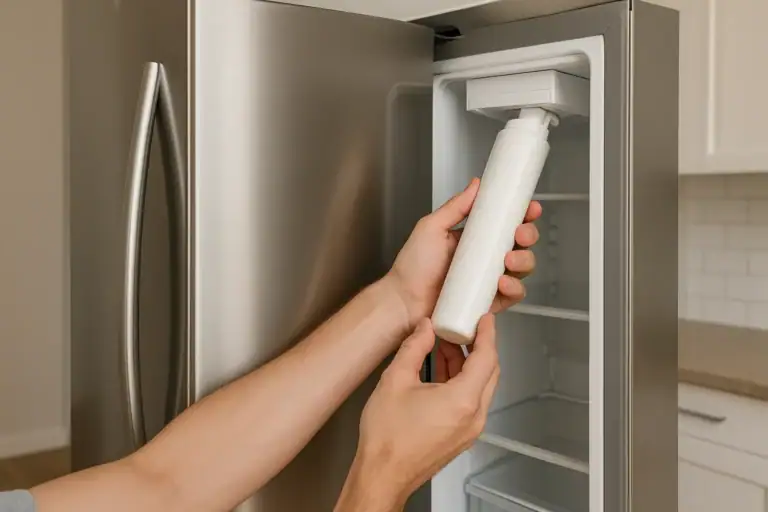 How to Safely Remove a Stuck Refrigerator Water Filter
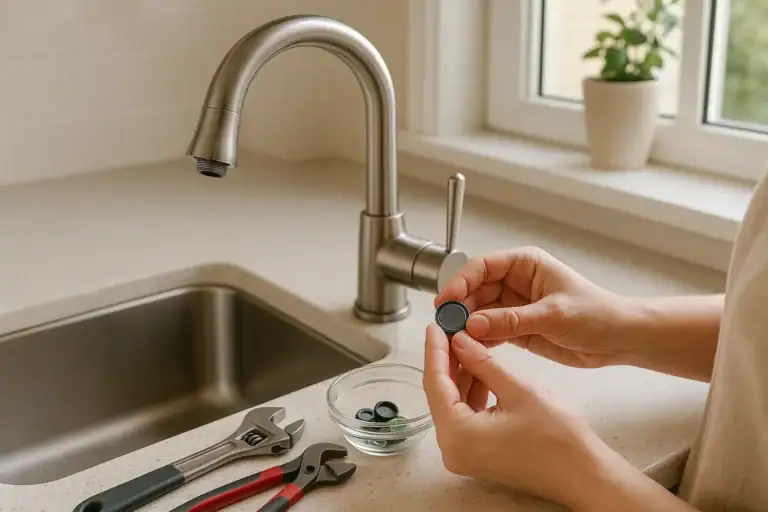 Black Debris From Faucet Aerator: What It Means and How to Fix It