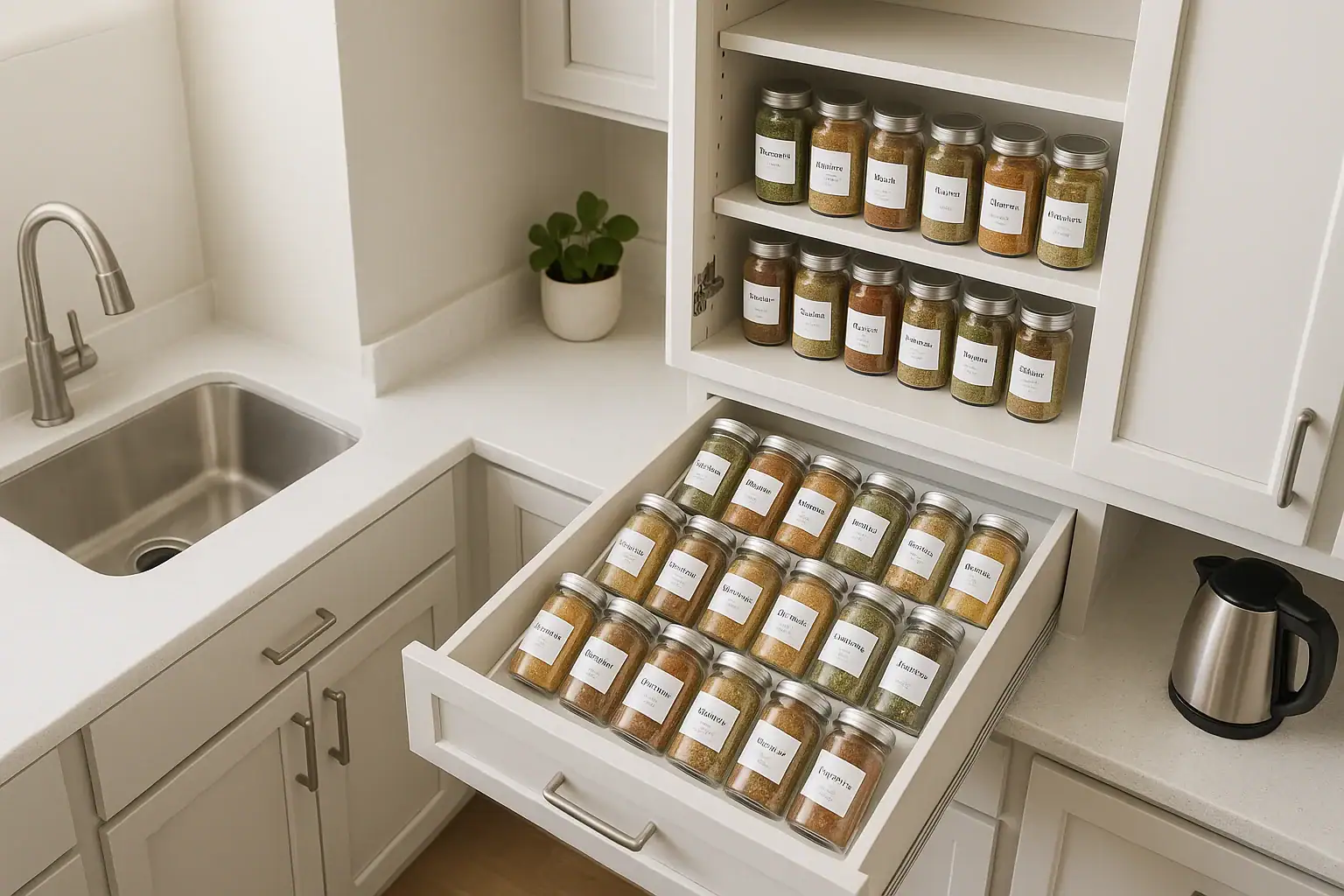
Spices can turn simple meals into something special, but in a small kitchen they often end up crammed into dark cabinets, pushed to the back of shelves, and forgotten until years past their prime. When you cannot see what you own, you end up rebuying the same jars, wasting money and space, and missing out on flavors you already paid for. A smart spice system does not require a huge pantry. It just needs clear structure, visibility, and habits that fit the way you actually cook.
This guide walks you through how to organize spices in a small kitchen so you use them before they expire. You will learn how to declutter your collection, choose the right storage spots, and set up a layout that makes it easy to grab what you need in seconds. You will also get simple labeling tips, space-saving ideas for renters, and a quick maintenance routine that keeps your spices fresh and your cabinets under control. Use these steps to turn your spice chaos into a compact, efficient setup that supports everyday cooking instead of getting in the way.
Step 1: Declutter Your Spices Before You Organize
Organizing only works if you are not trying to store more than your space can reasonably hold. Start by decluttering so you are only organizing spices you will actually use.
Pull Everything Out
Empty every spot where spices live in your kitchen: cabinets, drawers, baskets, and countertop racks. Lay everything on a table so you can see it all at once.
- Group duplicates together.
- Separate whole spices from ground spices.
- Set blends and seasoning mixes in their own group.
Check Dates and Use-By Guidelines
Most spices do not become unsafe when they are old, but they do lose flavor. General guidelines:
- Whole spices (like peppercorns, cloves, cumin seeds): about 3–4 years for best flavor.
- Ground spices (like cinnamon, paprika, cumin): about 2–3 years.
- Dried herbs (like basil, oregano, thyme): about 1–3 years.
- Seasoning blends: about 1–2 years.
Open a jar and smell it. If the aroma is weak or dusty, the flavor in your food will be weak too. That is a sign to let it go.
Decide What to Keep, Toss, or Use Up Fast
Make three quick piles:
- Keep: Spices you use regularly that still smell strong and fresh.
- Toss: Spices with no scent, caked texture, or very old dates.
- Use Up Soon: Spices you like but do not reach for often, or those nearing the end of their ideal life.
Plan to feature the “use up soon” spices in your next few weeks of cooking. Put them in a small bin or front-and-center spot so they are easy to grab.
Step 2: Choose the Best Spot for Spices in a Small Kitchen
Where you store spices matters just as much as how you arrange them. Heat, light, and moisture can all shorten their life and dull their flavor.
Spice Storage Rules to Protect Freshness
- Keep them cool: Avoid storing spices directly above the stove or oven, where rising heat can damage them.
- Keep them dry: Do not place them right next to a dishwasher vent or sink where steam and splashes are common.
- Keep them dark: Clear containers on open shelves near a window may look pretty but can fade quickly in direct light.
In a small kitchen, the goal is to balance protection with convenience. You want spices close enough to grab while cooking, but not in the hottest or steamiest spots.
Good Places to Store Spices in a Small Kitchen
- Upper cabinet near the stove (but not above it): Ideal for everyday cooking spices.
- Shallow drawer near your prep area: Great if you have one free drawer; spices can lie flat with labels on top.
- Inside of a cabinet door: Use slim racks or adhesive organizers to keep jars off the shelf but easy to reach.
- Small countertop rack away from heat: Works if you truly lack cabinet space, as long as it is not next to the range.
Pick one primary zone for your most-used spices, then a secondary zone for backups and rarely used items. This keeps your main cooking area from getting overcrowded.
Step 3: Decide Which Spices Deserve Prime Space
Not every spice you own needs to live in your main cooking zone. In a small kitchen, the key is to give your everyday favorites the best real estate and move everything else to a supporting role.
Create a “Core Spices” List
Think about what you cook most often: weeknight dinners, breakfast dishes, and go-to snacks. Pull out the spices you reach for multiple times a week. Common examples include:
- Salt and pepper
- Garlic and onion powders
- Chili powder or crushed red pepper
- Paprika
- Cumin
- Italian-style herb blend
- Cinnamon and baking basics
These “core” spices should live in your easiest-to-reach area: front of a cabinet, top of a drawer, or first row of a rack.
Separate Specialty and Rarely Used Spices
Now gather spices you only use for specific recipes or seasonal dishes. These might include items you bought for a single recipe, baking decorations, or very strong spices you use in tiny amounts.
Store these in a secondary area:
- Back of a cabinet shelf
- Higher shelf with a step riser
- Labeled bin or basket
Label the bin with something like “Specialty Spices” so you remember what is inside. This keeps your main area focused and uncluttered, making it easier to see and use what you reach for often.
Step 4: Choose Space-Saving Spice Organizers That Actually Work
You do not need fancy systems to organize spices in a small kitchen, but the right organizers can help you see everything at a glance and prevent bottles from getting lost.
For Cabinets: Tiered Risers and Turntables
If your spices live in a cabinet, consider:
- Tiered shelf risers: These create stadium-style rows so you can see labels in the back without moving everything in front.
- Turntables (lazy susans): Ideal for corner cabinets or deep shelves. Spin to see everything instead of digging around.
- Door-mounted racks: Shallow racks inside the cabinet door free up shelf space and keep small jars visible.
For Drawers: Flat Trays and Drawer Inserts
If you have a shallow drawer near your stove or prep area, it can be an excellent spice zone:
- Angled drawer inserts: Hold jars at a slight angle so you can read labels from above.
- Flat trays or shallow bins: Keep jars from rolling around and help you group similar flavors together.
- Custom labels on lids: Essential for drawer storage so you can identify spices quickly.
For Very Tight Spaces: Vertical and Underused Areas
In an especially small kitchen, look for vertical or overlooked spaces:
- Magnetic strips or boards: Attach small metal-topped jars to the side of a fridge or inside a metal cabinet door.
- Under-shelf hanging racks: Clip onto an existing shelf to create a second layer for spice jars.
- Narrow pull-out cart: If you have a gap between appliances, a slim rolling cart can hold spices and oils.
Before buying anything, measure your jars and your available space. A simple, well-fitting organizer is better than a complicated system that does not quite fit.
Step 5: Label Spices Clearly So You Actually Use Them
Labels are one of the most powerful tools for using spices before they expire. When you can read names and dates at a glance, you are far more likely to reach for what you already own.
What to Include on Each Label
Whether you keep original jars or transfer spices to matching containers, aim to include:
- Spice name: Use clear, simple names you recognize.
- Type: Note if it is ground or whole, especially if both versions live in your kitchen.
- Purchase or open date: A small date helps you know what to use up first.
Label Placement Tips
- Cabinet storage: Label the front of each jar so you can read it while standing in front of the shelf.
- Drawer storage: Label the top or lid so names are visible when you open the drawer.
- Bins and baskets: Add a label to the front of each bin (for example, “Baking Spices” or “Spicy and Smoky”).
Use a consistent style of label so your eyes can scan quickly. Even simple masking tape and a permanent marker can work well if you are on a budget.
Step 6: Arrange Spices in a Way That Matches How You Cook
The best organizing system is the one that makes sense to you. Instead of following a rigid rule, arrange your spices in a way that feels natural for your cooking style.
Option 1: Organize by Frequency of Use
This is often the most practical method in a small kitchen. Place:
- Daily-use spices (salt, pepper, garlic, onion, basic blends) in the front row or easiest-to-reach spot.
- Weekly-use spices in the next row or slightly higher shelf.
- Occasional-use spices in the back, higher up, or in a labeled bin.
This layout makes it almost impossible to ignore the spices you use most, helping you rotate through them naturally.
Option 2: Organize by Flavor Family or Cuisine
If you cook a lot of specific cuisines, grouping by flavor family can save time and encourage you to use a wider variety:
- Everyday savory: Garlic, onion, paprika, black pepper, basic herb blends.
- Spicy and smoky: Chili powders, crushed red pepper, smoked seasonings.
- Baking and sweet: Cinnamon, nutmeg, cloves, pumpkin-style blends.
- International sets: Group spices often used together for your favorite regional dishes.
Use small bins or dividers to keep each group together. Label each group so everyone in the household can find what they need.
Option 3: Alphabetical Within Zones
Alphabetical order can be helpful if you have a large collection, but in a small kitchen it works best when combined with zones. For example:
- Zone 1: Everyday savory spices, arranged alphabetically.
- Zone 2: Baking spices, arranged alphabetically.
- Zone 3: Specialty or rarely used spices, arranged alphabetically within a bin.
This way, you still keep most-used items front and center while enjoying the clarity of alphabetical order.
Step 7: Make It Easy to Use Spices Before They Expire
Once your spices are organized, a few simple habits will help you use them up on time instead of letting them sit untouched.
Rotate Spices Like Groceries
When you buy a new jar, place it behind the older one or underneath it if you stack. This “first in, first out” approach keeps you from always grabbing the newest jar and forgetting the older one.
Create a “Use Me First” Spot
Set aside a small section of your spice area or a mini bin labeled “Use Me First.” Place in it:
- Spices that are close to their recommended date.
- Spices you accidentally bought duplicates of.
- Blends you want to experiment with more often.
Challenge yourself to use at least one item from this section each week. It is a simple way to reduce waste and inspire new recipes.
Plan Meals Around What You Already Have
When you plan meals or grocery shop, glance at your spice area first. Ask:
- Which spices have I not used in a while?
- Are there blends I want to finish before buying more?
- Could I choose recipes that highlight a spice I own instead of buying a new one?
Building meals around your existing spices helps you rotate through them and keeps your collection from growing faster than your space.
Set a Simple Spice Checkup Reminder
Once or twice a year, do a quick review:
- Scan for duplicates you can combine.
- Smell a few older jars to see if they still have strong aroma.
- Move anything fading in flavor to your “Use Me First” spot.
Put a reminder on your calendar, or tie it to another routine, like spring cleaning or holiday baking prep.
Step 8: Smart Buying Habits for a Small Spice Collection
Staying organized is easier when you are intentional about what you bring into your kitchen. In a small space, it is especially important to avoid collecting more spices than you can reasonably use.
Buy Smaller Amounts More Often
Instead of stocking up on large containers, choose smaller amounts you can finish within a year or two. This keeps your spices fresher and reduces clutter.
Think Twice Before Buying a New Spice
Before you add a new jar to your cart, ask yourself:
- Do I already have something similar that could work in this recipe?
- Will I use this spice in at least three different dishes?
- Do I have room for it in my current spice setup?
If you cannot answer yes to most of these questions, consider skipping it for now or finding a substitute from what you already own.
Limit How Many Open Jars You Keep
Try to keep only one open container of each spice at a time. If you buy a replacement, store it in your backup area and wait to open it until the old one is finished. This keeps your main spice zone from getting overcrowded.
Putting It All Together in Your Small Kitchen
Organizing spices in a small kitchen is less about having perfect matching jars and more about creating a simple system you can maintain. When you declutter first, choose a cool and convenient storage spot, label clearly, and arrange spices in a way that matches how you cook, it becomes easy to see what you have and use it before it loses flavor.
Take the process step by step. Start by pulling everything out and letting go of what you no longer need. Then choose one main zone for everyday spices and a secondary spot for backups and special items. Add labels, group spices in a way that feels natural to you, and build small habits like rotating jars and checking your collection a couple of times a year.
With a thoughtful setup, even the smallest kitchen can support a well-organized, hard-working spice collection that makes everyday cooking faster, easier, and more flavorful.
 Food Storage Container Organization and Stain Removal Made Simple
 Kitchen Sponge Hygiene: When to Replace It and How to Sanitize It
 Refrigerator Making Noise: What Needs Attention?