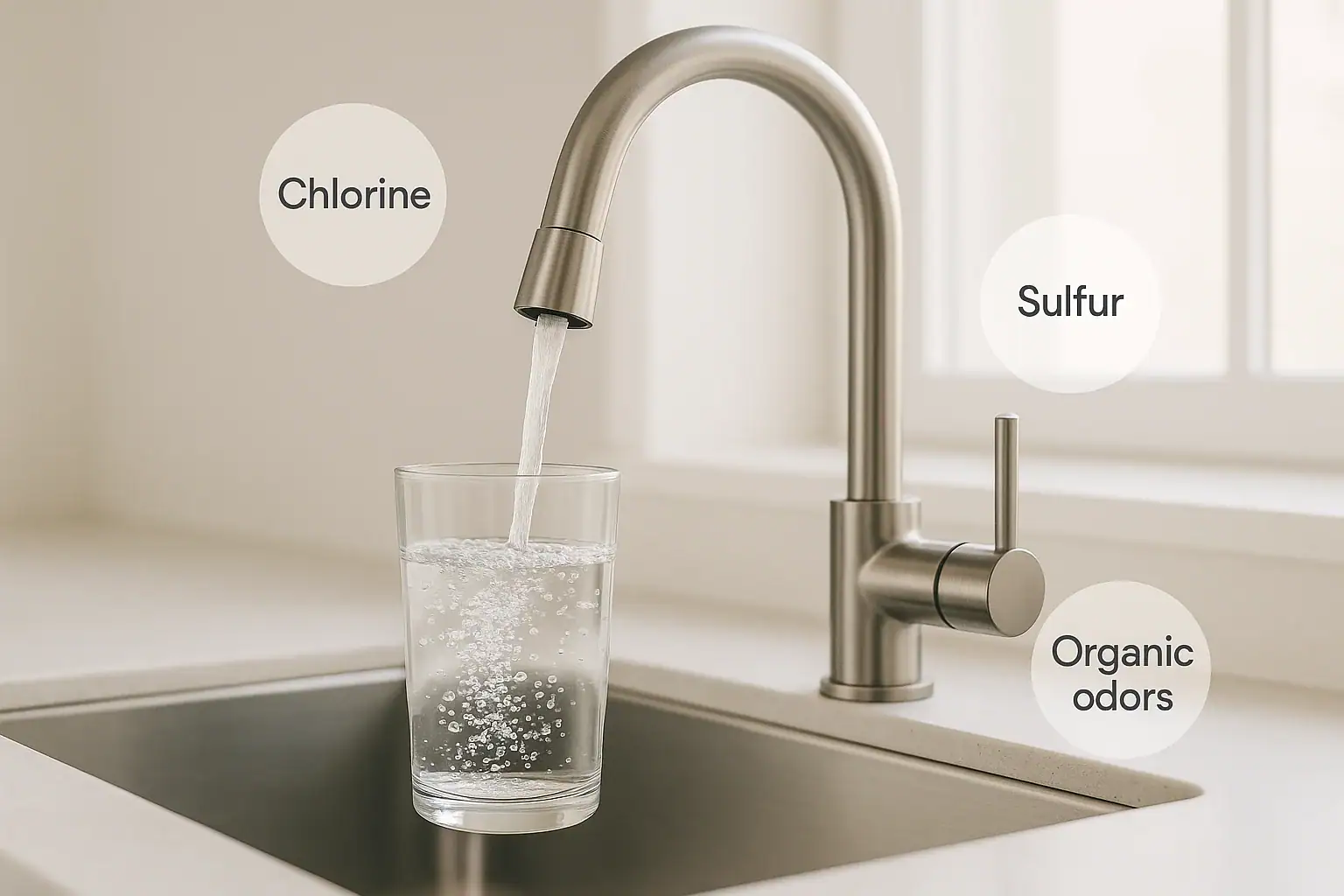
If your tap water suddenly tastes like a swimming pool, rotten eggs, or a musty basement, it is more than just unpleasant. Water taste and odor can tell you a lot about what is going on in your plumbing, your well, or your local water system. Understanding the difference between chlorine, sulfur, and organic odors helps you decide when a simple fix is enough and when you should take stronger action, such as testing or treatment. This guide walks you through quick, practical ways to identify common water tastes and smells, what they usually mean, and smart next steps for a typical home in the United States.
Why Your Water Smells or Tastes Strange
Most unusual water tastes and odors fall into a few broad categories. The three most common are:
- Chemical or bleach-like (often chlorine or other disinfectants)
- Rotten egg or sewage-like (often sulfur compounds)
- Earthy, musty, or swampy (often organic material or microbes)
Each category has its own likely causes and simple ways to investigate. While some issues are mainly cosmetic, others can point to plumbing problems, stagnant water, or microbial growth that deserves attention.
The goal is not to turn you into a water chemist, but to give you a quick, practical checklist so you can narrow down what you are dealing with and decide whether to flush, filter, test, or call a professional.
Quick Diagnosis: Start With These Simple Questions
Before comparing chlorine, sulfur, and organic odors, answer a few basic questions. They help you pinpoint whether the problem is your water source, your plumbing, or just one fixture.
1. Where do you notice the odor?
- All faucets, hot and cold: More likely a source or supply issue.
- Only one faucet: Often a localized plumbing or fixture problem.
- Only hot water: Often related to the water heater.
2. When do you notice it?
- Only when water first turns on: Could be stagnant water in pipes.
- After water runs for a while: May be from the main supply.
- Only with certain uses: For example, stronger in showers than at the kitchen sink.
3. Are you on city water or a private well?
- City water: Chlorine or chloramine odors are common. Organic odors may be seasonal.
- Private well: Sulfur and organic odors are more common. Disinfection odors are less likely unless you treat the well.
Keep your answers in mind as you compare the three main types of tastes and odors below.
Chlorine Taste and Odor: Bleachy or Pool-Like
Many public water systems use chlorine or related disinfectants to keep water safe as it travels through pipes. That disinfectant can leave a noticeable taste or smell, especially if you are sensitive to it.
How to Recognize Chlorine in Water
Chlorine-related odors usually have one or more of these traits:
- Smell: Bleachy, pool-like, or similar to a household cleaner.
- Taste: Sharp, chemical, or slightly medicinal.
- Location: Usually noticeable at all faucets, hot and cold.
- Timing: May be stronger at certain times of day or after system flushing by the utility.
Simple Home Checks for Chlorine
- Fill a glass and let it sit: If the odor fades after 10 to 20 minutes, it is likely chlorine gas escaping.
- Compare cold vs hot: Chlorine smell often seems stronger in hot water because heat releases more odor.
- Check neighbors: If nearby homes notice the same bleachy smell, it is likely from the municipal supply.
Is Chlorine Taste a Health Concern?
In most public systems, chlorine levels are regulated and kept within limits considered safe for everyday use. For many households, the issue is comfort, not immediate health risk. However, if the smell is suddenly much stronger than usual, or if you notice color changes, cloudiness, or sediment along with the odor, it is wise to contact your water provider and ask whether there have been recent changes or maintenance.
What You Can Do About Chlorine Taste
- Chill your drinking water: Store tap water in the refrigerator in an uncovered pitcher for a few hours to let chlorine dissipate, then cover.
- Run the tap: Let water run for 30 to 60 seconds before filling a glass, especially in the morning.
- Use a suitable filter: Many point-of-use filters designed for taste and odor reduction can reduce chlorine levels.
- Contact your utility: Ask for a recent water quality report and whether any system flushing or treatment changes are underway.
Sulfur Odor: Rotten Eggs or Sewage-Like Smell
A rotten egg smell is one of the most alarming water odors. It is often caused by hydrogen sulfide gas or related sulfur compounds, which can come from groundwater, plumbing, or even the water heater.
How to Recognize Sulfur in Water
Sulfur-related odors typically have these characteristics:
- Smell: Rotten eggs, sewage, or strong sulfur.
- Taste: Bitter, metallic, or similar to spoiled food.
- Location: May appear in only hot water, only cold water, or both, depending on the source.
- Intensity: Often stronger in the shower or when running hot water due to gas release.
Quick Tests to Narrow Down Sulfur Sources
Use this simple checklist to figure out where the sulfur smell is coming from:
- Only hot water smells: The water heater is a likely source. Certain heater components can react with minerals and create hydrogen sulfide gas.
- Both hot and cold smell, all faucets: The source may be your well or main supply line.
- Only one faucet smells: The issue may be in that fixture or nearby plumbing, possibly due to trapped organic material or bacteria.
Is Sulfur Odor Dangerous?
Low levels of hydrogen sulfide are usually more of a nuisance than an immediate health emergency, but strong sulfur odors can make water unpleasant to drink or use. Very high levels can be corrosive to plumbing and may require prompt attention. Because sulfur odors can also be linked with bacterial activity, it is wise to take them seriously, especially with private wells.
What to Do About Sulfur Smell
- Flush your plumbing: Run water for several minutes at affected faucets to clear stagnant water from pipes.
- Inspect the water heater: If only hot water smells, consider having a professional inspect and service the heater.
- Test well water: For private wells, schedule a water test that includes sulfur, bacteria, and common minerals.
- Consider treatment: Depending on test results, options may include aeration, filtration, or disinfection systems designed for sulfur reduction.
Organic and Musty Odors: Earthy, Moldy, or Swampy
Organic odors often come from naturally occurring compounds produced by algae, bacteria, or decaying plant material. These odors can show up in both surface water supplies and private wells, especially during certain seasons.
How to Recognize Organic-Related Odors
Organic tastes and smells often include:
- Smell: Earthy, musty, moldy, grassy, or swamp-like.
- Taste: Flat, stale, or slightly muddy, even if the water looks clear.
- Location: May be noticeable in all faucets, or stronger in certain rooms where water sits longer in pipes.
- Seasonal patterns: Sometimes stronger in late summer or after heavy rain.
Common Sources of Organic Odors
- Surface water influences: Lakes and rivers can experience algae blooms that create earthy or musty tastes.
- Biofilm in plumbing: Slimy buildup inside faucet aerators or pipes can harbor odor-causing microbes.
- Stagnant water: Rarely used lines or fixtures can develop a musty smell from standing water.
- Well contamination: Surface runoff entering a poorly sealed well can carry organic material and bacteria.
Simple Checks for Organic Odors
- Inspect faucet aerators: Unscrew and clean aerators and screens. If they are slimy or discolored, buildup may be contributing to odor.
- Run seldom-used taps: Flush guest bathrooms, basements, or outdoor spigots that are rarely used.
- Compare rooms: If odor is stronger in one bathroom than at the kitchen sink, local plumbing may be the issue.
Is an Organic Odor a Health Risk?
Many earthy or musty odors come from compounds that affect taste more than safety. However, because organic odors can also be associated with microbial growth, it is important not to ignore them, especially if you notice slime, discoloration, or if someone in the home has a weakened immune system. Private wells should be tested regularly for bacteria and other contaminants.
What to Do About Organic or Musty Smells
- Clean fixtures: Remove and scrub faucet aerators and showerheads. Soak them in a mild cleaning solution, then rinse well.
- Flush lines: Run water for several minutes in affected areas, especially after long periods of non-use.
- Check for leaks: Damp areas around plumbing can support mold and bacteria that may contribute to odors.
- Test and treat if needed: For wells or persistent odors, consider professional testing and, if indicated, disinfection or filtration.
Side-by-Side Comparison: Chlorine vs Sulfur vs Organics
Use this quick comparison to match what you are sensing with the most likely cause.
Main Sensations
- Chlorine: Bleachy, pool-like, chemical; often stronger in hot water and at all faucets.
- Sulfur: Rotten eggs, sewage-like; may be stronger in hot water or at certain taps.
- Organics: Earthy, musty, moldy, swampy; may vary by season or by location in the home.
Likely Sources
- Chlorine: Public water disinfection, occasional system flushing.
- Sulfur: Natural groundwater minerals, water heater reactions, or bacterial activity.
- Organics: Algae and natural compounds in source water, biofilm in pipes, stagnant water, or well contamination.
Typical First Steps
- Chlorine: Let water stand, chill it, or use a suitable taste-and-odor filter. Contact the utility if odor is unusually strong.
- Sulfur: Determine whether it is hot, cold, or both; flush lines; inspect the water heater; test well water if applicable.
- Organics: Clean fixtures, flush low-use lines, and consider testing if odors persist or worsen.
When to Test Your Water
While many water odors are mainly a nuisance, testing provides peace of mind and clear guidance on treatment options. Consider testing in these situations:
- The odor is new, sudden, or much stronger than usual.
- You notice color changes, cloudiness, or particles along with the smell.
- You use a private well and have not tested in the last year.
- Someone in your home is pregnant, elderly, or has a weakened immune system.
- You live near agricultural, industrial, or heavy construction activity.
For city water, you can request a water quality report, often called a consumer confidence report, which lists typical disinfectant levels and other key parameters. For wells, a certified laboratory can test for bacteria, minerals, sulfur, and other contaminants that may affect taste, odor, and safety.
Simple Everyday Habits to Improve Water Taste and Odor
Even if your water is safe, a few small habits can make it taste and smell better in daily use.
- Run the tap before drinking: Let water run for 30 to 60 seconds, especially after the tap has been idle for several hours.
- Use clean containers: Store drinking water in clean, food-safe containers and wash them regularly.
- Keep the refrigerator pitcher fresh: Refill with fresh water daily and clean the pitcher on a regular schedule.
- Maintain your plumbing: Fix slow leaks, clean aerators, and flush seldom-used lines a few times a month.
- Service treatment systems: If you use filters or softeners, follow the manufacturer’s maintenance schedule so they continue to work properly.
When to Call a Professional
Some water taste and odor issues are easy to handle on your own. Others deserve expert attention. Consider calling a licensed plumber, water treatment specialist, or local health department if:
- The odor is very strong and does not improve with simple flushing or cleaning.
- You notice metallic, fuel-like, or chemical odors that do not match chlorine, sulfur, or organic smells.
- Multiple neighbors on the same supply report significant changes in taste or smell.
- You have a well and recent tests show bacteria, high sulfur, or other issues.
- You experience health symptoms you think may be related to water quality.
A professional can help you interpret test results, identify the true source of the problem, and recommend treatment options tailored to your home’s plumbing, water source, and budget.
Key Takeaways for Diagnosing Water Taste and Odor
Unpleasant water does not always mean unsafe water, but it should never be ignored. By learning to tell the difference between chlorine, sulfur, and organic odors, you can respond more confidently and effectively.
- Chlorine: Bleachy or pool-like; often from city disinfection; usually a comfort issue but worth monitoring.
- Sulfur: Rotten egg smell; may come from groundwater, the water heater, or bacteria; can be corrosive at high levels.
- Organics: Earthy or musty; often tied to natural compounds or biofilm; may signal stagnant water or microbial growth.
- Check patterns: Note where and when the odor appears, and whether it is in hot, cold, or both.
- Use simple fixes first: Flush lines, clean fixtures, and chill water for better taste.
- Test when in doubt: Especially for wells, strong odors, or combined taste, color, and odor changes.
With a little observation and a few basic steps, you can quickly narrow down what is affecting your water, decide whether home remedies are enough, and know when it is time to test or seek professional help.
For more ways to improve water quality and kitchen comfort throughout your home, explore related guides and resources at Water & Kitchen.
 Cloudy Glasses From the Dishwasher: Causes and Simple Fixes
 Condensation Inside Your Refrigerator: Causes, Fixes, and Prevention
 Garbage Disposal Smell Causes and a Simple Cleaning Routine That Works