If your dishwasher is not cleaning well, you are not alone. Many homeowners start to notice cloudy glasses, gritty residue on plates, or food stuck to utensils even after a full wash cycle. The good news is that you can often restore cleaning power without calling a technician. Most problems come down to a few key areas: clogged spray arms, dirty filters, poor loading habits, or water and detergent issues. With a little maintenance and a few simple changes, you can usually get your dishwasher washing like it did when it was new.
This guide walks you step-by-step through diagnosing and fixing the most common reasons a dishwasher stops cleaning well. You will learn how to inspect and clear the spray arms, clean the filter, load dishes so water can reach every surface, and adjust your detergent and cycle choices. These tips are designed for a typical US home kitchen and require only basic tools and supplies you likely already have. Work through the sections in order, and test your dishwasher after each change to see what makes the biggest difference.
First Checks When Your Dishwasher Is Not Cleaning Well
Before taking anything apart, start with a few quick checks. These simple steps can reveal obvious issues and help you decide what to tackle first.
Basic things to confirm
- Run hot water at the sink first: Let the hot water tap run until it is hot before starting the dishwasher. This helps the appliance fill with hot water from the start of the cycle.
- Make sure nothing blocks the detergent dispenser: Large plates, pans, or utensils can block the detergent cup from opening fully, leaving detergent undissolved.
- Check for obvious obstructions: Look for large items blocking the spray arms from spinning freely.
- Listen for spray action: During a wash cycle, you should hear water spraying and arms rotating. A constant dull hum with no splashing may indicate poor water circulation.
If these basics look fine, move on to the core areas that most often cause poor cleaning: spray arms, filters, and loading habits.
How Spray Arms Affect Cleaning Performance
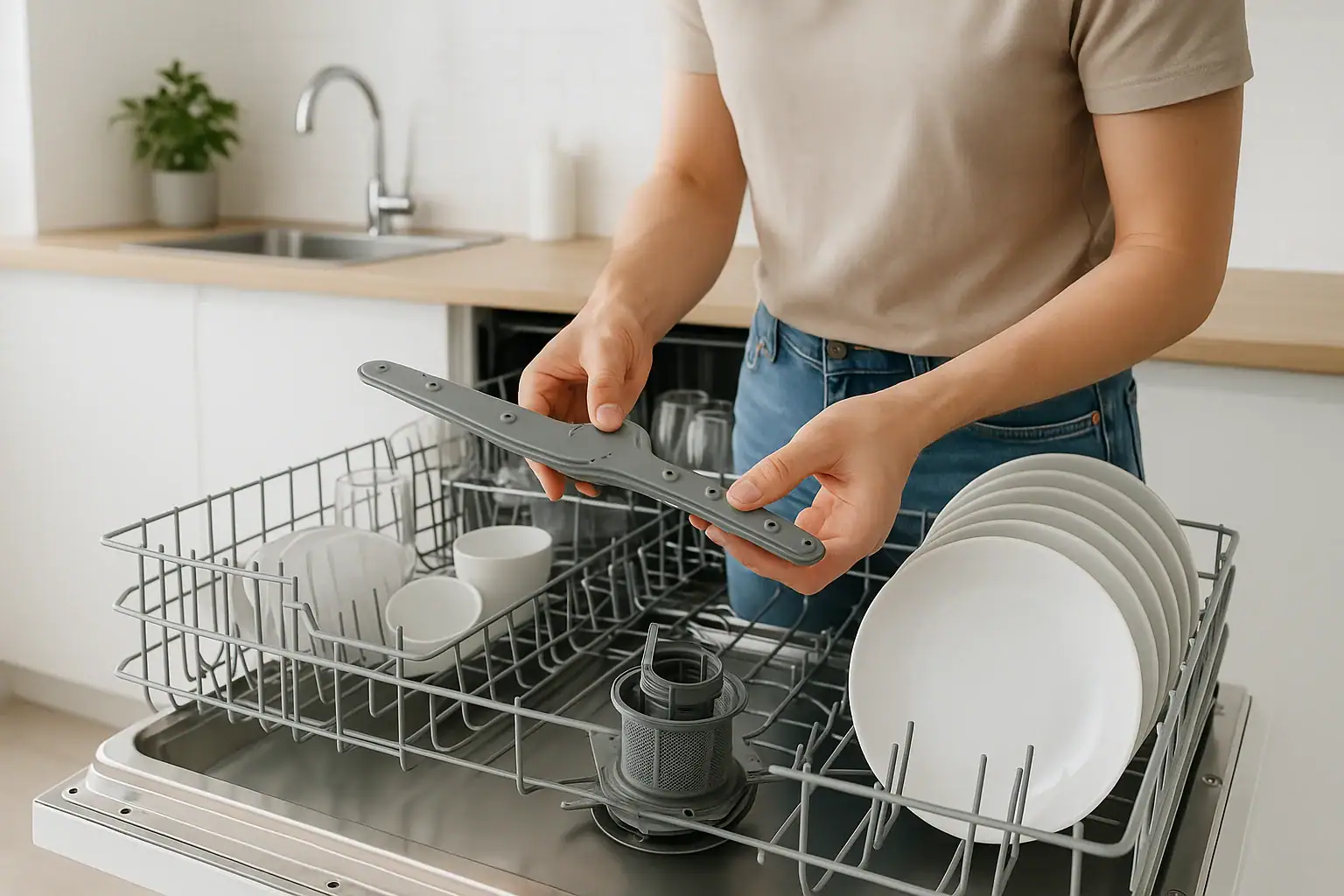
The spray arms are the heart of your dishwasher’s cleaning system. They rotate and spray pressurized water to reach every surface of your dishes. When the spray arms are clogged or blocked, your dishwasher may leave food particles, soap film, or greasy residue behind.
Signs your spray arms are not working properly
- Dishes on one rack are consistently dirtier than the other.
- There are clear patterns of clean and dirty areas on plates or bowls.
- Large items on the bottom rack come out clean, but smaller items on the top rack stay dirty.
- You notice grit or food particles stuck on glasses and cups.
How to inspect the spray arms
Follow these steps with the dishwasher powered off and empty:
- Remove the bottom rack: Slide it out completely to access the lower spray arm.
- Spin each spray arm by hand: They should rotate freely without scraping or sticking.
- Check the spray holes: Hold the arm up to a light and look for clogged or partially blocked holes.
- Look for cracks or damage: Damaged arms may not spray evenly and may need replacement.
How to clean clogged spray arms
Mineral buildup, food particles, and even small debris like seeds can clog the tiny holes in the spray arms. Cleaning them can dramatically improve performance.
- Remove the spray arms: Most models allow the arms to be lifted off or unscrewed by hand. Check for a central nut, clip, or twist-lock.
- Rinse under warm water: Use a sink sprayer to flush out loose debris from the holes.
- Use a soft tool to clear holes: A toothpick, soft brush, or piece of thin wire can gently push out clogs. Avoid metal tools that can enlarge or damage the holes.
- Soak in a vinegar solution: If you see white mineral deposits, soak the arms in a 1:1 mix of warm water and white vinegar for 20 to 30 minutes, then rinse again.
- Reinstall and test: Make sure each arm is seated correctly and spins freely before running a test cycle.
After cleaning the spray arms, run a short cycle with dishes loaded properly to see if cleaning performance improves. If not, the filter and drain system may need attention.
Filter and Drain Maintenance for Cleaner Dishes
The dishwasher filter captures food particles and prevents them from recirculating onto your dishes. When the filter is clogged, water flow is reduced and dirty water may be sprayed back onto plates and glasses. A dirty filter is one of the most common reasons a dishwasher is not cleaning well.
Types of dishwasher filters
Most modern dishwashers use a removable filter system, typically located at the bottom of the tub under the lower spray arm. It usually includes:
- Coarse filter: A screen that catches larger food pieces.
- Fine filter: A mesh or cylinder that traps smaller particles.
- Filter cover or cage: Holds the filter in place and directs water flow.
How to clean the dishwasher filter
Plan to clean the filter at least once a month, or more often if you use the dishwasher daily or rarely pre-rinse dishes.
- Turn off the dishwasher: Make sure the appliance is not running and has cooled down.
- Remove the bottom rack: Slide it out to expose the bottom of the tub.
- Locate the filter assembly: It is usually a round or rectangular piece in the center or rear of the tub floor.
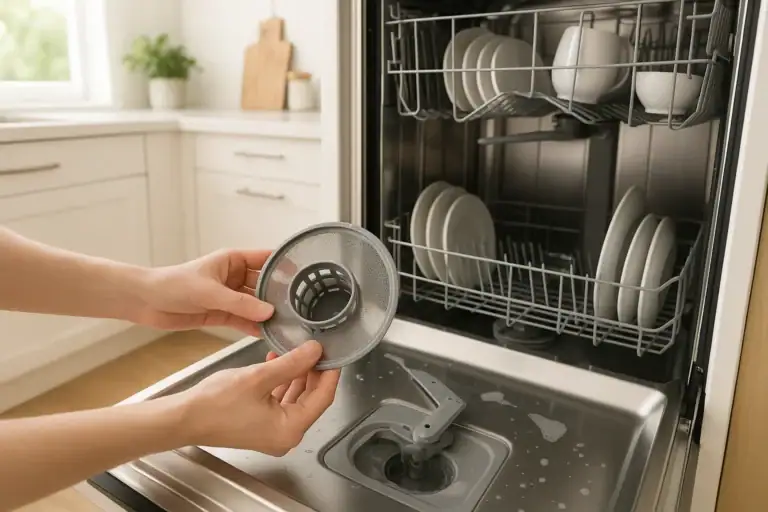
- Twist or lift out the filter: Many filters twist counterclockwise to unlock. Lift it out gently.
- Rinse under warm water: Use a soft brush or sponge to scrub away grease and trapped food. Avoid harsh brushes that could damage the mesh.
- Check the filter housing: Wipe out any sludge, food bits, or buildup in the cavity where the filter sits.
- Reinstall securely: Make sure the filter is seated and locked in place. A loose filter can allow debris to bypass it or damage the pump.
Check the drain area and sump
While the filter is out, inspect the drain area for anything that could block water flow.
- Look for broken glass, bones, or small items that may have fallen through the rack.
- Check that the small openings around the sump are not clogged with food sludge.
- Wipe away visible buildup with a damp cloth or sponge.
After cleaning the filter and drain area, run a hot cycle with the dishwasher empty and a cup of white vinegar on the top rack. This can help flush out remaining residue and odors.
Loading Tips: How to Arrange Dishes for Best Results
Even a perfectly maintained dishwasher will struggle if dishes are loaded poorly. Overloading, nesting items, or blocking the spray arms can all lead to poor cleaning. A few simple changes to your loading habits can make a big difference.
General loading guidelines
- Face dirty surfaces toward the spray: Angle plates and bowls so the dirtiest side faces the center or spray arms.
- Avoid nesting: Do not stack bowls inside each other or let spoons nest together; water cannot reach between them.
- Leave space between items: Dishes should not touch tightly. Gaps allow water and detergent to circulate.
- Do not block the detergent cup: Keep large platters or cutting boards away from the dispenser area.
- Keep spray arms clear: Make sure tall items do not hit or block the arms from spinning.
How to load the bottom rack
The bottom rack is designed for heavier and more heavily soiled items.
- Place plates in rows, angled slightly toward the center.
- Put pots, pans, and casserole dishes along the sides or back, tilted so water can drain.
- Place large items like baking sheets or cutting boards along the sides, not directly in front of the spray arms or detergent cup.
- Avoid laying items flat over the entire rack, which can create a “roof” that blocks water from reaching the top rack.
How to load the top rack
The top rack is best for cups, glasses, small bowls, and plastic items that are labeled dishwasher-safe.
- Place cups and glasses between tines, not over them, to avoid water spots and breakage.
- Angle glasses slightly for better drainage and to prevent water pooling on the bottoms.
- Lay long utensils, spatulas, and small lids flat on designated shelves or along the sides.
- Keep delicate plastic away from the heating element area at the bottom of the dishwasher.
Best practices for the utensil basket
- Mix spoons, forks, and knives so they do not nest together.
- Alternate handles up and down, but place sharp knives with blades down for safety.
- Do not overload any single compartment; give utensils room so water can reach all sides.
If you consistently see food stuck to certain items, pay attention to where they are placed and whether they may be shielded by larger dishes.
Water Temperature, Detergent, and Rinse Aid
Even with clean spray arms, a clear filter, and good loading habits, your dishwasher can still struggle if the water is too cool or the detergent is not working effectively. Adjusting these factors can improve both cleaning and drying.
Check your water temperature
Dishwashers work best with incoming water around 120 degrees Fahrenheit.
- Run hot water at the kitchen sink for a minute.
- Fill a cup with the hottest water and use a kitchen thermometer to measure the temperature.
- If it is significantly below 120 degrees, consider adjusting your water heater setting, keeping safety and household needs in mind.
Starting the dishwasher after the sink water is hot helps ensure the first fill is at the right temperature.
Choosing and using detergent
Detergent performance can vary based on water hardness and soil level.
- Use fresh detergent: Powder and pods can lose effectiveness if stored in a damp or very hot place. Replace any detergent that has clumped or hardened.
- Do not overfill: More detergent does not always mean cleaner dishes and can leave residue or film.
- Match detergent type to your water: In hard water areas, you may need a detergent formulated for mineral-heavy water.
Benefits of rinse aid
Rinse aid helps water sheet off dishes, reducing spots and improving drying. It can also help prevent film on glassware.
- Fill the rinse aid dispenser according to your manual.
- Adjust the setting higher if you see persistent water spots.
- Refill whenever the indicator shows low or empty.
Dealing With Hard Water and Mineral Buildup
Hard water is common in many parts of the United States. Minerals in the water can leave white spots, film, and scale inside your dishwasher and on your dishes. Over time, this buildup can clog spray arms and coat the interior, reducing cleaning performance.
Signs of hard water problems
- White, chalky spots on glasses and silverware.
- Cloudy film that does not rinse off easily.
- White or tan scale on the heating element and interior walls.
- Frequent clogs in spray arm holes.
How to reduce mineral buildup
- Run a monthly cleaning cycle with a cup of white vinegar on the top rack.
- Use a dishwasher cleaner product periodically if buildup is heavy.
- Consider a whole-house or under-sink water treatment system if hard water affects other fixtures and appliances.
- Use a detergent designed for hard water and keep rinse aid filled.
Managing hard water will not only help your dishwasher clean better but can also extend the life of the appliance and reduce maintenance.
When to Try Different Cycles and Options
If your dishwasher is not cleaning well, you may be using cycles that are too short or gentle for the soil level on your dishes. Many modern models offer multiple options that can be matched to your needs.
Match the cycle to the soil level
- Heavy or pots and pans: Use for baked-on or dried food, casseroles, and cookware.
- Normal: Best for everyday loads with typical food residue.
- Quick or express: Use only for lightly soiled dishes; not ideal if you often see food left behind.
- Eco or energy-saving: Uses less water and energy but may not clean heavy soil as well.
Helpful options to improve cleaning
- High-temperature wash: Raises water temperature for better grease removal.
- Sanitize or extended wash: Lengthens the cycle and can improve cleaning for heavily soiled loads.
- Extra rinse: Helps remove detergent residue and leftover food particles.
If you have been relying on quick cycles, try a full normal or heavy cycle with high-temperature wash enabled and compare the results.
Simple Maintenance Routine to Keep Cleaning Power Strong
Once you get your dishwasher cleaning well again, a basic maintenance routine will help keep it that way. Most tasks take only a few minutes and can be added to your regular kitchen cleaning schedule.
Monthly tasks
- Clean the filter and wipe out the filter housing.
- Inspect and, if needed, clean the spray arms.
- Run an empty hot cycle with a cup of white vinegar on the top rack.
- Check the door gasket and wipe away any debris or buildup.
Every few months
- Inspect racks for rust or damage to tines.
- Check that the detergent dispenser opens freely.
- Look for signs of leaks around the door and under the appliance.
Every load
- Scrape, but do not necessarily rinse, heavy food from dishes.
- Load dishes so spray arms can spin and water can reach every surface.
- Use the right amount of fresh detergent and keep rinse aid filled.
When to Call a Professional
If you have cleaned the spray arms, filter, and interior, adjusted your loading habits, and verified water temperature and detergent use, but your dishwasher still is not cleaning well, there may be a deeper mechanical or electrical issue.
Possible problems that need expert help
- Weak or failing circulation pump that cannot maintain water pressure.
- Faulty inlet valve that does not allow enough water into the tub.
- Heating element that does not reach proper temperature.
- Control board issues that prevent cycles from running correctly.
- Persistent leaks or standing water that do not resolve with basic cleaning.
At this point, consider contacting a qualified appliance technician. Explain the steps you have already taken so they can focus on likely mechanical causes and save time on the diagnosis.
 How to Clean a Dishwasher Filter Step by Step for Sparkling Dishes
 Dishwasher Air Gap Leaking: How to Find and Fix the Cause
 Kitchen Trash Can Odors: Liner, Lid, and Cleaning Fixes That Actually Work