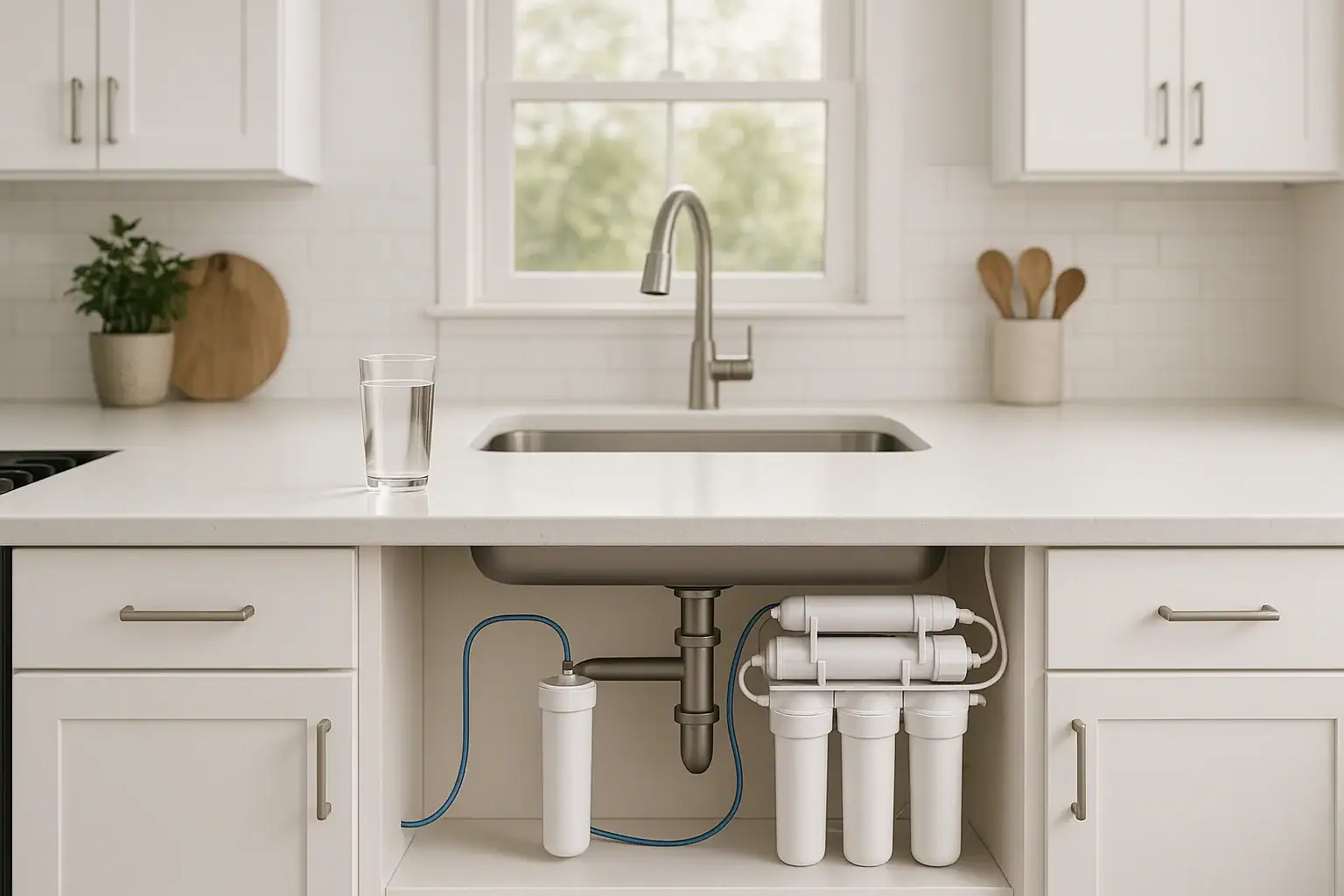
If you are planning a kitchen upgrade or simply want better drinking water at home, you have probably run into a common question: should you install a standard under-sink water filter or invest in a reverse osmosis (RO) system? Both live out of sight in the cabinet under your sink, but they work very differently and have distinct pros and cons. The right choice depends on what you want to improve most: taste, contaminants, cost, or convenience. This guide walks through how each system works and compares them on taste, waste water, and maintenance so you can confidently choose the best fit for your household and budget.
How Under-Sink Filters and RO Systems Work
Before comparing taste and upkeep, it helps to understand the basics of how each system treats your tap water.
What Is a Standard Under-Sink Filter?
An under-sink filter is usually a cartridge-based system plumbed into the cold-water line under your kitchen sink. It may feed a dedicated drinking-water faucet or connect directly to the main kitchen faucet.
Most under-sink filters use one or more of these technologies:
- Activated carbon: Adsorbs chlorine, some chemicals, and many odor-causing compounds.
- Sediment filtration: Screens out sand, rust, and other visible particles.
- Carbon block or specialty media: Targets specific contaminants like lead or certain organic chemicals, depending on the cartridge design.
These systems are considered point-of-use filters. They improve taste and reduce selected contaminants but do not remove everything dissolved in the water.
What Is a Reverse Osmosis (RO) System?
A reverse osmosis system is also installed under the sink, but it is more complex. It typically includes:
- One or more pre-filters (sediment and carbon) to protect the membrane
- A semi-permeable RO membrane that removes many dissolved solids and contaminants
- A small storage tank to hold purified water
- An RO faucet mounted on the sink or countertop
- A connection to the drain line to carry away reject water
RO works by pushing water through a very fine membrane. Most dissolved minerals, salts, and many contaminants are rejected and flushed to the drain, while purified water is stored for use.
Taste Differences: Under-Sink Filter vs RO
Taste is one of the biggest reasons people consider upgrading their kitchen water. Each system changes the flavor profile in a different way.
How Under-Sink Filters Affect Taste
Standard under-sink filters focus on improving taste and odor more than drastically changing water chemistry. They typically:
- Reduce chlorine and chloramine: This removes the “pool” or chemical taste common in treated city water.
- Reduce musty or earthy odors: Often caused by organic compounds in the water.
- Leave beneficial minerals: Calcium and magnesium remain, which many people feel gives water a pleasant, familiar taste.
The result is water that usually tastes cleaner and fresher but still similar to your original tap water, just without the harsh edge.
How RO Systems Affect Taste
RO systems remove a much wider range of dissolved solids and minerals. This can make the water taste:
- Very neutral and smooth: Many people describe RO water as light or crisp.
- Less mineral-forward: Because so many minerals are removed, RO water can taste “flat” to some people.
- More consistent: RO tends to even out seasonal or local changes in water quality.
If you are used to spring-like, mineral-rich water, RO may taste a bit plain. If you dislike any hint of mineral or chemical taste, RO often feels like an upgrade.
Which Tastes Better?
It depends on your preferences and starting water quality:
- Choose an under-sink filter if you mainly want to remove chlorine and odors while keeping a natural mineral taste.
- Choose RO if you want the cleanest, most neutral-tasting water possible and do not mind losing some mineral flavor.
Waste Water: Efficiency and Environmental Impact
Waste water is one of the most important differences between a standard under-sink filter and an RO system.
Waste Water with Standard Under-Sink Filters
Most under-sink cartridge filters are flow-through systems. Water enters, passes through the filter media, and comes out the faucet. There is typically:
- No dedicated waste line going to the drain
- No reject water produced during normal operation
The only time water is “wasted” is when you flush a new cartridge or if you run the faucet longer than needed. From a water-use standpoint, standard under-sink filters are usually more efficient.
Waste Water with RO Systems
Reverse osmosis works by separating purified water from a more concentrated waste stream. That waste stream is sent down the drain. Key points:
- Older or basic systems may send 3 to 4 gallons of water to the drain for every gallon of purified water produced.
- More efficient systems may reduce this ratio, but there is almost always some reject water.
- The waste water carries away the concentrated minerals and contaminants rejected by the membrane.
In areas where water is scarce or expensive, this can be a concern. For many households, the total volume is still modest, but it is important to be aware of.
Ways to Reduce or Repurpose RO Waste Water
If you decide RO is right for you but want to minimize waste, consider:
- Choosing a more efficient RO system with a lower waste-to-pure-water ratio.
- Collecting reject water (where plumbing codes allow) for non-potable uses like flushing toilets or watering outdoor plants.
- Fixing leaks and checking pressure so the system operates at its designed efficiency.
Which Is Better for Water Conservation?
For strictly minimizing waste water, a standard under-sink filter wins. RO offers higher contaminant reduction but uses more water to achieve it.
Maintenance: Filters, Membranes, and Everyday Upkeep
Maintenance is where many homeowners feel the difference between a simple under-sink filter and a more advanced RO system.
Maintaining a Standard Under-Sink Filter
Under-sink filters are generally low-maintenance. Typical tasks include:
- Replacing cartridges: Usually every 6 to 12 months, depending on water quality and usage.
- Flushing new filters: Running water for a few minutes after installation to clear carbon fines and air.
- Checking for leaks: Occasionally inspecting fittings and the filter housing.
Cartridge changes are often quick and can usually be done without special tools. Many homeowners are comfortable handling this on their own.
Maintaining a Reverse Osmosis System
RO systems require more steps but not necessarily constant attention. Typical maintenance includes:
- Pre-filter changes: Sediment and carbon pre-filters often need replacement every 6 to 12 months.
- RO membrane replacement: Usually every 2 to 5 years, depending on water quality and usage.
- Post-filter changes: Some systems add a polishing filter that also needs periodic replacement.
- Sanitizing the storage tank and lines: Recommended every 1 to 2 years to control microbial growth.
- Checking the tank pressure and flow rate: Ensures the system is performing properly.
Many homeowners can handle these tasks with clear instructions, but some prefer professional service, especially for membrane changes and system sanitizing.
Signs Your System Needs Maintenance
Regardless of which system you choose, watch for:
- Slower flow at the faucet than usual
- Changes in taste or odor of the water
- Visible particles or cloudiness in the water
- Leaks or drips under the sink
These signs often mean it is time to replace cartridges or inspect connections.
Which Is Easier to Maintain?
Standard under-sink filters are simpler, with fewer parts and no storage tank or membrane. RO systems offer more advanced filtration but require more components and occasional sanitizing. If you want the most straightforward option, a basic under-sink filter is usually easier to live with.
Contaminant Reduction: What Each System Targets
While this guide focuses on taste, waste water, and maintenance, it is important to understand what each system can and cannot remove.
What Under-Sink Filters Typically Remove
Depending on the cartridge type, a standard under-sink filter may reduce:
- Chlorine and some chloramine
- Many taste- and odor-causing compounds
- Sediment, rust, and visible particles
- Some heavy metals or specific chemicals, if the cartridge is designed for them
However, these filters usually do not remove most dissolved salts, many microorganisms, or all types of chemicals. Always check the performance claims and any third-party certifications for the specific cartridge you choose.
What RO Systems Typically Remove
RO systems, with their membrane and pre-filters, can reduce:
- Many dissolved minerals and salts
- Some heavy metals
- Many types of organic and inorganic contaminants
- Some microorganisms, depending on the system design
Because RO removes such a broad range of dissolved substances, it is often chosen where water quality is uncertain or when there are specific concerns about contaminants. As with any system, actual performance depends on the design and filters used.
Cost and Space Considerations
Budget and cabinet space also influence the choice between a standard under-sink filter and an RO system.
Initial Cost
- Under-sink filters: Generally lower upfront cost. Many are simple single- or dual-cartridge systems.
- RO systems: Higher initial cost due to the membrane, storage tank, and additional hardware.
Ongoing Cost
- Under-sink filters: You mainly pay for replacement cartridges once or twice a year.
- RO systems: You pay for multiple filters and the membrane over time, plus possible service visits if you do not do maintenance yourself.
Space Under the Sink
Space is another practical concern:
- Under-sink filters: Usually compact, leaving more room for cleaning supplies and other items.
- RO systems: The storage tank and additional components take up more cabinet space.
Which System Fits Your Home Best?
To decide between an under-sink filter and an RO system, think about your priorities and your home’s conditions.
When a Standard Under-Sink Filter Is a Good Fit
A basic under-sink filter may be the better choice if you:
- Primarily want to improve taste and remove chlorine
- Live in an area with generally good municipal water quality
- Want a simple system with minimal maintenance
- Have limited space under the sink
- Want to avoid waste water associated with RO
When a Reverse Osmosis System Makes Sense
An RO system may be worth the extra cost and maintenance if you:
- Have concerns about a wider range of contaminants
- Prefer very neutral-tasting water with most minerals removed
- Are willing to accept some waste water for higher filtration performance
- Do not mind a more involved maintenance schedule
- Have enough cabinet space for the tank and components
Practical Tips Before You Decide
A few simple steps can make your decision easier and help you get the most from whichever system you choose.
- Check your water quality report: If you are on city water, review the annual report for information on common contaminants and treatment methods.
- Consider a basic water test: Especially if you are on a private well or have specific concerns.
- Measure your cabinet space: Make sure you know how much room you have for filters, housings, and a possible storage tank.
- Plan for installation: Decide whether you will install the system yourself or hire a professional.
- Set a reminder for filter changes: Mark your calendar or use a phone reminder so maintenance does not fall behind.
Bottom Line: Under-Sink Filter vs RO
Both under-sink filters and reverse osmosis systems can significantly improve the water you drink and cook with every day. A standard under-sink filter is simpler, uses no dedicated waste water, and keeps natural minerals in your water while reducing chlorine and odors. An RO system offers more extensive contaminant reduction and a very neutral taste but requires more space, more maintenance, and produces reject water.
Think about the taste you prefer, how much maintenance you are comfortable with, and how important water conservation is in your area. With those points in mind, you can choose the system that best matches your kitchen, your budget, and your long-term comfort at the tap.
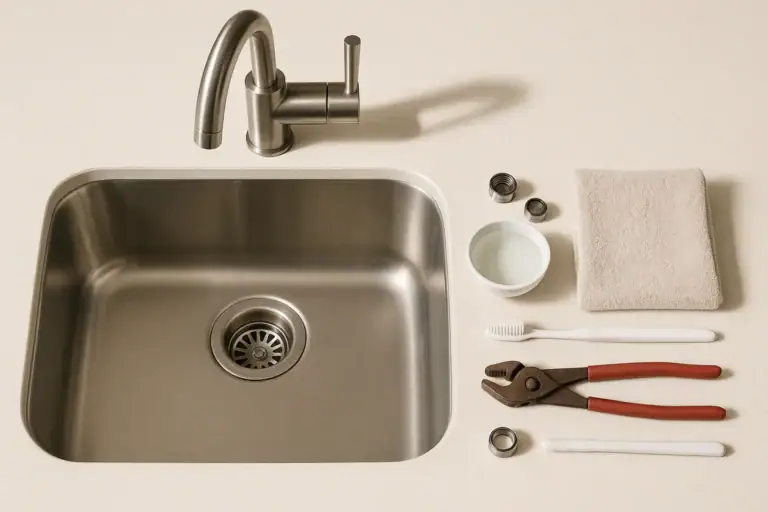 Kitchen Sink Aerator Cleaning for Low Water Flow: A Step-by-Step Guide
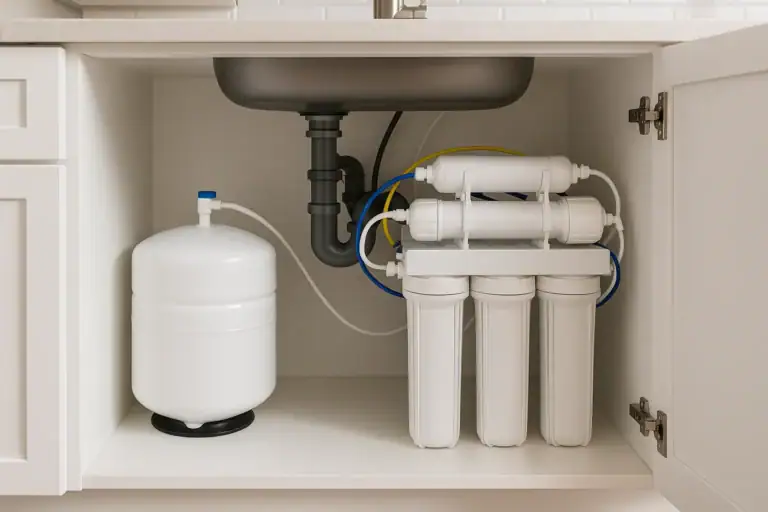 Reverse Osmosis Tank Not Filling: Step‑By‑Step Fix
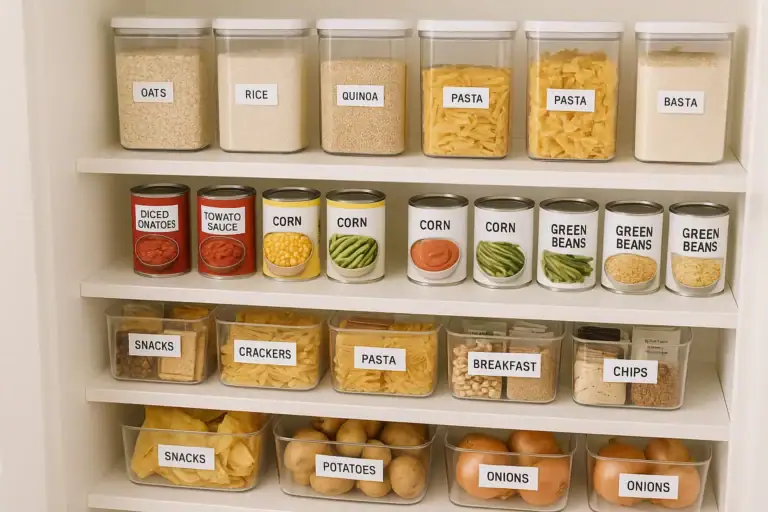 How to Set Up a Pantry Inventory System with FIFO for Busy Kitchens