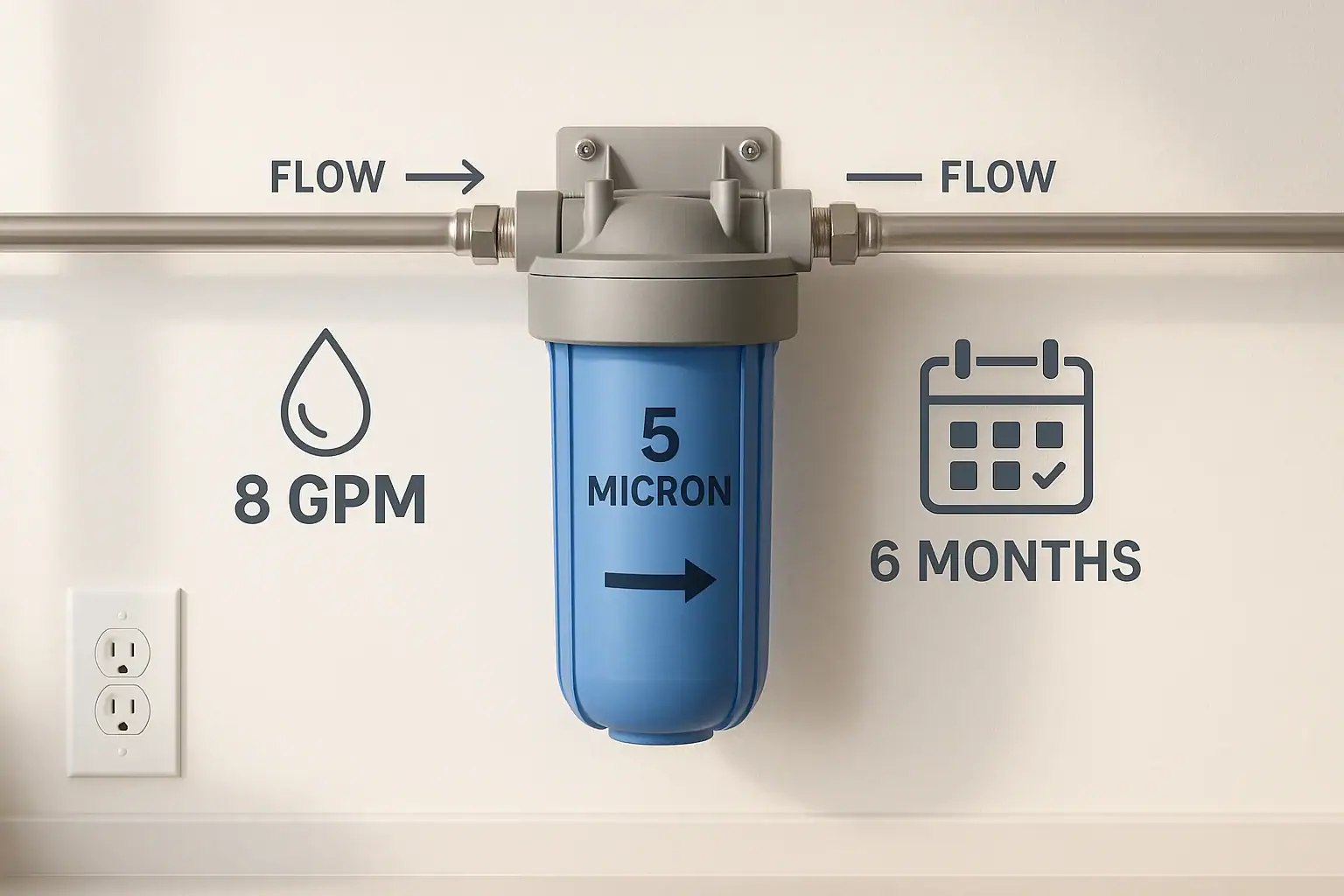
A whole-house sediment filter is one of the simplest ways to protect your plumbing, fixtures, and appliances from grit, sand, rust, and other particles. Yet many homeowners either oversize or undersize their filter, or they change cartridges far too often or not nearly enough. This guide walks you through how to size a whole-house sediment filter for your home and how to set a realistic replacement schedule based on your water conditions and usage.
Whether your water comes from a private well or a municipal supply, sediment control is the first step in a smart home water strategy. By the end of this guide, you will understand key sizing terms like flow rate and micron rating, how to read sediment clues in your home, and how to create a simple maintenance calendar that keeps your water flowing freely and your filter working efficiently.
What a Whole-House Sediment Filter Does
A whole-house sediment filter is installed on the main water line where it enters your home. Its job is to catch solid particles before they reach your plumbing system and fixtures.
Common types of sediment it removes include:
- Sand and fine grit
- Silt and clay
- Rust flakes from old pipes
- Scale particles
- Organic debris such as bits of leaves or soil
By trapping these particles, the filter helps:
- Protect pipes from abrasion and buildup
- Extend the life of water heaters, dishwashers, and washing machines
- Reduce clogs in faucet aerators and showerheads
- Improve the look and feel of water at every tap
Because it treats all incoming water, sizing and maintaining this filter correctly is critical. An undersized filter can choke your water pressure, while poor maintenance can leave you with cloudy water and frequent plumbing issues.
Key Concepts for Sizing a Whole-House Sediment Filter
Sizing a whole-house sediment filter is about more than just picking a cartridge that physically fits your plumbing. You need to match the filter to your home’s water demand and water quality. Four main factors drive sizing decisions:
- Flow rate (gallons per minute)
- Pipe size and connection type
- Micron rating
- Filter body size and capacity
1. Flow Rate (GPM)
Flow rate is the amount of water your home uses at peak demand, measured in gallons per minute (GPM). The sediment filter must handle that flow without causing a noticeable drop in pressure.
Typical peak flow estimates for homes:
- 1–2 bathrooms: about 7–10 GPM
- 3–4 bathrooms: about 10–15 GPM
- 5+ bathrooms or large homes: 15+ GPM
If you want a more precise number, you can:
- List fixtures that might run at the same time (showers, faucets, washing machine, irrigation).
- Assign typical GPM values (for example, 2.0–2.5 GPM per shower, 1.5–2 GPM for a faucet, 3–5 GPM for an outdoor spigot).
- Add them up to find your peak demand.
Choose a filter rated for at least your estimated peak GPM. Oversizing slightly for future needs is usually better than undersizing.
2. Pipe Size and Connection
The filter housing must match the diameter of your main water line to avoid bottlenecks. Common residential pipe sizes are:
- 3/4 inch for smaller homes
- 1 inch for many standard homes
- 1 1/4 inch or larger for high-demand or large properties
Using a filter with smaller ports than your main line can create pressure drop, especially during high demand. When in doubt, match the filter port size to your main line and use proper fittings for transitions.
3. Micron Rating
The micron rating describes how fine the filter media is. One micron is one-millionth of a meter. Lower micron numbers capture smaller particles but can clog faster and may reduce flow if undersized.
Common micron ranges for whole-house sediment filters:
- 50–100 microns: captures coarse sand and grit; minimal impact on flow.
- 20–50 microns: balances protection and flow; good general-purpose range.
- 5–20 microns: captures finer silt and rust; better for visibly cloudy water.
- 1–5 microns: very fine; often used as a polishing stage, may require larger housings.
For most municipal water supplies, a 10–30 micron filter is a practical starting point. For private wells with heavy sediment, a staged approach (coarse pre-filter followed by finer filter) often works best.
4. Filter Body Size and Capacity
Filter housings come in different lengths and diameters. Larger housings hold larger cartridges, which provide:
- Higher flow capacity
- Lower pressure drop at a given flow
- Longer time between cartridge changes
As a rough guideline:
- Smaller housings work for low-demand applications such as cabins or small homes.
- Larger housings are better for typical family homes and high-sediment wells.
When choosing, review the manufacturer’s maximum flow rating and recommended pressure drop. Aim for a setup that keeps pressure loss low at your peak flow.
How to Choose the Right Sediment Filter for Your Home
Once you understand the sizing factors, you can narrow down your options. Use the steps below as a simple decision path.
Step 1: Evaluate Your Water Source
Your water source strongly influences micron rating and filter capacity.
Municipal Water
Municipal water is usually filtered before it reaches your home, but it can still carry rust, scale, and occasional debris.
Typical needs:
- Micron rating: 10–30 microns
- Moderate housing size with good flow rating
- Replacement schedule driven by usage and visible buildup
Private Well Water
Well water often carries sand, silt, and organic material, especially after heavy rain or seasonal changes.
Typical needs:
- Micron rating: start with 30–50 microns for heavy sediment; consider a second stage at 5–10 microns if needed
- Larger housing or multiple housings in series
- More frequent monitoring and replacement
Step 2: Estimate Household Demand
Use your number of bathrooms and typical simultaneous water uses to estimate flow. For most single-family homes, choosing a filter system that supports at least 10–15 GPM provides a comfortable margin.
If you have:
- A large soaking tub
- Multiple showers used at the same time
- Outdoor irrigation tied into the same line
consider upsizing the housing and choosing cartridges designed for higher flow.
Step 3: Balance Micron Rating and Longevity
Finer is not always better. A very fine filter may give you slightly clearer water but require much more frequent changes. For most homes, a practical approach is:
- Start with a mid-range micron rating (10–30 microns).
- Monitor water clarity and pressure over a few months.
- Adjust to a finer or coarser cartridge if needed based on performance.
In high-sediment situations, a dual-stage setup often works best: a coarse pre-filter to catch big particles and a finer filter to polish the water.
Setting a Realistic Replacement Schedule
The right replacement schedule depends on water quality, household size, and cartridge type. Many homeowners either follow a generic time frame or wait until problems appear. A better approach combines baseline guidelines with observation.
Typical Time-Based Guidelines
As a starting point:
- Municipal water, average family: every 3–6 months
- Well water with moderate sediment: every 2–4 months
- Well water with heavy sediment: monthly or even more often in peak seasons
These are general ranges. Your actual schedule should be tuned to your home.
Usage-Based and Condition-Based Cues
Beyond the calendar, watch for signs that your sediment filter needs attention:
- Noticeable pressure drop: Showers feel weaker, or it takes longer to fill a tub.
- Visible discoloration: Water looks cloudy or has visible particles despite a filter in place.
- Cartridge appearance: When you change the filter, it is heavily discolored or caked with sediment.
- Seasonal changes: After heavy rain or spring thaw, wells may carry more sediment than usual.
If you see these signs before your planned change date, shorten the interval. If your filter still looks relatively clean and water quality is good at the scheduled change, you may be able to extend the interval slightly.
How to Build a Simple Replacement Calendar
- Install a new cartridge and write the date on the housing or on the cartridge itself.
- Set a reminder on your phone or calendar based on a conservative interval (for example, 3 months).
- At the reminder date, check water pressure and clarity, then inspect the cartridge.
- Adjust your next reminder earlier or later based on what you see.
Within a few cycles, you will have a schedule tailored to your home’s actual water conditions.
How to Tell if Your Sediment Filter Is Undersized
Even if your filter technically fits your plumbing, it may be undersized for your demand or water quality. Signs of an undersized system include:
- Frequent cartridge changes: Cartridges clog in weeks instead of months.
- Persistent pressure issues: Pressure drop is noticeable whenever multiple fixtures run.
- Bypassing sediment: You still see grit in faucet aerators or appliances despite regular filter changes.
Ways to correct an undersized setup:
- Upgrade to a larger housing with higher flow capacity.
- Use a slightly coarser micron rating as a first stage.
- Add a second housing in series to split the workload between coarse and fine filtration.
For homes with very heavy sediment, a multi-stage approach is often the most reliable long-term solution.
Best Practices for Installing and Maintaining Sediment Filters
Correct installation and simple routine checks will help your whole-house sediment filter perform at its best.
Installation Tips
- Install the filter on the main cold water line as it enters the home, before any water heaters or branch lines.
- Include shutoff valves on both sides of the filter to make cartridge changes easier.
- Mount the housing where you have enough clearance below to remove the sump and cartridge.
- Check the arrow on the housing to ensure water flows in the correct direction.
- Use appropriate fittings and thread sealant to avoid leaks and preserve flow.
Routine Maintenance
Once your system is in place, a few habits will keep it running smoothly:
- Inspect the housing periodically for leaks or cracks.
- Wipe down the housing exterior when you change cartridges to spot any slow drips.
- Lubricate O-rings with a compatible lubricant during cartridge changes to prevent pinching and leaks.
- Keep a spare cartridge on hand so you can change it promptly if water quality suddenly changes.
Coordinating Sediment Filtration With Other Water Treatment
A whole-house sediment filter is often the first stage in a broader home water system. Proper sizing and scheduling help protect other treatment equipment downstream.
Protecting Softeners and Other Media Filters
Water softeners, iron filters, and other media-based systems can be damaged or clogged by heavy sediment. A well-sized sediment filter:
- Reduces the load on downstream systems
- Helps control fouling of media beds
- Can extend the time between backwash cycles or service visits
Pairing With Drinking Water Filters
If you use under-sink or countertop drinking water filters, a whole-house sediment filter can significantly extend the life of their cartridges. By catching larger particles at the point of entry, you let finer drinking water filters focus on taste, odor, and specific contaminants.
Practical Examples of Sizing and Scheduling
The following scenarios illustrate how you might apply these guidelines in real homes.
Example 1: Municipal Water, Three-Bedroom Home
A family of four in a three-bedroom, two-bath home on municipal water notices occasional rust particles and slightly cloudy water at times.
- Estimated peak flow: around 10–12 GPM
- Filter choice: medium-to-large housing rated for at least 15 GPM
- Micron rating: 10–20 microns
- Starting schedule: change every 4 months, then adjust based on pressure and clarity
Example 2: Private Well, High Sediment
A rural home on a private well sees visible sand in toilet tanks and frequent clogging of faucet aerators.
- Estimated peak flow: 12–15 GPM
- Filter choice: two large housings in series, both rated above 15 GPM
- Micron ratings: first stage 50 microns, second stage 10 microns
- Starting schedule: check monthly; expect to change the first stage more often than the second
When to Seek Professional Help
Many homeowners can select and maintain a whole-house sediment filter on their own. However, it is wise to consult a professional if:
- You have very low or very high existing water pressure.
- Your plumbing layout makes it difficult to access the main line.
- You suspect multiple water quality issues beyond sediment, such as hardness, iron, or unusual odors.
- You are planning a larger treatment system and want all components sized together.
A professional can measure your actual flow rate and pressure, test your water, and recommend a system that fits your home’s needs without guesswork.
Next Steps for Your Home
Choosing and maintaining the right whole-house sediment filter does not have to be complicated. Start by understanding your water source, estimating your household’s peak demand, and selecting a filter with an appropriate micron rating and flow capacity. Then, build a replacement schedule that blends time-based reminders with simple checks of water clarity and pressure.
For more ideas on protecting your home’s water and kitchen systems, you can explore related guides and resources on water quality, filtration, and plumbing care at Signature Home Guide. With a well-sized sediment filter and a realistic maintenance plan, you can enjoy clearer water, fewer plumbing headaches, and better performance from your fixtures and appliances throughout the home.
 How to Store Flour, Rice, and Pasta to Prevent Pests at Home
 How to Clean Range Hood Filters Without a Greasy Mess
 How to Safely Remove a Stuck Refrigerator Water Filter